Carpet Cleaning Guide for Seattle
Carpet Cleaning in Seattle: What You Need to Know
Seattle's climate creates specific challenges for carpets that don't apply to drier parts of the country. Average annual humidity hovers around 70–75%, and the city sees roughly 150 days of measurable rain per year. That moisture doesn't stay outside. It gets tracked in on shoes and paws, settles into carpet fibers, and creates conditions where dirt compacts faster and mold can develop if carpets are left wet too long after cleaning.
This guide explains how the main carpet cleaning methods work, how Seattle's climate affects which approach makes sense for your situation, when DIY is practical and when it isn't, and what to expect from a professional cleaning appointment. We also cover pricing and how often different households need professional cleaning.
Carpet Cleaning Methods Explained
There are four main methods used in residential carpet cleaning. They're not equally effective, and in Seattle's climate, the drying time differences matter more than they would in, say, Phoenix.
Hot-Water Extraction (HWE)
Often called "steam cleaning" in marketing, though true steam is rarely used. Hot water is injected into the carpet under pressure and immediately extracted along with loosened soil. This is the most thorough method and the one recommended by most carpet manufacturers for deep cleaning.
- Reaches deep into the pile and backing
- Removes dissolved soil, bacteria, and allergens
- Professional truck-mounted units extract far more moisture than portable machines
- Drying time: 4–8 hours with fans; 12–24 hours without
Seattle note: Drying time matters here. Professional extraction removes enough moisture that a fan or two gets most carpets dry in half a day. Rental machines leave significantly more water behind.
Encapsulation
A cleaning solution is applied that surrounds soil particles in a crystalline polymer. As the solution dries, the crystals release from carpet fibers and are vacuumed away. This is an interim maintenance method, not a substitute for deep extraction.
- Very fast drying: 30–60 minutes
- Good for commercial settings or between deep cleanings
- Does not remove deep-set soil or pet contamination
- Works best on lightly soiled, regularly maintained carpet
We use encapsulation for commercial clients between scheduled HWE visits, or for residential clients who need a quick refresh before an event.
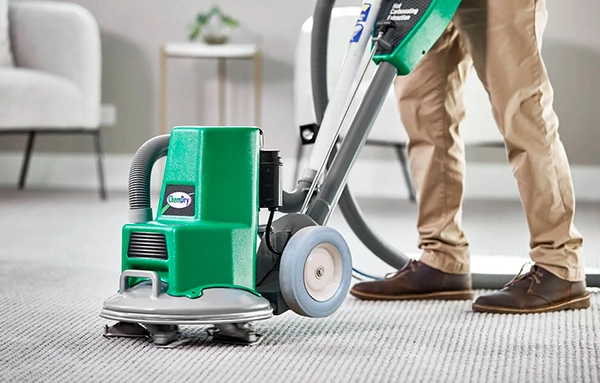
Dry Compound Cleaning
An absorbent compound is spread over the carpet, worked in with a machine, and then vacuumed up. The compound absorbs soil as it's agitated through the fibers.
- Drying time: 1–2 hours (minimal moisture used)
- Good option when fast turnaround is essential
- Surface-level cleaning only — does not penetrate deep soil
- Not suitable for pet urine, odor problems, or heavily soiled carpet
This method has its place but is genuinely limited. We offer it when clients specifically need same-day turnaround and their carpet is lightly soiled.
"Steam Cleaning" — What the Label Actually Means
Most companies advertising "steam cleaning" are describing hot-water extraction with a different name. True steam at 212°F+ is rarely used on carpet because the heat can damage fibers and backing materials. When you see "steam cleaning" in an ad, ask whether it's truck-mounted HWE. That's the question that actually matters.
- If it's truck-mounted HWE: good choice
- If it's a portable steam machine: much weaker suction, longer dry times
- If it's a handheld steam wand: surface-only, avoid using on carpet
We use truck-mounted HWE for residential carpet jobs. The extraction power is substantially higher than any portable unit.
Why Seattle's Climate Affects Your Carpet
The combination of high humidity and frequent foot traffic in wet weather creates a specific pattern in Seattle carpets. Understanding it helps you decide how often to clean and which method makes sense.
Moisture Binds Soil Faster
In dry climates, tracked-in dirt stays loose longer and vacuums up more easily. In Seattle, damp shoes and paws deposit moisture-laden soil that compacts into carpet fibers quickly. Carpet near entryways in a Seattle home gets soiled faster than the same carpet in a drier city.
Mold Risk When Carpet Stays Wet
Carpet left damp for more than 24–48 hours in a humid environment is at risk for mold growth in the backing and padding. This is why drying time matters in Seattle more than in drier regions. A rental carpet cleaner that leaves your carpet wet for 18 hours is a genuine problem here, not just an inconvenience.
More Frequent Entry Traffic
Seattle averages about 150 rainy days per year. During the long wet season (October through April), wet shoes and umbrella drips become a daily event rather than an occasional one. This means entryways, hallways, and living areas near doors accumulate significantly more soil than in drier climates.
DIY vs. Professional Carpet Cleaning in Seattle
DIY carpet cleaning has its place, and we're not going to pretend otherwise. Here's an honest look at what each approach is actually good for.
| Situation | DIY Realistic? | Notes |
|---|---|---|
| Fresh spill (within the hour) | Yes | Blot immediately, work from outside in, use a clean white cloth. For most spills, fast action beats any cleaner. |
| Light surface soil, single room | Yes | Rental HWE machine works for lightly soiled carpet. Make multiple dry passes to extract moisture. Open windows and run fans. |
| Whole-home cleaning | Maybe | Rental machines work, but require multiple passes and significant drying time. In Seattle's climate, plan for 18–24 hours drying. |
| Pet urine contamination | Rarely effective | Urine soaks into the carpet backing and pad. Rental machines can't extract from that depth. Store-bought enzyme cleaners help with surface odor but rarely reach the full contamination. |
| Set-in stains (weeks old) | Partial | DIY enzyme cleaners can help with organic stains. Some stains (red dye, bleach damage, ink) require professional products or can't be fully removed. |
| Heavily soiled, high-traffic areas | Not recommended | The suction gap between rental machines and professional truck-mounted units is most apparent here. Rental machines often push deep soil around rather than extracting it. |
The main practical limitation of rental machines in Seattle is drying time. Professional truck-mounted extractors remove roughly 3–4x more moisture per pass than portable rental units. In a 70%+ humidity environment, that difference directly affects whether your carpet dries in 4 hours or 20 hours.
How Often Should You Clean Your Carpet?
The honest answer is: it depends on your household. Here's a practical guide based on what we see in Seattle-area homes.
| Household Type | Recommended Frequency | Why |
|---|---|---|
| Single adult, no pets, low traffic | Every 18–24 months | Light soil accumulation. Regular vacuuming handles maintenance well. |
| Couple, no pets, moderate traffic | Every 12–18 months | Standard household use. Annual cleaning keeps allergen levels manageable. |
| Family with children | Every 9–12 months | Food, drinks, and higher foot traffic accelerate soiling, especially in living areas. |
| One pet with limited couch/carpet access | Every 9–12 months | Pet dander and occasional tracked-in material. Allergen buildup is the main concern. |
| One or more pets with full carpet access | Every 6–9 months | Dander, oils, and potential for odor buildup require more frequent deep cleaning. |
| Multiple pets or pet urine incidents | Every 4–6 months | Urine contamination in backing and pad needs regular professional treatment to prevent permanent odor. |
These are general guidelines. The best indicator is the carpet itself — if the color looks uneven in traffic areas, if you notice odor, or if allergy symptoms worsen at home, it's time regardless of the calendar.
How to Prepare for a Professional Carpet Cleaning Appointment
A little preparation makes the job go faster and the results better. Here's what helps:
- Clear small items from the floor. Pick up toys, pet bowls, shoes, and anything else directly on the carpet. We move furniture to clean under it, but small items on the floor slow things down.
- Identify stains and problem areas. If you know where a pet had an accident, where a wine spill happened, or where traffic patterns are heavy, tell us when we arrive. This lets us apply the right pre-treatment before the main cleaning pass.
- Vacuum if possible. We pre-vacuum before cleaning, but if your carpet has loose pet hair or debris, a pass with your own vacuum first helps. This is optional, not required.
- Plan for drying time. Expect 4–8 hours before the carpet is fully dry with fans running. If you have dogs or small children, keep them off cleaned areas until dry. We'll tell you the expected time before we leave.
- Ensure access to a parking spot near the door. Our truck-mounted equipment connects via hoses from the truck. We need to park within about 150 feet of the main entry. Let us know if parking is difficult at your address.
- Have the area well-ventilated. Open windows if weather permits, or make sure your HVAC is running. Good airflow cuts drying time significantly in Seattle's humid climate.
What's Included in a Professional Carpet Cleaning
Here's what we do on a standard residential carpet cleaning job. This applies to most appointments unless the job requires additional specialized work:
- Pre-vacuum: We vacuum before applying any moisture. This removes dry soil, pet hair, and loose debris that would otherwise become part of the cleaning solution. Skipping this step is a common shortcut that affects results.
- Pre-spray: A pre-conditioning solution is applied to the full carpet. This loosens soil from fibers before extraction begins and makes the hot-water pass more effective.
- Spot pre-treatment: Known problem areas — stains, high-traffic zones, pet accident locations — get a targeted treatment before the main cleaning pass.
- Hot-water extraction: This is the main cleaning pass. Hot water is injected and immediately extracted along with dissolved soil, pre-spray residue, and biological contaminants. We make multiple passes on heavily soiled areas.
- Spot treatment (post-extraction): If any stains remain after extraction, we address them with targeted products. Some stains can't be fully removed (bleach damage, certain dyes), and we'll tell you that honestly rather than continue treating something that won't change.
- Carpet grooming: We use a grooming tool on the carpet after cleaning. This lifts the pile, helps the carpet dry more evenly, and improves the appearance, particularly on thicker pile.
- Drying setup: We position fans in the cleaned areas before we leave. This is standard, not an extra. In Seattle's climate, starting the drying process immediately after cleaning matters.
Carpet Cleaning Pricing in Seattle
| Service | What's Included | Typical Price |
|---|---|---|
| Standard Carpet Cleaning | Pre-vacuum, pre-spray, extraction, spot treatment, grooming, drying setup | $0.25–$0.35 per sq ft (300 sq ft room: ~$75–$105) |
| Pet Urine Treatment (add-on) | Enzyme pre-treatment, extended dwell time, subsurface extraction where needed | +$30–$75 per affected area |
| Stain Protection (add-on) | Applied after cleaning; repels liquids for 12–18 months | +$0.10–$0.15 per sq ft |
| Whole-Home Cleaning | All rooms with carpet, standard cleaning included | Quoted by total sq ft; most homes $200–$450 |
Prices vary based on carpet type, level of soiling, and whether add-ons are needed. We give you the price before starting — not after. Text us a photo of the space or describe the rooms and we'll give you an estimate.
Common Questions About Carpet Cleaning in Seattle
How long until the carpet is dry after professional cleaning?
With truck-mounted HWE and fans running: 4–8 hours for most carpets. Thick pile carpets or heavily soiled areas that needed multiple passes may take closer to 8 hours. Without fans, add several hours to those estimates, especially in Seattle's climate. Dry compound cleaning dries in 1–2 hours because almost no moisture is used, but that method has the limitations described above.
Is carpet cleaning safe for kids and pets?
Yes, once the carpet is dry. All cleaning solutions we use are biodegradable and non-toxic. We don't use optical brighteners or petroleum-based solvents as standard products. If you have specific concerns — a chemically sensitive family member, a crawling infant — let us know when you book and we can discuss exactly what we'll be using. Keep kids and pets off the carpet until it's dry.
Will professional cleaning shrink my carpet?
No, if done correctly. Carpet shrinkage is a concern with very old or low-quality carpet that's been over-wetted, and it was more common before modern extraction equipment. With professional truck-mounted extraction, the moisture is removed quickly enough that shrinkage isn't a realistic concern on standard residential carpet. If you have a very old wool carpet or something you're uncertain about, tell us — we'll inspect it and give you an honest answer before cleaning.
Can carpet cleaning remove all stains?
Most, but not all. Organic stains (food, wine, coffee, pet waste) respond well to professional cleaning and enzyme treatment. Stains caused by bleach, permanent dye, or certain inks have changed the carpet fiber itself — cleaning can improve the appearance but can't reverse the discoloration. We'll tell you upfront if a stain falls into that category rather than waste your time and money treating something that won't fully improve.
Seattle Neighborhoods We Serve
| Seattle Area | Common Carpet Challenges |
|---|---|
| Capitol Hill, First Hill | Older buildings, high foot traffic, coffee and food spills, pet-friendly households |
| Ballard, Crown Hill | Family households, dogs, outdoor lifestyle — muddy entry traffic from October through April |
| Queen Anne, Magnolia | Older homes with original carpet, higher humidity near the water, family and pet households |
| Fremont, Wallingford | Mixed residential and older building stock, renters preparing for move-out, pet odor in rentals |
| West Seattle, Georgetown | Family neighborhoods, newer construction mixed with older homes, dogs and children |
| Eastside (Bellevue, Kirkland, Sammamish, Redmond) | Newer suburban homes, microfiber and wall-to-wall in family rooms, regular maintenance cleaning |
| Tacoma (North End, JBLM area, Proctor District) | Victorian and Craftsman homes with original subfloors, military PCS move-out cleaning, maritime humidity near Commencement Bay |
| Kent (East Hill, Panther Lake, Benson Hill) | 1980s–1990s East Hill homes, high rental turnover, large Amazon/Boeing workforce moving frequently |
| Renton (Kennydale, The Highlands, Boeing campus) | Kennydale waterfront humidity, mid-century homes saving carpet from replacement, Boeing corporate relocation cleaning |
| Federal Way (Twin Lakes, Pacific Highway corridor) | High-density apartments and condos, move-out as primary service type, multicultural cooking odors requiring enzyme pre-treatment |
| Puyallup & South Hill (Edgewood, Firgrove) | Larger suburban homes, agricultural dust from horse properties, Washington State Fair–season cleaning demand each September |
Schedule Your Seattle or Pierce County Carpet Cleaning
We serve Seattle, the Eastside, and south to Tacoma, Puyallup, and Federal Way. Call or text for a free quote — or send us a photo of the space and we'll give you an estimate the same day.
Related Articles
Ultimate Carpet Cleaning Guide
A deeper look at carpet types, cleaning methods, and how to maintain carpet between professional cleanings.
Read MoreHow to Get Fresh-Smelling Carpets
Practical steps for dealing with carpet odor — from baking soda for surface smells to enzyme treatment for pet urine.
Read MoreNon-Toxic Carpet Cleaning Options
What "non-toxic" actually means in carpet cleaning, which certifications matter, and when to ask your cleaner about plant-based solutions.
Read More