Professional Upholstery Cleaning
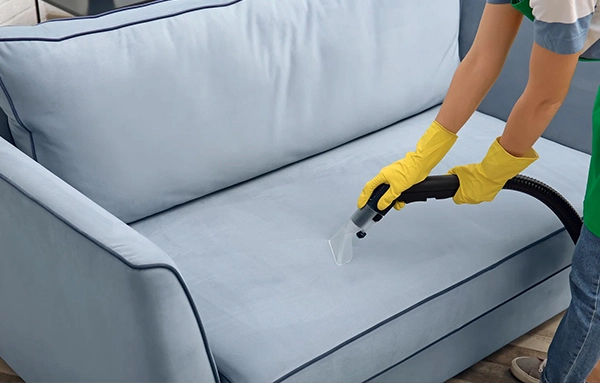
When to Clean Your Own Upholstery — And When to Call a Professional
Not every dirty couch needs a professional. Some fabric furniture you can clean yourself without risking damage, and some of it you absolutely should not touch with a home cleaner. The difference usually comes down to the fabric type, how bad the soiling is, and whether you're dealing with something that has penetrated into the padding.
This guide lays out exactly when DIY is fine, when professional cleaning is worth it, what the professional process actually looks like step by step, and how to tell whether the person you're hiring knows what they're doing. We've also included Seattle-specific notes, because the damp climate here changes the calculus on a few things.
When DIY Upholstery Cleaning Is Perfectly Fine
There are situations where renting a home cleaner or using store-bought products makes complete sense:
Light soil and surface grime
If your furniture just looks dull and dusty but doesn't have specific stains or odors, a good vacuuming with an upholstery attachment — followed by a light cleaning with a fabric-appropriate product — is often all it needs. Couch cushions that see everyday use accumulate skin oils, dust, and general household dirt that responds well to basic maintenance.
Weekly vacuuming alone makes a meaningful difference. Most people skip this, then wonder why professional cleaning is needed more often.
W-code fabrics with fresh, simple stains
Check the tag on your cushions. Furniture with a W cleaning code (water-safe) can generally handle water-based cleaning products. A fresh coffee spill or juice stain on a polyester microfiber couch, blotted immediately and treated with a mild detergent solution, can usually be handled at home.
The key word is fresh. A stain that happened yesterday and was blotted right away is a completely different situation than the same stain after it's dried and sat for two weeks.
Machine-washable covers
Some furniture comes with removable slipcovers or cushion covers that are machine-washable. If you have these, use them. Wash covers in cold water on gentle cycle, reshape while damp, and air dry rather than running them through a dryer — heat shrinks fabric and can cause covers to stop fitting properly.
Even with washable covers, the foam cushions inside should still be cleaned periodically. Covers get washed; the foam underneath quietly accumulates everything that soaks through.
Synthetic fabric in good condition
Polyester, nylon, and most synthetic blends are forgiving. They resist moisture absorption, dry faster, and are less likely to shrink or bleed color. If you have a relatively new synthetic fabric sofa with moderate soiling and no deep stains, a rented upholstery cleaner used carefully can do a decent job.
Still test in a hidden area first. Even "safe" fabrics can have dye issues with certain pH levels.
When You Should Call a Professional
These are the situations where DIY attempts either won't work or will actively make things worse:
Pet urine that has reached the padding
This is probably the most common case we see where homeowners have already tried and failed on their own. Urine soaks through fabric and into foam padding within minutes. Once it's in the foam, you can clean the fabric surface all you want — the odor source is still inside the cushion.
The uric acid crystals left behind when urine dries are not water-soluble. They sit dormant until humidity reactivates them (which happens regularly in Seattle's damp climate), then release ammonia and sulfur compounds all over again. You need enzyme treatment injected into the padding, followed by industrial-grade extraction to pull the dissolved material out.
A store-bought enzyme spray applied to the surface does help, but it can't penetrate deep enough on its own, and there's no extraction to remove the broken-down material. The smell returns.
Delicate fabrics: silk, velvet, S-code
Furniture with an S cleaning code should only be cleaned with solvent-based products — water will leave rings, cause shrinkage, or distort the fabric. Most consumers don't have access to the right solvent-based cleaning products, and using water on these fabrics is a common way to permanently damage them.
Silk upholstery requires dry cleaning solvents and very careful handling. A single pass with a wet machine can crush the pile, cause irreversible water staining, or shrink the cover enough that it won't fit back over the frame.
Velvet is similarly unforgiving. The pile needs to be cleaned in a specific direction, dried carefully, and groomed while damp. Do it wrong and you end up with crushed, matted pile that won't recover.
Old, set-in stains
A stain that has been sitting for weeks or months has chemically bonded to the fabric fibers. The organic material has oxidized, the dye carriers have fixed, and in some cases (tannin stains like coffee or wine) the compound has essentially tanned itself into the fabric like leather. Standard DIY products can't break these bonds.
Professionals have access to stronger chemistry — reducing agents for oxidized stains, solvent-based spotters for oil-based stains, and the extraction equipment to remove the dissolved material properly. Even then, a stain that's been there for a year may not come out completely; the honest answer depends on the fabric type and stain chemistry.
Post-flood or water damage
Furniture that has been in a flood, or that has had significant water sitting in it for more than 24 hours, needs professional attention fast. Mold begins growing in wet upholstery within 24-48 hours in a warm environment. By the time you can see or smell it, the colonization is well established.
Drying the surface isn't enough. The padding needs to dry all the way through, and in Seattle's climate, that can take much longer than you'd expect without professional air-moving equipment.
Allergy sufferers in the household
Upholstery is one of the primary reservoirs for dust mites in a home. A single sofa cushion can house hundreds of thousands of dust mites along with their waste products — which are among the most potent household allergens. Surface vacuuming removes some, but the population lives deep in the fabric and padding.
Professional hot water extraction at temperatures above 140°F kills dust mites and removes the allergen-containing debris. For households with asthma or allergic rhinitis, this is genuinely useful rather than just cosmetic cleaning.
Antique or high-value pieces
A sofa that cost $300 at a big-box store is a different situation than a mid-century piece worth $2,000 or an antique chair with original fabric. The risk-reward calculation changes entirely when the piece has significant value. If you're uncertain about the fabric code or cleaning method, the cost of a professional visit is cheap insurance against permanent damage.
Some antique fabrics are fragile enough that even gentle professional cleaning requires a conservator's approach. Ask your cleaner specifically whether they have experience with the type of piece you have.
What Professional Upholstery Cleaning Actually Involves
A lot of people aren't sure what they're paying for when they hire an upholstery cleaner. Here's the actual process, step by step:
Step 1: Pre-Inspection and Fabric Code Check
Before any water or product touches your furniture, a trained technician should inspect each piece, check the manufacturer's cleaning code (W, S, WS, or X), and assess the fabric condition.
The cleaning code tells you what chemistry is safe:
- W — water-based cleaning only
- S — solvent-based cleaning only; water will damage the fabric
- WS — either water-based or solvent-based methods are safe
- X — vacuum only; no liquid cleaning of any kind
The technician should also check for colorfastness — that is, whether the dye will bleed when wet. This is done by dampening a white cloth and pressing it against a hidden area of the fabric. If color transfers, the cleaning approach needs to be adjusted.
Step 2: Pre-Treatment of Stains and Soiled Areas
Once the fabric is confirmed safe to clean, specific stains get pre-treated before the main cleaning begins. Different stains require different chemistry:
- Protein stains (blood, urine, food) — enzyme-based pre-spotters that break down protein chains
- Oil and grease — solvent-based products that emulsify the oil so it can be extracted
- Tannin stains (coffee, tea, wine) — specific reducing agents or alkaline pre-sprays depending on fabric type
- Ink — isopropyl alcohol or professional solvent-based spotters
Pre-treatment needs dwell time — typically 5 to 15 minutes — to work before the main cleaning begins. Skipping this step or rushing it is a sign of an inexperienced technician.
Step 3: Hot Water Extraction or Dry Cleaning
The main cleaning method depends on the fabric code and condition:
Hot water extraction (HWE) is the most common method for W and WS fabrics. Hot water and cleaning solution are injected into the fabric under pressure, then immediately extracted using powerful suction. A truck-mounted system generates much stronger suction than a portable unit — important because leftover moisture leads to slow drying, which leads to mold and ring marks.
Dry cleaning / low-moisture methods are used on S-code fabrics, silk, velvet, and anything water-sensitive. This uses solvent-based compounds that are worked into the fabric and extracted without introducing significant moisture. The fabric dries in 20-30 minutes rather than 2-4 hours.
In Seattle specifically, low-moisture methods have an advantage even for WS fabrics during the wet season: the ambient humidity makes fully wet-cleaned furniture take longer to dry, and anything that doesn't dry completely within 6-8 hours risks mold or musty smell.
Step 4: Grooming and Pile Restoration
After cleaning, the fabric needs to be groomed — brushed in the direction of the pile using a soft upholstery brush. This step matters more than most people realize. It:
- Prevents pile from drying in a matted, crushed direction
- Distributes any remaining moisture evenly so it dries uniformly
- Restores the original texture of the fabric
- Removes any remaining loose debris worked up from the cleaning process
Velvet and chenille especially need careful grooming — the pile is directional, and if it dries wrong it won't come back without re-wetting and re-grooming.
Step 5: Fan Drying and Dehumidification
A professional job doesn't end when the cleaning wand leaves the fabric. Air movers (industrial fans) should be set up to accelerate drying. This matters for several reasons:
- Furniture that stays damp for more than a few hours can develop a musty smell from bacterial growth in the still-wet foam
- Slow drying causes ring marks as dissolved soil migrates to the edge of the wet area and deposits there
- In Seattle, ambient humidity slows natural evaporation significantly — what dries in 2 hours in Phoenix might take 6+ hours here without active drying
After cleaning, furniture should feel slightly damp to the touch, not wet. Fully wet furniture after "cleaning" is a sign the equipment wasn't extracting well.
Step 6: Final Inspection and Walkthrough
The technician should walk through results with you before packing up. Specifically:
- Point out any stains that didn't fully come out and explain why (age, fabric type, stain chemistry)
- Note any damage that was pre-existing vs. anything that happened during cleaning
- Give care instructions for the next 24 hours while the furniture finishes drying
- Advise on how long to wait before using the furniture
If the technician leaves without a walkthrough and just sends you an invoice, that's a problem. You need to know the condition of your furniture while the tech is still on-site, not after they've gone.
Real Risks of DIY Upholstery Cleaning
The four most common ways people damage their own furniture while trying to clean it:
Over-Wetting
Home upholstery machines inject water but extract poorly. Leaving fabric saturated causes ring marks as the dirty water migrates to the edge of the wet area and deposits there when it dries. Saturated foam also takes days to dry fully, causing mildew smell.
Shrinkage
Natural fiber fabrics — cotton, linen, wool, rayon — can shrink when wetted improperly. A cover that fitted perfectly can become tight, puckered, or impossible to reinstall after home cleaning. This is permanent and usually irreversible.
Color Bleeding
Dyes in some fabrics are not colorfast — they bleed when wet. Colors can run into each other or into the backing. This isn't something that happens gradually; a single wet pass can cause significant irreversible dye transfer in a susceptible fabric.
Ring Marks
Cleaning a single stain without feathering out to the edges creates a visible ring where the wet area ended. The soil that was in the fabric concentrates at this boundary. Ring marks are often harder to remove than the original stain was.
The Safest DIY Approach:
If you want to DIY, stick to vacuuming, blotting fresh spills immediately (never rubbing), and using products specifically formulated for your fabric type. Read the cleaning code tag first. Test any product in a hidden area. And stop if you see any color transfer onto your cloth, any fabric texture change, or any sign of shrinkage while still damp. The damage from a bad DIY attempt is often more expensive to fix than the original cleaning job would have cost.
How to Find a Legitimate Professional Upholstery Cleaner
The upholstery cleaning industry has no licensing requirement in most states, including Washington. Anyone can buy a cleaning machine and call themselves a professional. Here's how to distinguish people who actually know what they're doing:
IICRC UFT Certification
The IICRC (Institute of Inspection, Cleaning and Restoration Certification) offers an Upholstery and Fabric Cleaning Technician (UFT) certification. It's not the only mark of a competent cleaner, but it indicates the person has at least passed standardized training on fabric types, cleaning codes, chemistry, and safety procedures.
You can verify a technician's certification directly on the IICRC website. A company claiming certification but unable to produce a certification number is a red flag.
The IICRC also offers an Odor Control Technician (OCT) certification, which matters if you're dealing with pet odors, smoke, or other embedded smells. These are separate from UFT — a cleaner can have one without the other.
What to Look For in Reviews
Generic 5-star reviews ("Great service! Very professional!") don't tell you much. Look for reviews that mention specifics:
- Fabric types worked on (silk, velvet, microfiber, leather)
- Specific stain situations (pet urine, red wine, grease)
- Whether the technician explained what they were doing
- How the furniture looked and smelled after drying completely (not just immediately after)
- Whether any problems were handled honestly
Also look at how the company responds to negative reviews. A company that responds defensively to every complaint tells you something different than one that acknowledges problems and explains what they did about them.
Questions to Ask Before Hiring
- Do you check the fabric cleaning code before starting? A tech who doesn't know what this is shouldn't be cleaning upholstery.
- Do you test for colorfastness? This takes 30 seconds and prevents disasters. Any professional should do it.
- What method do you use on S-code fabrics? The right answer is solvent-based dry cleaning, not water. If they say they use water, walk away.
- Do you use air movers for drying? Furniture left wet is a problem.
- What happens if a stain doesn't come out? The honest answer is that some stains can't be fully removed depending on age and fabric — any cleaner who guarantees 100% stain removal on everything is overselling.
Red Flags
- Extremely low prices — professional equipment and products aren't cheap. Someone charging $40 to clean a sofa is either inexperienced, using poor products, or planning to upsell you aggressively on-site.
- No written estimate — get the price in writing before they start. "We'll figure it out after" is a setup for surprise charges.
- Guarantees results they can't possibly guarantee — no one can guarantee complete removal of a 3-year-old coffee stain on rayon without even seeing it first.
- No licensing or insurance information available — if something goes wrong with your furniture, you need recourse. Ask for proof of liability insurance.
- Pressure to add services on-site — some companies send in low-price offers to get in the door, then pressure you to add services once they're there. Decide what you want before they arrive.
Seattle-Area Considerations: Why Drying Matters More Here
The Seattle area averages around 37 inches of rain per year and sits at 70-80% relative humidity for most of the fall and winter months. This has a direct effect on upholstery cleaning in a few ways that don't apply as much in drier climates:
Slow Drying Creates Real Problems
In Phoenix in summer, wet upholstery might be dry in 2-3 hours. In Seattle in November, the same furniture in the same room might still be damp to the touch 8-10 hours later. That extra time in a damp state allows:
- Mold and mildew to establish in the foam padding
- Bacteria to proliferate in the still-wet fabric
- Ring marks to form as soil migrates during slow drying
- Musty odors to develop that weren't present before cleaning
A professional working in the Seattle area should use air movers as standard practice, not as an optional upsell. If they're not setting up fans on your furniture, ask why.
Low-Moisture Methods Are Often Better Here
For suitable fabrics (WS code, polyester blends, microfiber), low-moisture cleaning methods — sometimes called dry cleaning or encapsulation — are genuinely preferable in the Pacific Northwest, not just a marketing pitch. A low-moisture clean that leaves furniture nearly dry within an hour has a much lower risk of drying problems than a fully wet clean that leaves furniture saturated.
This doesn't mean hot water extraction is wrong — it's the right method for many situations. But a cleaner who insists on the same wet method for everything regardless of fabric type or season is not tailoring their approach to your situation.
Ask specifically: "Given our humidity this time of year, what method do you recommend for this fabric and why?"
Fresh Furnish Cleaners — Seattle and Eastside
Fresh Furnish Cleaners is IICRC certified in Upholstery and Fabric Cleaning (UFT) and Odor Control (OCT). We serve Seattle, Bellevue, Kirkland, Redmond, Mercer Island, and surrounding areas. We use truck-mounted extraction for power and portables when building access requires it, and we bring air movers to every job — not as an upsell, as standard. We'll tell you honestly when a stain is likely to come out and when it probably won't.
Call or email for a quote. We can usually give a ballpark estimate over the phone once we know the fabric type and what you're dealing with.
How Often Should You Have Upholstery Professionally Cleaned?
The answer depends entirely on how the furniture is used:
| Household Situation | Recommended Frequency | Notes |
|---|---|---|
| Adults only, no pets, light use | Every 18-24 months | Regular vacuuming extends time between professional cleans |
| Family with children, regular use | Every 12 months | Spot-treat stains immediately rather than letting them set |
| 1-2 pets with couch access | Every 6-12 months | More frequent if pets are wet regularly (Seattle dogs) |
| Pet urine accidents | As soon as possible after the incident | Don't wait — urine in padding worsens with time |
| Allergy sufferers in household | Every 6 months | Dust mite populations rebuild over time |
| High-end or delicate fabric | Every 12-18 months, or as needed | Preventive cleaning is better than treating heavy soiling on delicate fabric |
The more honest answer: clean your upholstery when it looks or smells like it needs it, not on a calendar schedule. Regular vacuuming and prompt stain treatment reduce how often professional cleaning is necessary. And when it does need cleaning, sooner is almost always better than later — accumulated soil becomes more difficult to remove over time, and certain stains become permanent if left long enough.
