Remove Smoke Smell from Furniture
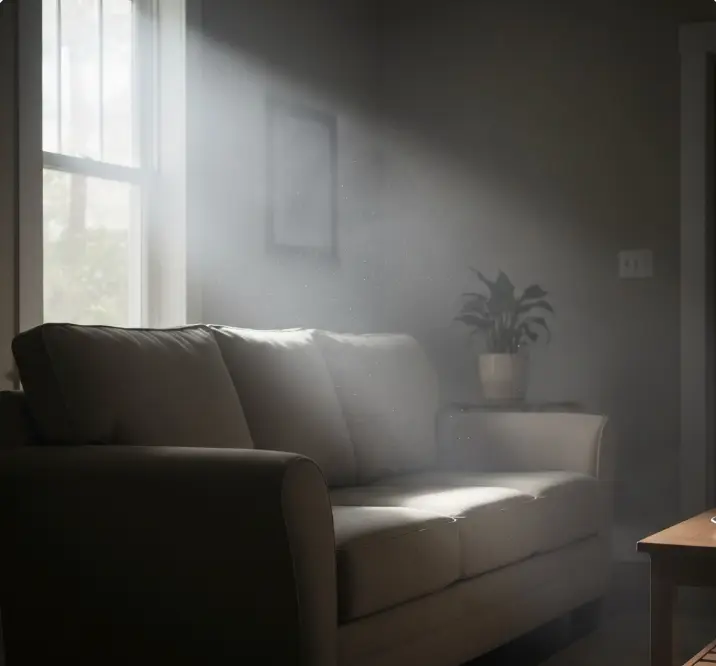
Your Furniture Smells Like Smoke. Is It Ruined?
Maybe you just moved into an apartment where the previous tenant was a heavy smoker, and every piece of your new life smells like their old habit. Maybe a kitchen fire sent plumes of acrid smoke through your home, and now your grandmother's antique loveseat carries the memory of that terrifying night. Maybe wildfire season left a haze inside your house for weeks, and your sectional still reeks months later.
Whatever the story, the question is the same: Can your furniture be saved, or is it headed for the curb?
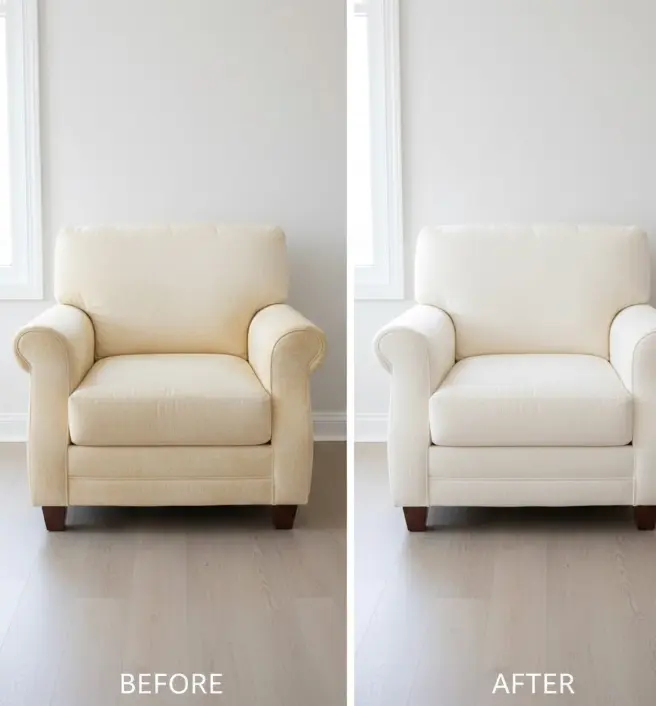
The answer, in the majority of cases, is yes -- your upholstery can be saved. But not with air fresheners, not with baking soda alone, and not by simply waiting for the smell to fade (it won't). Smoke odor is one of the most persistent and chemically complex challenges in furniture restoration, and it requires a systematic, science-based approach to eliminate completely.
We understand the emotional weight of this situation. That sofa might be the first piece of furniture you bought together as a couple. That armchair might be the one your father always sat in. Fire victims are dealing with trauma alongside property damage. We take every case seriously because we know it's never "just furniture" -- it's part of your life.
This guide will help you understand why smoke smell is so stubborn, honestly assess whether your specific furniture can be restored, and walk you through the professional treatments that achieve permanent odor elimination. For general upholstery care information, see our complete guide to professional upholstery cleaning.

Our Smoke Odor Removal Services:
- Cigarette & Cigar Odor - Complete nicotine and tar residue removal from all fabric types
- Fire Smoke Restoration - Insurance-approved treatment for fire-damaged furniture
- Wildfire Smoke Treatment - Specialized protocols for Pacific Northwest smoke season
- Ozone & Enzyme Treatment - Advanced molecular odor elimination technology
- Thermal Fogging - Penetrates deep into padding and foam to neutralize odor at the source
- Insurance Claim Assistance - Documentation and direct billing for fire restoration claims
Why Trust Our Smoke Odor Removal Expertise
- IICRC Certified - Fire & Smoke Restoration Technician (FSRT) certification
- 15+ Years Experience - Specializing in smoke odor removal from upholstered furniture
- 3,000+ Pieces Restored - Smoke-damaged furniture successfully treated and returned to owners
- 94% Success Rate - On complete odor elimination across all smoke types
- Insurance Partners - Approved vendor for major insurance companies on fire restoration claims
- Money-Back Guarantee - If the smoke smell returns within 30 days, we re-treat at no charge
- Free Assessment - Honest evaluation before any work begins -- no obligation
- EPA-Compliant Products - All treatments safe for children, pets, and allergy sufferers
We've restored smoke-damaged furniture from house fires, cigarette-exposed apartments, wildfire smoke infiltration (a growing concern in the Pacific Northwest), and cannabis odor situations. In our 15+ years, we've saved furniture that owners were ready to throw away -- including irreplaceable heirlooms, custom pieces, and furniture with deep sentimental value.
Types of Smoke Damage: Not All Smoke Is the Same
The type of smoke your furniture was exposed to dramatically affects both the difficulty of removal and the treatment approach required. Understanding the differences helps set realistic expectations for restoration.
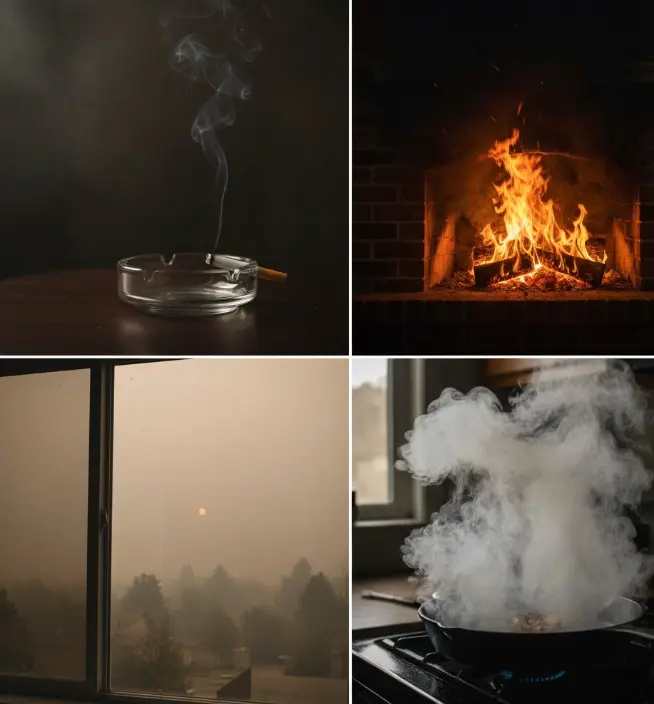
Cigarette & Cigar Smoke
Penetration Depth: Deep -- into padding, foam, and frame
Treatability: 85-95% success rate
- Nicotine and tar create a sticky, yellowish residue on fibers
- Builds up gradually over months or years of exposure
- Penetrates through fabric into foam padding and even wooden frames
- Contains 7,000+ chemicals, many of which bind to surfaces
- Severity depends on duration of exposure (weeks vs. years)
House Fire Smoke
Penetration Depth: Very deep -- saturates all layers
Treatability: 60-85% success rate
- Contains combustion byproducts from burned plastics, synthetics, and building materials
- Wet smoke (smoldering, low heat) leaves thick, sticky, pungent residue
- Dry smoke (fast, high heat) leaves finer, easier-to-remove particles
- Protein smoke (kitchen fires) produces an extremely foul odor
- May include toxic compounds requiring specialized handling
Wildfire & Outdoor Smoke
Penetration Depth: Moderate -- primarily surface and upper padding
Treatability: 90-98% success rate
- Wildfire smoke particles are extremely fine (PM2.5) and infiltrate sealed homes
- Contains burned organic matter, not synthetic chemicals
- Less tar and nicotine than cigarette smoke, but high particulate load
- Seasonal exposure in the Pacific Northwest (typically July-September)
- Accumulates gradually during extended smoke events
Cannabis Smoke
Penetration Depth: Moderate -- fabric and upper padding
Treatability: 90-95% success rate
- Produces resinous, sticky residue similar to tobacco but with different terpene compounds
- Distinctive odor from terpenes (myrcene, limonene, pinene) that bind to fabric
- Less tar than cigarettes but higher resin content per session
- Increasingly common concern in Washington State (legal since 2012)
- Often combined with tobacco smoke, complicating treatment
Cooking Smoke
Penetration Depth: Surface to moderate
Treatability: 95-99% success rate
Cooking smoke, especially from grease and protein-rich foods, leaves an oily residue on furniture surfaces. While the odor can be strong (particularly from burnt food or frequent deep-frying), it's typically the easiest smoke type to eliminate. Open-concept homes where cooking smoke reaches living room furniture are common cases we treat. A single professional cleaning session almost always resolves cooking smoke completely.
Why Smoke Smell Is So Incredibly Hard to Remove
To understand why smoke odor defeats most cleaning attempts, you need to understand what smoke actually is at a molecular level. Smoke isn't a single substance -- it's a complex mixture of gases, particles, and chemical compounds that interact with upholstery in multiple ways simultaneously.
Particulate-Phase Odor
What it is: Tiny solid particles (0.01 to 1.0 microns) that physically embed in fabric fibers, padding, and foam.
- Tar particles: Sticky, resinous solids that bond to surfaces and trap other odor compounds
- Nicotine residue: Yellowish coating that clings to fibers and slowly releases odor over time
- Soot and carbon: Microscopic black particles from combustion that penetrate deep into woven materials
- Ash particulates: Fine mineral particles that settle into every crevice and fiber gap
Gas-Phase Odor
What it is: Volatile organic compounds (VOCs) that exist as gases and are absorbed into materials at the molecular level.
- Formaldehyde: Released from burning synthetic materials, bonds to fabric chemically
- Acrolein: Produced during combustion, causes the sharp, irritating smell of smoke
- Benzene and toluene: Carcinogenic compounds absorbed deep into foam and padding
- Hydrogen cyanide: From burned synthetics, absorbed into upholstery at a molecular level
Why Smoke Penetrates So Deep Into Furniture:
Your upholstered furniture is essentially a multi-layer odor sponge. Smoke doesn't just sit on the surface -- it migrates through each layer over time:
- Fabric surface -- Particles lodge between fibers within minutes of exposure
- Fabric backing -- Smoke passes through woven material to the backing layer
- Batting/wadding -- Cotton or polyester batting absorbs and holds VOCs like a filter
- Foam padding -- Open-cell polyurethane foam acts as an odor reservoir, absorbing and slowly releasing smoke compounds for months or years
- Wooden frame -- Porous wood absorbs smoke gases, becoming a long-term odor source
- Springs and hardware -- Soot coats metal surfaces and crevices, releasing odor when heated by body warmth
This is why surface cleaning fails. Even if you make the fabric smell clean, the foam and frame continue releasing odor molecules that migrate back to the surface. Effective treatment must address every layer -- which is exactly what our professional process does.
Can YOUR Furniture Be Saved? An Honest Assessment
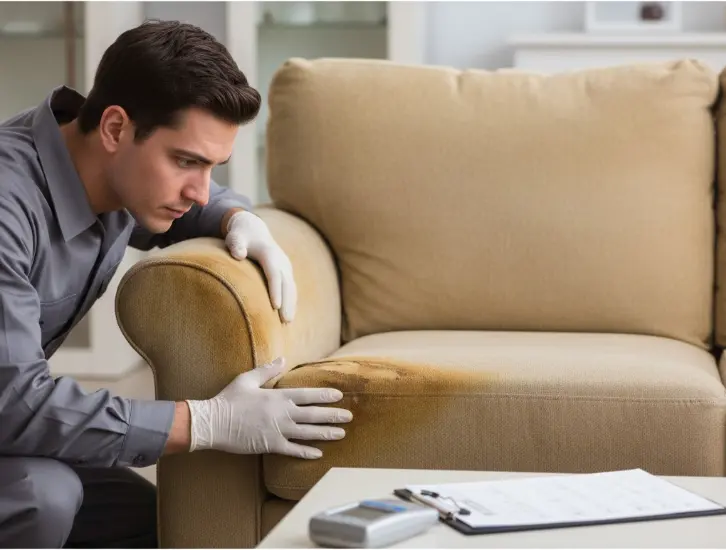
Honest Truth: Not All Furniture Can Be Saved
We believe in honest assessments before taking your money. Roughly 6% of the smoke-damaged furniture we evaluate is beyond restoration. We will tell you upfront if your piece falls into that category, and we'll explain exactly why. We'd rather lose a job than charge you for a treatment that won't work. That honesty is why 80% of our business comes from referrals and repeat customers.
Several factors determine whether smoke-damaged furniture can be successfully restored:
| Factor | Favorable for Restoration | Challenging for Restoration |
|---|---|---|
| Smoke Type | Wildfire, cooking, light cigarette | Heavy house fire (wet smoke), chemical fire |
| Exposure Duration | Days to weeks (single event) | Years of daily cigarette smoke |
| Fabric Type | Synthetic blends, microfiber, leather | Velvet, silk, loosely woven natural fibers |
| Padding Material | Newer high-density foam, down fill | Old, degraded foam; loose fill batting |
| Frame Condition | Solid, sealed, or painted wood; metal | Raw, untreated, or charred wood |
| Time Since Exposure | Treated within 1-4 weeks | Untreated for 6+ months (odor sets deeper) |
| Previous Cleaning Attempts | No prior attempts or professional only | DIY chemical products that sealed in odor |
When to Act:
The sooner you seek professional treatment after smoke exposure, the higher the success rate. Smoke compounds continue to bond and polymerize over time, making them harder to break down. Furniture treated within the first 2 weeks of exposure has a 97% successful restoration rate in our experience. After 6 months, that drops to around 85%. Don't wait for the smell to "air out" -- it won't.
The Self-Assessment Test: Evaluate Your Furniture at Home
Before calling a professional, you can perform this simple assessment to get a preliminary idea of your furniture's restoration potential. This is the same initial evaluation framework our technicians use during free in-home assessments.
Step 1: The Sniff Test
- Remove all cushions and smell the frame/base area
- Smell each cushion individually (both sides)
- Smell the underside of the furniture
- Rate the intensity: faint (1-3), moderate (4-6), or strong (7-10)
What it tells you: If the frame smells as strong as the cushions, smoke has penetrated deeply. If cushions are worse than the frame, treatment has a higher success rate.
Step 2: The Touch Test
- Run a clean white cloth firmly across the fabric surface
- Check for yellow or brown discoloration on the cloth
- Feel for stickiness or tacky residue on the fabric
- Check if the fabric feels stiffer than it should
What it tells you: Heavy residue on the cloth indicates significant tar/nicotine buildup. Sticky fabric means long-term exposure. Both are treatable but require more intensive protocols.
Step 3: The Visual Test
- Look for yellowing on light-colored fabrics
- Check for soot deposits in seams and crevices
- Examine the padding through zipper openings (if accessible)
- Look at the underside for staining or discoloration
What it tells you: Visible discoloration means heavy particulate deposits. If padding is visibly discolored, professional deep extraction is essential.
Step 4: The Heat Test
- Use a hair dryer on low heat, aimed at the fabric for 30 seconds
- Immediately smell the heated area
- If the odor intensifies significantly, it's in the deeper layers
- Compare heated smell to ambient smell -- a big difference means deep penetration
What it tells you: Heat activates trapped VOCs in foam and padding. If heat dramatically worsens the smell, the odor has migrated deep into the furniture -- but professional thermal fogging can still reach those layers.
Your Self-Assessment Score:
Good Prognosis:
Faint to moderate smell, minimal residue on cloth, no visible discoloration, mild reaction to heat. Very likely to be fully restored in 1 session.
Moderate Challenge:
Moderate to strong smell, some residue on cloth, some yellowing, noticeable heat reaction. Likely restorable in 1-2 sessions with advanced treatment.
Needs Professional Assessment:
Very strong smell, heavy residue, visible discoloration, extreme heat reaction. Schedule a free professional assessment to determine restoration viability.
DIY Methods That Sometimes Work (With Honest Limitations)
We believe in honesty, so here are the DIY approaches that can provide some improvement for light smoke exposure. For detailed general cleaning tips, see our guide on maintaining upholstery between professional cleanings.
Baking Soda Absorption
How: Sprinkle liberally on all fabric surfaces, leave for 24-48 hours, vacuum thoroughly with HEPA vacuum.
Why it partially works: Baking soda (sodium bicarbonate) is mildly alkaline and absorbs some surface-level odor compounds and moisture.
Effectiveness: 15-25% odor reduction
Limitation: Only affects surface odor. Cannot reach padding, foam, or frame. Will not remove tar or nicotine residue. May leave white residue in dark fabrics.
White Vinegar Solution
How: Mix equal parts white vinegar and water in a spray bottle. Lightly mist fabric surfaces (don't saturate). Allow to air dry completely.
Why it partially works: Acetic acid neutralizes some alkaline smoke compounds and breaks down light surface residue.
Effectiveness: 20-30% odor reduction
Limitation: Temporary vinegar smell replaces smoke smell initially. Does not penetrate to padding layer. Can discolor some fabrics -- always spot-test first. Ineffective against heavy tar deposits.
Activated Charcoal
How: Place activated charcoal bags or bowls inside/around the furniture. Seal in a room or cover with plastic sheeting for 48-72 hours.
Why it partially works: Activated charcoal has an enormous surface area that adsorbs VOCs and gas-phase odor molecules from the surrounding air.
Effectiveness: 15-30% odor reduction
Limitation: Only captures airborne odor molecules -- does not extract compounds embedded in fabric or foam. Works slowly. Requires large quantities for meaningful effect. Best used as a supplement, not a solution.
Sunlight & Fresh Air Exposure
How: Place removable cushions outside in direct sunlight for 6-8 hours on a dry, warm day. Flip halfway through.
Why it partially works: UV radiation breaks down some organic odor compounds on the surface. Fresh air circulation helps off-gas volatile compounds from outer layers.
Effectiveness: 20-35% odor reduction
Limitation: Only affects outer layers exposed to UV. Cannot treat the frame or non-removable parts. Weather-dependent (challenging in Seattle's climate). Risk of fabric fading with extended UV exposure. Multiple sessions needed.
DIY Methods That DON'T Work (Stop Wasting Money)
Why Masking Always Fails:
The fundamental problem with the products below is that they add new scent molecules on top of smoke odor rather than eliminating the smoke compounds. Your nose may be temporarily distracted, but the smoke chemicals remain. As the masking scent fades (and it always does), the smoke smell returns -- often seeming even worse by comparison. You're paying for temporary distraction, not restoration.
Febreze & Air Freshener Sprays
Does NOT WorkFebreze uses cyclodextrin to trap some odor molecules, but it only works on surface-level, light odors. It cannot reach or neutralize smoke compounds embedded in padding and foam. The fresh scent fades in hours; the smoke smell persists for years.
Scented Sprays & Perfumes
Does NOT WorkAdding fragrance on top of smoke odor creates a nauseating combination that's actually worse than the original problem. The chemical interaction between perfume and smoke compounds can produce new, unpleasant odors. This approach makes professional treatment harder.
Essential Oils & Diffusers
Does NOT WorkEssential oils are themselves volatile organic compounds. They cannot break down or neutralize smoke VOCs. Adding oil-based compounds to smoke-contaminated upholstery can actually make the situation worse by creating a sticky surface that traps more particulates.
A Special Warning About Store-Bought "Odor Eliminators":
Many products marketed as odor eliminators for smoke are actually enzyme-based cleaners designed for pet urine or general odors. Smoke odor requires different chemistry. Using the wrong enzyme product on smoke damage wastes money and delays effective treatment. If you're dealing with pet odors alongside smoke, our pet stain and odor removal service addresses both issues with the correct treatments for each.
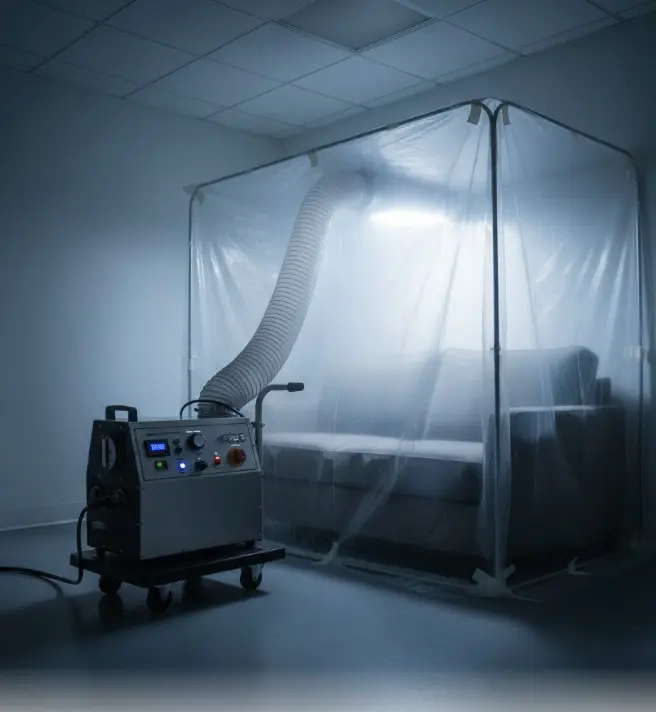
Our Professional 6-Step Smoke Odor Removal Process
Our smoke odor removal process is designed to address every layer of contamination -- from surface residue to deep-embedded VOCs. Each step builds on the previous one, and the specific techniques used are customized based on the type and severity of smoke damage identified during assessment.
Step 1: Comprehensive Assessment & Testing
- Identify smoke type (cigarette, fire, wildfire, cannabis, or mixed)
- Fabric identification and cleaning code verification
- Penetration depth evaluation using thermal and chemical testing
- Padding and frame condition assessment
- Photo documentation for insurance claims (if applicable)
- Honest restoration prognosis and treatment plan
Duration: 15-30 minutes. Cost: Free -- no obligation.
Step 2: HEPA Vacuum & Dry Particulate Removal
- Medical-grade HEPA vacuum removes loose soot, ash, and particulate matter
- All surfaces, seams, crevices, and underside treated
- Cushions removed and vacuumed individually
- Prevents wet soot from being driven deeper during cleaning
- Captures 99.97% of particles down to 0.3 microns
Why this comes first: Wet cleaning without prior dry extraction can push soot deeper and create permanent stains. Always dry-clean before wet-clean for smoke damage.
Step 3: Chemical Pre-Treatment & Tar Dissolution
- Professional-grade smoke residue solvent applied to all fabric surfaces
- Breaks down tar, nicotine, and resin bonds on upholstery fibers
- Enzyme treatment applied to break down organic odor compounds
- Dwell time allows chemicals to penetrate backing and upper padding
- Fabric-safe formulations matched to your specific upholstery type
The chemistry: Our solvents contain surfactants that emulsify tar (make it water-soluble) and enzymes that biologically digest odor-causing organic compounds.
Step 4: Hot Water Extraction & Deep Cleaning
- Truck-mounted hot water extraction at controlled temperature and pressure
- Injects cleaning solution deep into upholstery and immediately extracts
- Removes dissolved tar, nicotine, soot, and chemical residue
- Multiple extraction passes for heavy contamination
- Controlled moisture prevents over-wetting and damage to padding
What you'll see: The extraction water is often shockingly dark brown or black from smoke residue. This is visual proof of how much contamination was hiding in your furniture. Learn more about the science in our professional sofa cleaning guide.
Step 5: Advanced Odor Neutralization
- Ozone treatment, thermal fogging, or hydroxyl generation (based on smoke type)
- Penetrates deep into padding, foam, and frame to reach embedded VOCs
- Chemically breaks down odor molecules at the molecular level
- Neutralizes gas-phase odors that cleaning alone cannot remove
- Treatment selection customized to your specific situation
This is the critical step that separates professional smoke restoration from basic cleaning. Without advanced odor neutralization, embedded VOCs will continue releasing odor for months or years.
Step 6: Verification, Protection & Follow-Up
- Odor verification after treatment (technician and customer confirmation)
- Fabric protector application (optional) to prevent future odor absorption
- Speed drying with professional air movers
- 48-hour follow-up call to verify odor has not returned
- 30-day guarantee -- if smoke smell returns, we re-treat at no charge
Drying time: 4-8 hours depending on treatment intensity. Your furniture will be dry and usable the same day in most cases.
Advanced Smoke Odor Treatment Technologies
Professional smoke odor removal goes far beyond standard cleaning. These advanced technologies target odor at the molecular level -- something no DIY method can achieve. Understanding each technology helps you appreciate why professional treatment succeeds where home remedies fail.
Ozone (O3) Treatment
How it works: Ozone generators produce O3 molecules -- oxygen with an extra atom that's highly reactive. This extra oxygen atom breaks away and bonds with odor molecules, chemically altering their structure and neutralizing the smell permanently.
Best For:
- Cigarette and cigar smoke (excellent for nicotine/tar compounds)
- Moderate fire smoke in well-ventilated spaces
- Whole-room treatment alongside furniture
Considerations:
- Space must be unoccupied during treatment (ozone is irritating in high concentrations)
- Treatment takes 4-24 hours depending on severity
- Room must be ventilated for 1-2 hours after treatment
- Safe for all fabric types and materials
Thermal Fogging
How it works: A thermal fogger heats a deodorizing solution to create a dry fog of microscopic droplets (under 5 microns). These tiny droplets follow the same pathways smoke took into the furniture, reaching deep into padding, foam, and frame cavities to neutralize odor at the source.
Best For:
- Fire smoke with deep penetration into furniture layers
- Heavy cigarette smoke in padding and frames
- Any situation where odor is trapped deep in non-removable components
Considerations:
- Fog reaches areas that liquid cleaning cannot access
- Does not add moisture -- safe for delicate fabrics
- May require 2-3 applications for severe contamination
- Leaves no residue on furniture
Hydroxyl Generators
How it works: Hydroxyl generators use UV light to produce hydroxyl radicals (OH) -- the same molecule that naturally cleans the earth's atmosphere. These radicals react with and break down VOCs, bacteria, and odor molecules on contact, converting them to harmless CO2 and water vapor.
Best For:
- Sensitive environments where ozone cannot be used
- Occupied spaces (safe for people, pets, and plants)
- Cannabis odor (excellent at breaking down terpene compounds)
Considerations:
- Safe for continuous use in occupied spaces
- Slower than ozone but equally effective over time
- Ideal for ongoing treatment of persistent odors
- No ventilation period required after treatment
Which Technology Do We Use on Your Furniture?
Our technicians select the appropriate technology (or combination of technologies) based on your specific situation. Cigarette smoke often gets ozone treatment. Fire smoke typically requires thermal fogging followed by ozone. Cannabis odor responds best to enzyme cleaning plus hydroxyl generation. Many cases use two or all three technologies in sequence for the most thorough result. Your treatment plan is determined during the free assessment -- there's no one-size-fits-all approach. For information on how we handle different fabric types, see our eco-friendly upholstery cleaning guide.
How Different Fabrics Respond to Smoke Damage
The type of fabric on your furniture significantly affects both how smoke odor is absorbed and how effectively it can be removed. This knowledge helps set realistic expectations and guides our treatment approach. For fabric-specific cleaning guidance, check our microfiber couch cleaning guide and our leather furniture cleaning guide.
| Fabric Type | Odor Absorption Level | Odor Release Ease | Treatment Approach | Restoration Success |
|---|---|---|---|---|
| Microfiber / Polyester | Moderate | Good | Hot water extraction + ozone; synthetic fibers respond well to cleaning | 90-97% |
| Cotton / Linen | High | Moderate | Enzyme pre-treat + extraction + thermal fog; natural fibers absorb deeply | 85-93% |
| Leather / Faux Leather | Low | Very Good | Specialized leather cleaner + conditioner + ozone; non-porous surface helps | 93-98% |
| Velvet / Velour | Very High | Difficult | Careful low-moisture cleaning + extended thermal fog; dense pile traps particles | 75-88% |
| Silk | High | Difficult | Dry cleaning solvents only + hydroxyl treatment; water can damage silk | 70-85% |
| Wool / Wool Blend | High | Moderate | Low-moisture extraction + enzyme treatment + ozone; lanolin complicates removal | 80-90% |
| Nylon / Olefin | Moderate | Good | Standard hot water extraction + ozone; durable and responds well | 90-96% |
| Acrylic | Low-Moderate | Good | Extraction + ozone; synthetic construction resists deep absorption | 92-97% |
Don't Know Your Fabric Type?
Most upholstered furniture has a cleaning code tag (W, S, WS, or X) on the underside or on the cushion tags. Our technicians identify your fabric type during the free assessment and customize the treatment accordingly. Never guess -- using the wrong cleaning method on the wrong fabric can cause permanent damage. For general upholstery cost information by fabric type, see our upholstery cleaning cost guide.
Pacific Northwest Wildfire Smoke: A Growing Concern for Your Furniture

If you live in the Seattle area, you've noticed that wildfire smoke seasons have become longer, more intense, and more frequent. What was once a rare event is now an annual reality from July through September (and sometimes into October). The 2020 smoke event, the 2022 season, and subsequent years have driven home the fact that wildfire smoke infiltration is no longer an "if" but a "when" for Pacific Northwest homeowners.
Wildfire smoke is unique because its ultra-fine particulate matter (PM2.5 -- particles 2.5 microns or smaller) infiltrates even sealed homes through tiny gaps around windows, doors, HVAC systems, and electrical outlets. These particles settle on and are absorbed by upholstered furniture, carpets, curtains, and bedding. Even with windows closed and air purifiers running, extended smoke events of 1-2 weeks can leave noticeable odor in furniture.
The good news: wildfire smoke, while persistent, is among the most treatable smoke types because it consists primarily of burned organic matter (wood, vegetation) rather than the synthetic chemicals found in structure fires or the tar/nicotine of cigarette smoke.
Seattle Wildfire Smoke Trends
- Annual smoke days (avg): 15-30 days per year (up from 5-10 days a decade ago)
- AQI during events: Regularly exceeds 150 ("Unhealthy"), peaks above 300
- Indoor impact: Indoor air quality drops to 60-80% of outdoor levels even with windows closed
- Furniture effect: 1-2 weeks of heavy smoke can leave detectable odor for 3-6+ months
- Treatment demand: Our smoke odor service requests increase 400% in September-October
During Smoke Season: Protect Your Furniture
- Run HEPA air purifiers in rooms with upholstered furniture continuously
- Cover furniture with washable cotton sheets or drop cloths during AQI events above 100
- Seal gaps around windows and doors with temporary weather stripping
- Set HVAC to recirculate (don't draw outside air) and upgrade to MERV-13+ filters
- Vacuum furniture with HEPA vacuum every 2-3 days during smoke events
- Wash all throws and cushion covers immediately after smoke events end
- Schedule professional cleaning within 2 weeks of a major smoke event for best results
- Don't wait until the smell is "bad" -- early treatment prevents deep absorption
Post-Smoke-Season Cleaning Package:
Every fall, we offer a Wildfire Smoke Recovery Package specifically designed for Seattle-area furniture affected by summer smoke season. This includes inspection, HEPA extraction, hot water cleaning, and ozone treatment -- everything needed to reset your furniture after weeks of smoke infiltration. Contact us to schedule your post-smoke-season cleaning. For comprehensive home cleaning, consider combining with our full upholstery cleaning service.
Insurance Claims & Fire Restoration: We Handle the Paperwork
If your furniture was damaged by a house fire or a covered event, your homeowner's insurance likely covers professional smoke odor removal and restoration. We work directly with insurance companies to make the process as smooth as possible during an already stressful time.
How We Help With Insurance Claims
- Detailed Documentation: Before/after photos, inventory lists, and condition assessments that meet insurer requirements
- Professional Estimates: Itemized, industry-standard pricing documentation that insurance adjusters accept
- Direct Communication: We speak directly with your adjuster to answer technical questions about treatment necessity
- Direct Billing: In many cases, we can bill your insurance company directly, reducing your out-of-pocket costs
- Supplement Filing: If the initial estimate doesn't cover full restoration, we file supplements with supporting evidence
The Insurance Claim Process
- File your claim with your insurance company as soon as possible after the fire
- Contact us for a free assessment -- we can often come same-day for fire damage
- We document everything -- condition, smoke type, damage extent, treatment plan
- We provide the estimate to your adjuster in their preferred format
- Upon approval, we begin restoration immediately
- We photograph results and provide a completion report for your claim file
What Insurance Typically Covers:
Usually Covered:
- Professional smoke odor removal from furniture
- Fire damage restoration and cleaning
- Replacement cost if furniture cannot be restored
- Temporary storage during restoration
Typically NOT Covered:
- Cigarette smoke damage (gradual, not sudden)
- Cannabis smoke odor removal
- Cooking smoke without a fire event
- Wildfire smoke (check your specific policy -- some newer policies include it)
Smoke Odor Removal Pricing
Pricing depends primarily on the severity of smoke damage and the type of treatment required. Below are our standard ranges. For a precise quote, we recommend our free in-home assessment. For comparison with standard cleaning prices, see our upholstery cleaning cost guide for Seattle.
| Severity Level | Per Piece (Sofa-Sized) | What's Included | Typical Duration |
|---|---|---|---|
| Light Smoke Exposure Short-term wildfire, cooking, light secondhand smoke |
$150 - $250 | HEPA vacuum, hot water extraction, enzyme treatment, single ozone session | 2-3 hours |
| Moderate Smoke Damage Several months cigarette exposure, moderate fire smoke, extended wildfire |
$250 - $450 | Full 6-step process with chemical pre-treatment, extraction, and thermal fogging | 3-5 hours |
| Severe Smoke Damage Years of cigarette smoke, heavy fire damage, extreme exposure |
$400 - $700+ | Multi-session treatment: full extraction, repeated thermal fogging, ozone, hydroxyl generator | Multiple visits over 1-2 weeks |
| Fire Restoration Direct fire damage, adjacent room heavy smoke, insurance claims |
Quote-Based | Complete restoration protocol with documentation, insurance coordination, and guarantee | Varies by scope |
Special Offers & Bundle Discounts:
- Multi-Piece Discount: 2+ furniture pieces treated together = 15% off total
- Whole-Room Package: All furniture in a room + area rug = 20% off
- Wildfire Recovery Package: Seasonal special for post-smoke-season cleaning (September-November)
- New Customer Offer: $30 off your first smoke odor treatment (mention this article)
- Free Assessment: Every smoke odor consultation includes a free in-home evaluation -- no obligation
Is It Worth the Cost?
Consider the replacement cost of your furniture. A quality sofa costs $1,500-$5,000+ to replace. Professional smoke odor removal at $250-$700 saves you significant money while preserving furniture you love. For sentimental or antique pieces, restoration is priceless. And for insurance-covered fire damage, your out-of-pocket cost may be just your deductible.
Prevention Tips: Protecting Your Furniture From Smoke Damage
For Households With Smokers
- Smoke outside only -- even smoking near open windows allows smoke to settle on furniture
- Use a dedicated smoking jacket that stays outside to prevent transferring residue to furniture when you sit down
- Run a HEPA air purifier near furniture areas continuously
- Wash hands and face after smoking before sitting on upholstered furniture
- Schedule professional cleaning every 6 months to prevent buildup -- see our guide on how often to clean your couch
- Use washable furniture covers that can be laundered weekly
For Wildfire Season
- Monitor AQI daily during summer months using AirNow.gov or PurpleAir
- Cover furniture with cotton sheets when AQI exceeds 100
- Seal your home -- use temporary caulk or weather stripping around windows and doors
- Run HEPA air purifiers on maximum in rooms with upholstered furniture
- Upgrade HVAC filters to MERV-13 or higher before smoke season
- Schedule post-season cleaning within 2 weeks of smoke events ending
For New Apartment/Home Buyers
- Smell before signing -- visit the property on a warm day with windows closed to detect lingering smoke
- Check walls and ceilings for nicotine yellowing, especially above where furniture sat
- Ask directly if previous occupants were smokers (landlords must disclose in many states)
- Negotiate cleaning into your lease if smoke odor is present -- have the landlord pay for professional treatment
- Test included furniture with the self-assessment test above before moving in
- Apply fabric protector to new furniture as a preventive barrier against future odor absorption
Frequently Asked Questions About Smoke Odor Removal
What Our Customers Say About Smoke Odor Removal
"A kitchen fire in November filled our entire house with smoke. Everything smelled -- the walls, the carpets, and especially our furniture. Our insurance adjuster recommended Fresh Furnish Cleaners. They treated our sofa, loveseat, two armchairs, and a dining set. The technician was professional, documented everything for our claim, and the results were incredible. I genuinely cannot detect any smoke smell anymore. They also helped us navigate the insurance paperwork, which was a huge relief during an already overwhelming time. I can't thank them enough."
"We bought a condo from a heavy smoker. The previous owner had lived there for 12 years and smoked indoors daily. The furniture was gone, but the smell had soaked into everything. We brought our own brand-new sofa in, and within a month it started absorbing the residual smoke smell from the walls and carpet. The cleaning team treated our new sofa AND did a comprehensive ozone treatment of the entire condo. The smoke smell is completely gone from both the furniture and the unit. We finally feel like the place is truly ours."
"After 20 years of smoking, I finally quit. The hardest part wasn't the cravings -- it was coming home to a house that smelled like two decades of cigarettes. Every piece of furniture was a reminder. The team came out and was completely non-judgmental (I was embarrassed about the condition of things). They treated my living room set -- a sofa, recliner, and ottoman -- over two sessions. The smell is gone. Completely. Sitting on my couch no longer triggers cravings or reminds me of smoking. It's like a fresh start for my home to match my fresh start in life."
"The August 2025 wildfire smoke was brutal. Even with air purifiers running and windows sealed, two weeks of heavy smoke left our sectional and bedroom furniture smelling like a campfire. I called in September and they were able to get us in within a week. One session of deep cleaning plus ozone, and everything smells completely normal again. They also gave us great tips for protecting furniture during future smoke seasons. We'll definitely be calling them again if next summer is as bad. Highly recommend their wildfire smoke recovery service."
Eliminate Smoke Smell From Your Furniture -- Permanently
Don't live with smoke odor. Don't mask it. Eliminate it. Professional smoke odor removal restores your furniture and your peace of mind. Free assessment, money-back guarantee, and insurance claim assistance available.
Why Choose Fresh Furnish Cleaners for Smoke Odor Removal:
- IICRC Fire & Smoke Restoration Certified
- 15+ Years Smoke Odor Removal Experience
- 94% Complete Odor Elimination Success Rate
- Advanced Ozone, Thermal Fogging & Hydroxyl Technology
- Free In-Home Assessment -- No Obligation
- 30-Day Money-Back Guarantee on Odor Removal
- Insurance Claim Documentation & Direct Billing
- All Fabric Types Including Leather & Delicates
- Same-Day Emergency Service for Fire Damage
- EPA-Compliant, Child & Pet Safe Products
Your furniture deserves a second chance. Whether it's cigarette smoke, fire damage, wildfire residue, or any other smoke odor -- we have the expertise and technology to restore it.
Contact Us for a Free Smoke Odor Assessment:
Call or Text: (425) 287-3619
Email: info@ovencarpetcleaning.com
Serving: Seattle, Bellevue, Redmond, Kirkland, Bothell, Everett, Lynnwood, Edmonds & All King County
Smoke Odor Specialists Licensed & Insured Fire Restoration Certified Money-Back Guarantee Same-Day Emergency Service
