What Professional Upholstery Cleaners Use — Seattle, WA
Why Professional Upholstery Equipment Makes the Difference
When a couch or armchair looks dingy, most homeowners reach for a rental machine or a spray bottle from the hardware store. The results are usually underwhelming — and sometimes make things worse. The reason is simple: professional upholstery cleaning equipment is engineered to extract contaminants at a molecular level, control moisture precisely, and protect fabric integrity. Consumer tools simply aren't built for this.
Understanding what goes into a professional's van gives you a clear picture of why the results look — and feel — so different. Below is a complete breakdown of every major piece of professional upholstery equipment that trained technicians use on every job.
1. Hot Water Extraction Machine (HWE)
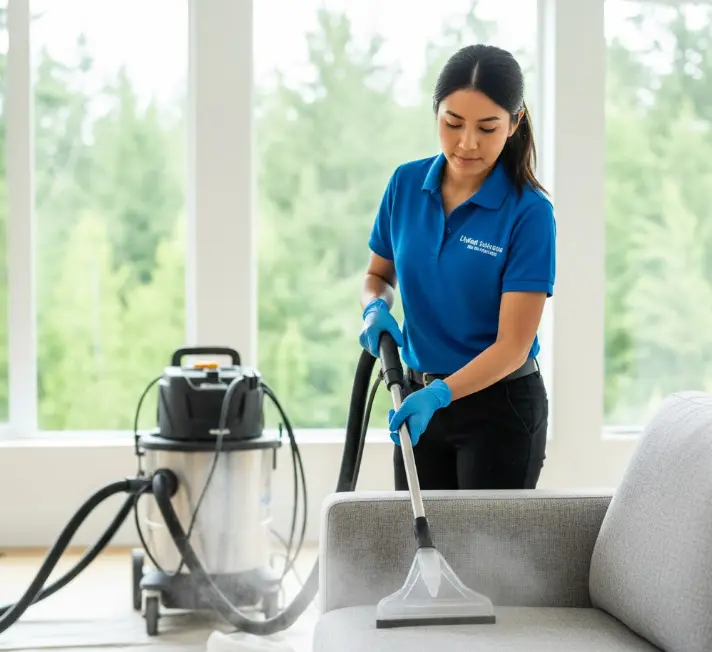
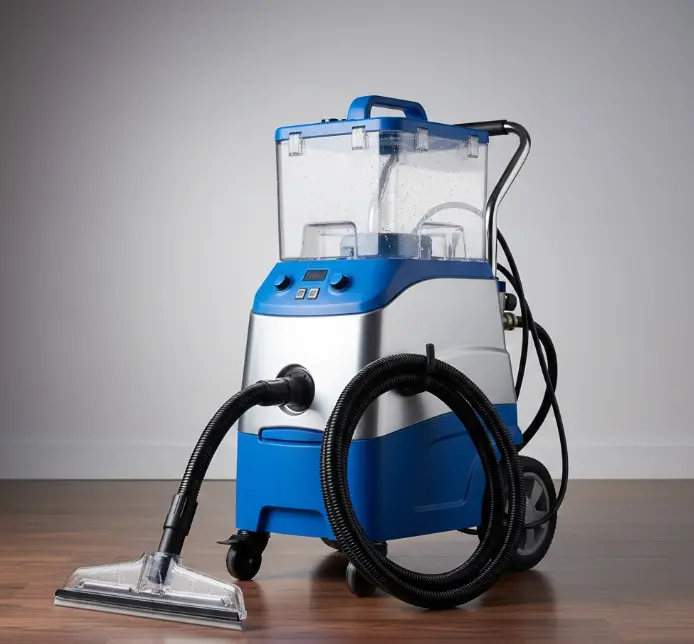
The hot water extractor is the cornerstone of professional upholstery cleaning. It works by injecting a precise mixture of hot water and cleaning solution deep into fabric fibers, then immediately vacuuming everything back out — dirt, allergens, cleaning agents, and dissolved soils included.
Truck-Mounted Extractors
- Powered by the vehicle's engine — unlimited power and heat
- Water temperatures up to 230°F (110°C)
- Vacuum pressure of 200–300 inches of water lift
- Ideal for large jobs and heavily soiled furniture
- More consistent results because power never drops
Portable Extractors
- Electric units carried into the home
- Water temperatures of 150–180°F (65–82°C)
- Vacuum lift of 100–180 inches
- Preferred for high-rise apartments and indoor-only access
- Lighter and more maneuverable for delicate pieces
Both types connect to an upholstery wand — a specialized hand tool with a smaller spray jet and extraction slot, designed for the curved surfaces and tight seams of sofas, chairs, and ottomans. Unlike carpet wands, upholstery wands apply gentler pressure to avoid distorting fabric pile or foam backing.
2. Low-Moisture and Dry Cleaning Systems
Not every fabric can handle the moisture levels of hot water extraction. Viscose, silk blends, wool, and many vintage fabrics will shrink, bleed, or distort if they get too wet. Professionals carry low-moisture alternatives for exactly these situations.
| Method | How It Works | Best For |
|---|---|---|
| Dry Compound Cleaning | Absorbent compound is worked into the fabric, binds to soil, then vacuumed out | Delicate fabrics, wool, W-coded upholstery |
| Encapsulation Foam | Polymer foam surrounds soil particles; crystalizes when dry and is vacuumed away | Maintenance cleaning, lightly soiled pieces |
| Solvent-Based Cleaning | Dry solvents dissolve oil-based soils without water; evaporate quickly | S-coded fabrics, oil stains, woven silk |
| CO₂ Cleaning | Liquid carbon dioxide under pressure cleans fibers with zero moisture | Luxury and museum-grade pieces |
3. Professional Pre-Treatment Tools
Effective upholstery cleaning always starts before the extractor runs. Professionals use several tools in the pre-treatment phase that most DIY attempts skip entirely:
- HEPA-filter commercial vacuum: A powerful dry vacuum removes loose soil, pet hair, dust, and debris before any liquid is applied. Skipping this step drives dry particles deeper into the fabric during wet cleaning.
- Electric pressure sprayer: Applies pre-treatment solution evenly at a controlled pressure — no over-saturating, no dry spots. Consumer spray bottles can't replicate this consistency.
- Natural-bristle agitation brush: Works the pre-treatment into fabric fibers without breaking the weave. Professionals use horse-hair brushes on delicate fabrics and stiffer nylon brushes on synthetic upholstery.
- Grooming brush / upholstery rake: Realigns fabric pile after cleaning and speeds drying time by lifting fibers away from the base.
4. UV Black Light
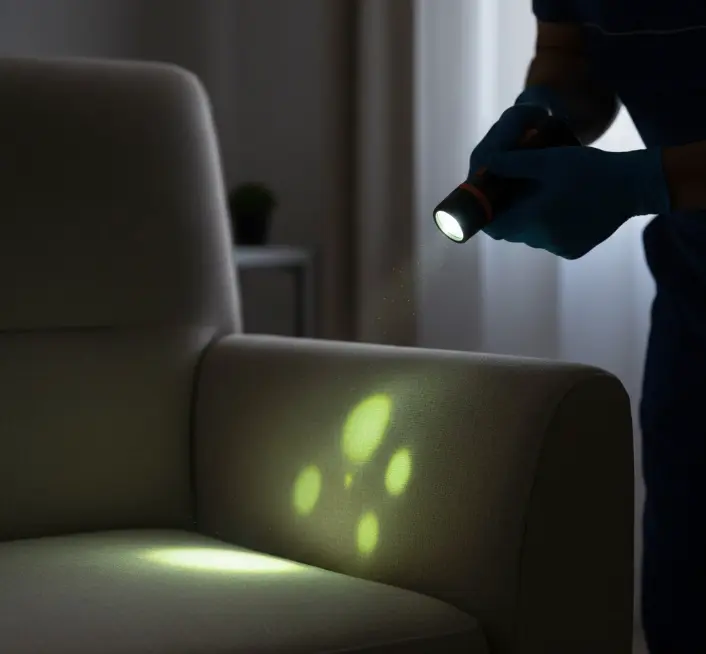
One of the most important tools in a professional's kit is also one of the least expected: an ultraviolet black light. Pet urine, blood, vomit, and other biological deposits are often invisible under normal lighting — but they glow bright under UV. Professionals scan every piece of furniture before cleaning to:
- Locate hidden biological stains that require enzyme pre-treatment
- Identify areas of repeated contamination that need extra dwell time
- Verify that stains have been fully removed after treatment
- Detect old cleaning product residue that could cause re-soiling
Without a UV light, a technician is working blind. Treating fabric with the wrong chemistry on an undetected biological stain can permanently set it into the fibers.
5. Spot and Stain Removal Tools
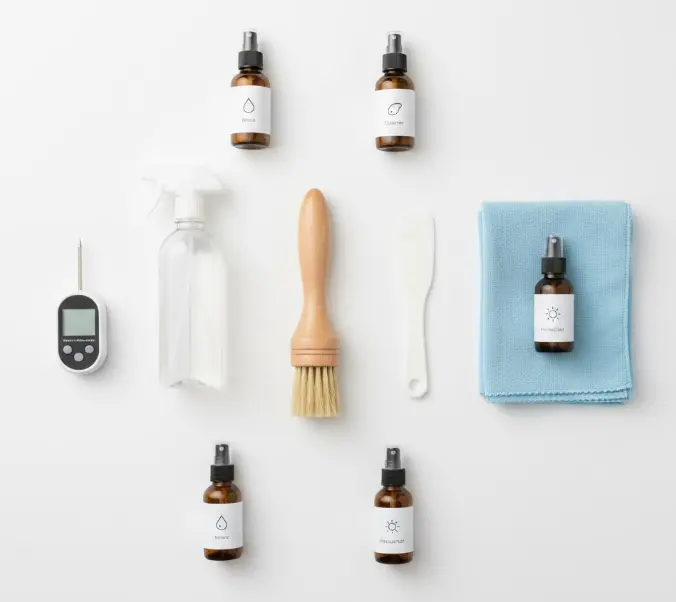
Not all stains respond to general cleaning. Professionals carry a dedicated spot treatment kit — a system of targeted tools and chemistry for specific stain types:
- Portable spot extractor: A small, handheld extraction unit designed to flush a stain repeatedly from different angles. Used for coffee, wine, ink, and other concentrated spills.
- Stain-specific solutions: Separate formulas for protein stains (blood, food), tannin stains (coffee, tea), oil-based stains (grease, makeup), and dye stains (ink, berries). Using the wrong formula can oxidize or set a stain permanently.
- Bone spatula and spoon: For gently lifting dried, hardened material from fabric without tearing fibers.
- Freeze spray: Applied to chewing gum or wax to make it brittle enough to lift cleanly.
"Most DIY stain removal fails not because of effort, but because of the wrong chemistry. A professional knows that what removes a red wine stain will set a blood stain permanently."
6. Moisture Meter
Over-wetting upholstery is one of the most common causes of damage after professional cleaning — when it's done by someone who doesn't measure moisture levels. A professional moisture meter reads the water content inside the fabric and foam padding in seconds. Technicians use it to:
- Confirm that extraction removed enough moisture for safe drying
- Identify pockets of moisture trapped in thick foam cushions
- Prevent mold growth by ensuring moisture levels drop below the safe threshold before leaving the job
- Document dry readings as proof of quality work for high-value furniture
In Seattle's humid climate, moisture management is especially critical. Without a moisture meter, there is no reliable way to confirm that furniture is dry enough to be safe.
7. Air Movers and Drying Equipment
The final phase of professional upholstery cleaning is controlled drying. Professionals use commercial-grade air movers — not standard household fans — to accelerate evaporation:
- Axial air movers: Move high volumes of air across fabric surfaces, cutting dry time from 6–12 hours down to 2–4 hours.
- Low-profile centrifugal air movers: Positioned under cushions and inside seam folds to dry areas that surface airflow can't reach.
- Dehumidifiers: Used in enclosed rooms to pull moisture from the air as it evaporates from the fabric, preventing re-absorption into the furniture.
Fast, complete drying prevents mold and mildew from developing in foam padding — a common problem when furniture stays damp for more than a day.
Professional Equipment vs. Rental Machines: A Direct Comparison
| Feature | Professional Equipment | Consumer / Rental Machine |
|---|---|---|
| Water temperature | 150–230°F (kills bacteria) | 80–120°F (limited sanitization) |
| Vacuum suction | 150–300" water lift | 40–80" water lift |
| Moisture left in fabric | Low — fast drying | High — slow drying, mold risk |
| Stain chemistry | Multiple targeted formulas | One general-purpose solution |
| Pre-UV inspection | Yes — every job | No |
| Moisture verification | Meter-confirmed before leaving | None |
| Fabric code compatibility | W, S, WS, X — all handled | W-code only (water-safe) |
Frequently Asked Questions About Professional Upholstery Equipment
Professional Equipment. Real Results — Seattle to Everett.
Fresh Furnish Cleaners uses commercial-grade hot water extractors, UV inspection, moisture meters, and fabric-specific chemistry on every job. Our technicians are IICRC-certified in Upholstery & Fabric Cleaning (UFT). We serve Bothell, Kirkland, Bellevue, Redmond, Everett, Shoreline, and surrounding King and Snohomish County communities.
Get a Free Upholstery Quote