How to Clean a Microfiber Couch
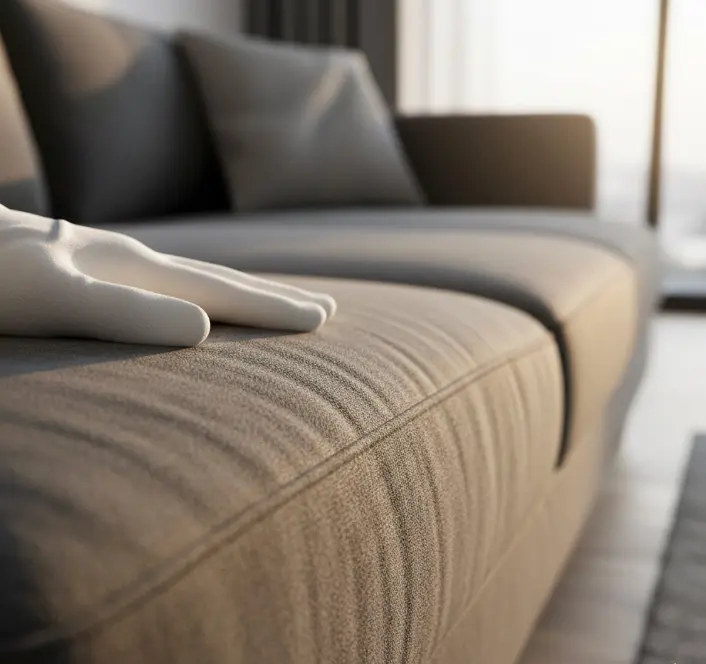
Microfiber is the single most popular upholstery fabric in American living rooms — and it is also the most commonly cleaned incorrectly. After cleaning thousands of microfiber couches across the Seattle metro area over the past decade, we have learned that microfiber is one of the most misunderstood fabrics in residential furniture. Homeowners love it for its softness, durability, and stain resistance, but those same qualities that make it attractive also create unique cleaning challenges that trip people up every single day.
The number one issue we see? Water damage on microfiber couches that were perfectly fine before the homeowner tried to clean them. It sounds counterintuitive, but using plain water on many microfiber sofas will leave permanent water marks, stiff patches, and discoloration that is far worse than the original stain. We have lost count of how many service calls we get from panicked customers who say, "I just tried to wipe a small spot off my couch and now it looks terrible everywhere I touched it."
This guide will teach you how to clean a microfiber couch the right way — starting with the one thing you absolutely must check before you touch your sofa with any liquid. We will cover the science behind microfiber fabric, the cleaning code system that determines your entire approach, step-by-step methods for every code type, stain-specific solutions, and the honest truth about what you can handle yourself versus what requires professional upholstery cleaning.
Why Trust This Guide?
This article was written by the cleaning team at The Oven & Carpet Cleaning Company, an IICRC-certified upholstery cleaning service operating in the greater Seattle and Eastside area. Our technicians have cleaned over 3,500 microfiber couches and sofas across every brand, grade, and cleaning code type.
- IICRC Certified — Institute of Inspection, Cleaning and Restoration Certification in upholstery and fabric cleaning
- 10+ years of hands-on experience with microfiber-specific cleaning and restoration
- Manufacturer-trained on cleaning protocols for major furniture brands including Ashley, Pottery Barn, Crate & Barrel, and La-Z-Boy
- Expertise in textile science, fiber chemistry, and solvent-based cleaning systems
Last reviewed and updated: August 31, 2026
What Is Microfiber? The Science Behind the Fabric
Before you can clean microfiber properly, it helps to understand what makes it fundamentally different from every other upholstery fabric. Microfiber is not just "soft polyester" — it is an engineered textile with properties that directly affect how it should be cleaned.
Split Fiber Technology
Microfiber is made from ultra-fine synthetic fibers — typically a blend of polyester (about 80%) and polyamide/nylon (about 20%). What makes it "micro" is the fiber diameter: each strand is approximately 1/100th the diameter of a human hair, or less than 1 denier in thickness. For reference, a single silk fiber is about 1.25 denier, and cotton is 1.5–2.0 denier.
During manufacturing, these fibers are split into even finer strands using a chemical or mechanical process. A single microfiber strand may be split into 16 or more sub-fibers. This splitting process is what creates the characteristic softness and the enormous surface area that gives microfiber its unique properties.
Why this matters for cleaning: The split fibers create millions of tiny pockets and channels within the fabric. These pockets trap dust, dirt, and liquids effectively — which is great for stain resistance on the surface, but it also means that once a liquid penetrates these channels, it can be extremely difficult to flush out without proper technique.
Density and Weave
High-quality microfiber upholstery fabric is woven at extremely high density — often 80,000 to 110,000 fibers per square inch. This density is what gives microfiber its suede-like texture and visual depth. When you run your hand across a microfiber couch and see the color change, that is the dense nap (the raised fiber surface) being pushed in different directions, reflecting light differently.
Microfiber quality varies dramatically between manufacturers. Budget microfiber may use unsplit or partially split fibers at lower density, resulting in fabric that pills, flattens, and stains more easily. Premium microfiber from brands like Ultrasuede uses fully split fibers at maximum density, creating fabric that rivals genuine suede in look and feel.
Why this matters for cleaning: The tight weave means liquids initially bead on the surface (which is why fresh spills are easy to wipe away). However, once liquid is forced into the weave — through rubbing, pressing, or over-saturation — the density works against you by trapping moisture deep in the fiber structure. This is exactly why aggressive scrubbing makes microfiber stains worse.
Why Microfiber Is Popular
- Durability: Microfiber resists pilling, fraying, and fading far better than natural fabrics. A well-maintained microfiber couch can last 7–15 years.
- Stain resistance: The tight weave causes most liquids to bead on the surface initially, giving you time to blot before penetration occurs.
- Hypoallergenic: The dense weave resists dust mites, pet dander, and pollen accumulation compared to open-weave fabrics.
- Softness: High-quality microfiber feels like suede or velvet at a fraction of the cost.
- Affordability: Microfiber couches typically cost 40–60% less than comparable leather or natural-fiber sofas.
- Pet-friendly: Microfiber resists pet claw snags and pet hair is relatively easy to remove with a lint roller or vacuum.
Microfiber Grades to Know
- Economy Grade (under $500 sofas): Uses partially split fibers at lower density. More prone to water marks, flattening, and pilling. Often labeled simply as "microfiber" or "microsuede" with no brand name. Cleaning is trickier because the weave is less uniform.
- Mid-Range Grade ($500–$1,500 sofas): Fully split fibers at moderate density. Good stain resistance and durability. Most common in brands like Ashley Furniture, IKEA (some lines), and Rooms To Go. Responds well to proper cleaning.
- Premium Grade ($1,500+ sofas): Maximum fiber density with advanced stain treatments applied at the factory. Found in Pottery Barn, Crate & Barrel, Ethan Allen, and similar brands. Often comes with branded performance fabric names. Extremely resilient when cleaned correctly.
- Ultrasuede / Alcantara: The highest-end microfiber, virtually identical to real suede. Requires specialized cleaning — always professional service recommended.
Understanding Your Microfiber Cleaning Code
This is the single most important section of this guide. Every piece of upholstered furniture manufactured for sale in the United States is required to carry a care tag with a cleaning code. For microfiber couches, this code is not a suggestion — it is the difference between a successful cleaning and permanent damage to your sofa. We cannot stress this enough: ignoring the cleaning code is the number one cause of DIY microfiber cleaning disasters we see in homes across Seattle.
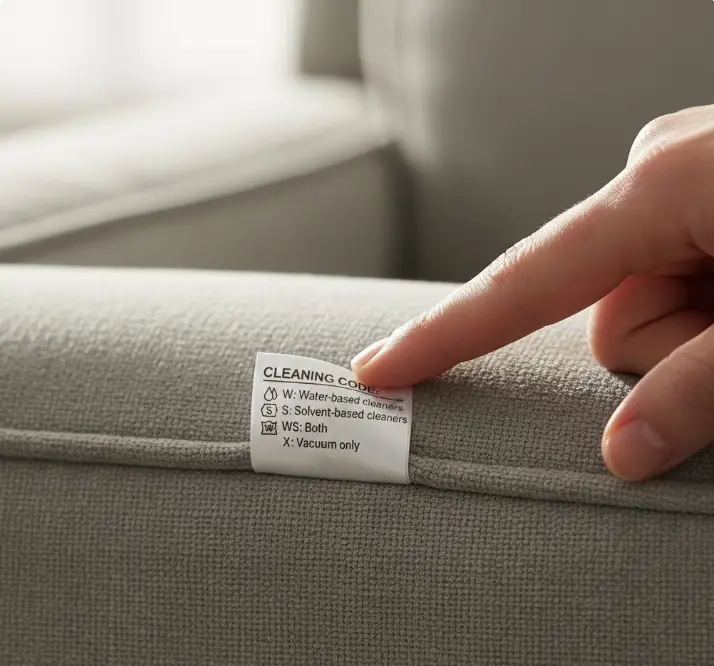
Where to Find the Cleaning Code Tag
The cleaning code tag is typically located in one of these places:
- Under the seat cushions, attached to the decking (the fabric platform the cushions sit on)
- On the underside of the couch frame, stapled or sewn to the dust cover
- On the back of the couch near the bottom
- Inside the zipper of a removable cushion cover
- On a tag hanging from the arm or back seam
If you cannot find the tag, it may have been removed or may have fallen off. In this case, do not guess. Contact the manufacturer with your couch model number, or call a professional cleaning service for a fabric assessment before applying any liquid. This is especially common with imported furniture and sofas recovered with fabrics that don't carry English-language care labels — a situation we encounter regularly in diverse communities like Kent and South King County, where we always start with a test-spot protocol before applying any method.
Water-Based
You can safely use water-based cleaning solutions on this fabric. This includes diluted dish soap, upholstery shampoo, and steam cleaning. This is the easiest code to clean at home.
Solvent-Only
Do NOT use water. This fabric requires dry-cleaning solvents only. Water will leave permanent marks, rings, and stiffness. Use rubbing alcohol (isopropyl) or a commercial dry-cleaning solvent.
Water or Solvent
You can safely use either water-based or solvent-based cleaners. This gives you the most flexibility. You can choose whichever method works best for the specific stain.
Professional Only
Do NOT use any liquid. Vacuum only. Any water or solvent application risks permanent damage. This fabric requires professional dry cleaning or specialized treatment.
The #1 Mistake: Using Water on S-Code Microfiber
This deserves its own section because it is, far and away, the most common and most damaging mistake homeowners make with microfiber couches. We see the aftermath of this mistake multiple times every week, and it is almost always the same story: a small spill or stain, a well-intentioned cleaning attempt with a damp cloth, and a result that looks far worse than the original problem.
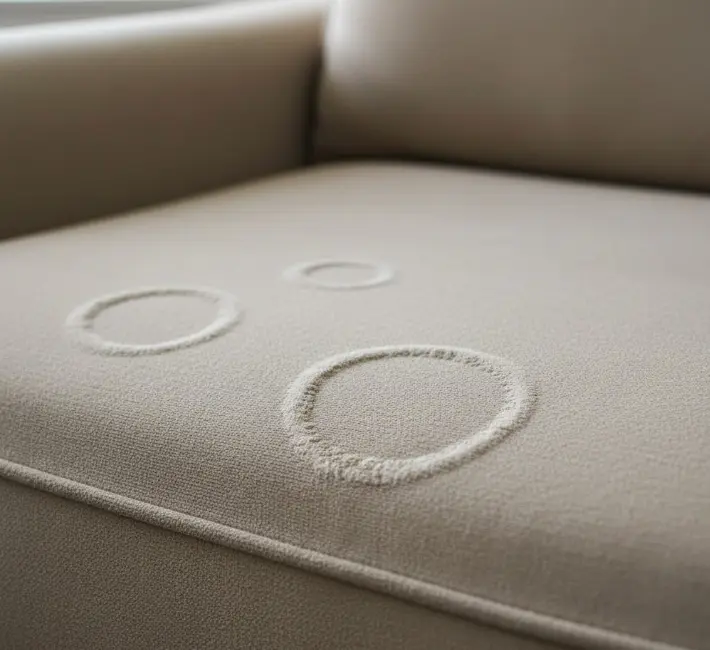
Why Water Damages S-Code Microfiber
To understand why water creates such havoc on S-code microfiber, you need to understand the chemistry at the fiber level:
Mineral Deposits
Tap water contains dissolved minerals (calcium, magnesium, iron). When water evaporates from the microfiber surface, these minerals are left behind in the fiber channels. They create visible white or chalky residue that alters the fabric color and cannot be brushed or vacuumed away. This is the primary cause of water "rings" and "tide marks."
Fiber Matting
Water causes the polyester and polyamide fibers in S-code microfiber to swell and then dry in a compressed, matted position. This destroys the raised nap that gives microfiber its soft, suede-like texture. The affected area feels stiff, looks flat, and reflects light differently than the surrounding fabric — creating a visible "spot" even after drying.
Edge Wicking
Water spreads outward through microfiber via capillary action, carrying dissolved dirt, body oils, and manufacturing residues toward the edges of the wet area. As the water evaporates from outside in, these contaminants concentrate at the drying edge — creating the distinctive dark ring pattern. This ring is actually a concentrated line of redistributed soil.
Why Solvents Work on S-Code Microfiber (and Water Does Not)
Solvents like isopropyl (rubbing) alcohol work beautifully on S-code microfiber for a simple chemical reason: they evaporate completely without leaving residue. Unlike water, rubbing alcohol does not contain dissolved minerals. It dissolves oils and stains effectively, then evaporates rapidly and cleanly, leaving no moisture behind to mat the fibers or deposit contaminants. This is the exact same principle used in professional dry cleaning — the solvents do the cleaning work and then disappear, leaving the fabric clean and undamaged.
How to Clean W-Code Microfiber: Step-by-Step Guide
If your microfiber couch has a W cleaning code, you are in luck — this is the most forgiving code for DIY cleaning. Water-based solutions are safe, and you have the widest range of cleaning options available. Here is our professional step-by-step method for whole-couch cleaning:
Vacuum Thoroughly First
Use an upholstery attachment with a soft brush to vacuum the entire couch. Get into all crevices, under cushions, and along seams. This removes loose dirt, crumbs, pet hair, and dust that would otherwise turn into muddy residue when wet. Skipping this step is like mopping a dirty floor without sweeping first. For ongoing care tips, see our guide on maintaining upholstery between professional cleanings.
Prepare Your Cleaning Solution
Mix a few drops (3–5) of clear liquid dish soap (like Dawn Free & Clear) into 1 gallon of warm (not hot) water. Stir gently to create light suds. Alternatively, you can use a commercial upholstery cleaner labeled safe for microfiber — Resolve Upholstery Cleaner and Folex are both effective. Avoid anything with bleach, ammonia, or heavy fragrance.
Spot Test First
Even with a W code, always test your solution on a hidden area — the back of the couch, the underside of a cushion, or the decking under the seat cushions. Apply a small amount, wait 5 minutes, then blot dry. Check for any color change, bleeding, or texture alteration. Proceed only if the test area looks unchanged.
Apply Solution with a Microfiber Cloth
Dip a clean white microfiber cloth into the solution and wring it out until it is just damp — not dripping. You want the cloth barely wet to the touch. Work in small sections (about 2 square feet at a time), wiping in one consistent direction following the nap of the fabric. Do not scrub in circles. Apply light, even pressure.
Rinse with a Clean Damp Cloth
Using a second clean microfiber cloth dampened with plain water (no soap), wipe over the same section to remove soap residue. Soap left in the fabric will attract dirt and make the couch get dirty faster. Again, wring the cloth well — you want minimal moisture.
Blot Excess Moisture
Press a dry microfiber cloth or clean white towel firmly against the cleaned area to absorb as much moisture as possible. Do not rub. Repeat with a fresh dry section of the towel until the fabric feels barely damp.
Speed Up Drying
Point a fan at the couch or open windows for airflow. The faster the couch dries, the less chance of water marks forming. Do not use a hair dryer on high heat — this can cause the synthetic fibers to warp. A cool or low setting is acceptable if you keep it moving and do not concentrate on one spot.
Brush the Nap When Dry
Once the couch is completely dry, use a soft-bristled brush (a clean mushroom brush, suede brush, or soft nail brush works perfectly) to gently brush the fabric in one direction. This restores the nap and eliminates any flat or stiff spots from the cleaning process. This final step makes a dramatic difference in the finished appearance.
How to Clean S-Code Microfiber: The Rubbing Alcohol Method
S-code microfiber requires a completely different approach. No water. No water-based cleaners. No steam. The cleaning agent of choice is isopropyl rubbing alcohol (91% or higher concentration is ideal — 70% works but dries slower). Here is the method our technicians recommend for homeowners tackling S-code microfiber themselves:
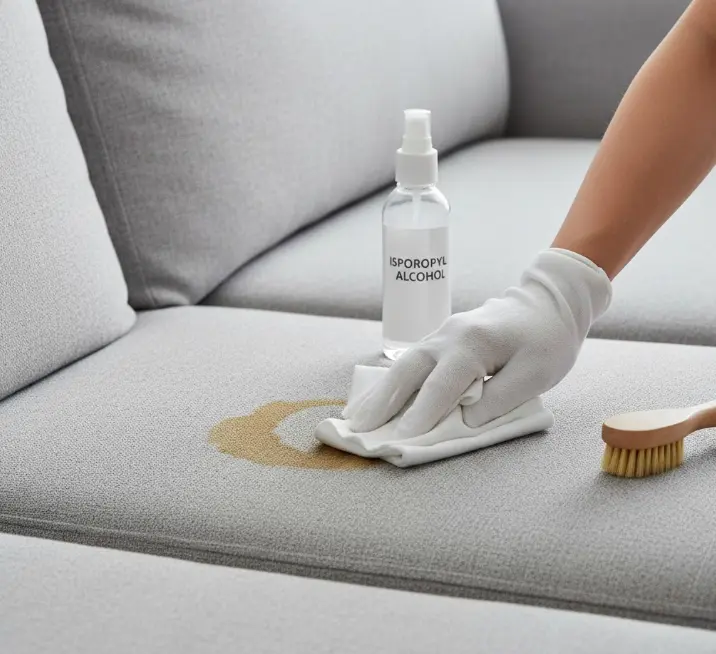
Vacuum the Couch Thoroughly
Just like with W-code, start by vacuuming the entire surface with an upholstery attachment. Remove all loose debris, crumbs, and dust. This prevents loose dirt from being dissolved by the alcohol and redistributed across the fabric.
Fill a Spray Bottle with Rubbing Alcohol
Pour 91% isopropyl rubbing alcohol into a clean spray bottle. Using a spray bottle gives you control over how much liquid you apply — you want a light, even mist, not a soaking drench. Label the bottle clearly so it does not get confused with anything else.
Spot Test in a Hidden Area
Spray a small amount on an inconspicuous spot and let it evaporate completely (5–10 minutes). Check for any color change or texture damage. While rubbing alcohol is safe for nearly all S-code microfiber, some dyes (especially red and bright orange) can be sensitive. Always test first.
Mist the Stained or Dirty Area
Spray the rubbing alcohol onto the area you want to clean until the fabric is damp but not saturated. For spot cleaning, target just the stain. For whole-couch cleaning, work one cushion or section at a time. The alcohol will dissolve body oils, food residue, and most common stains on contact.
Scrub Gently with a White Sponge or Cloth
Using a clean white sponge (not colored — dye transfer is a risk), gently scrub the dampened area in a circular motion. You should see dirt and grime lifting onto the sponge. Flip and rotate the sponge frequently to use clean surfaces. For heavily soiled areas, you may need to reapply alcohol and repeat.
Allow to Air Dry Completely
Rubbing alcohol evaporates much faster than water — your couch should be dry within 15–20 minutes depending on ventilation. Do not sit on or use the couch until it is completely dry. Keep the room ventilated during drying.
Brush the Nap to Restore Texture
Once dry, the fabric may feel slightly stiff. This is normal. Use a soft-bristled brush (a suede brush or a clean, dry scrub brush) to vigorously brush the entire cleaned area. Brush in one direction, then the opposite direction, then settle on the direction that looks best. This breaks up the compacted fibers and restores the soft, velvety feel. This step is essential — do not skip it.
How to Clean WS-Code Microfiber: The Dual-Method Approach
WS-code microfiber is the most versatile and forgiving cleaning code. You can use either water-based or solvent-based methods, which gives you the flexibility to choose the best approach for each specific stain type. Here is how we recommend using this flexibility strategically:
Use Water-Based Cleaning For:
- General whole-couch cleaning and freshening
- Water-soluble stains: coffee, tea, juice, soda, wine
- Food-based stains: ketchup, mustard, chocolate, baby food
- Dirt and mud (once dried and vacuumed first)
- Light surface grime and everyday soil
Use Solvent-Based Cleaning For:
- Oil and grease stains: butter, cooking oil, salad dressing
- Ink stains: ballpoint pen, marker (not permanent marker)
- Cosmetic stains: makeup, lipstick, foundation, sunscreen
- Body oil and hair product buildup on armrests and headrests
- Stubborn spots that did not respond to water-based cleaning
For WS-code microfiber, follow the same step-by-step methods described in the W-code and S-code sections above, choosing the appropriate method based on the stain type. When in doubt, start with the water-based method (it is gentler) and switch to the solvent method if the stain does not respond. Just make sure the fabric is completely dry between methods — never apply alcohol to a wet surface or water to a surface still damp with solvent.
Stain-Specific Removal Guide for Microfiber
Different stains require different chemistry to break them down. Here is our comprehensive guide to removing the most common stains from microfiber couches, with specific instructions for both W-code and S-code fabrics. For stains not listed here, or for WS-code couches, use the W-code method first and try the S-code method if the stain persists.
| Stain Type | W-Code Method | S-Code Method | Difficulty | Pro Needed? |
|---|---|---|---|---|
| Coffee / Tea | Blot immediately. Apply a solution of 1 tbsp white vinegar + 1 tbsp dish soap + 2 cups warm water. Dab with a white cloth, working from the outside in. Rinse with a damp cloth. Repeat as needed. | Blot immediately with a dry cloth. Spray rubbing alcohol onto a clean white cloth and dab the stain gently. Rotate cloth as stain transfers. Allow to dry and brush nap. | Easy | Usually no |
| Red Wine | Blot excess immediately. Apply salt to absorb. Then use 1 part hydrogen peroxide (3%) + 1 part dish soap on light fabrics. For dark fabrics, use club soda + white vinegar solution. See our full wine stain removal guide. | Blot immediately. Apply generous rubbing alcohol to a white cloth and dab repeatedly. The alcohol dissolves the anthocyanin pigments. Multiple applications may be needed for set stains. | Moderate | If dried/set |
| Ink (Ballpoint) | Apply rubbing alcohol to a cotton ball and dab (yes, even for W-code — alcohol is most effective on ink). Blot with a dry cloth. Repeat. Finish by cleaning the area with your water-based solution to remove any alcohol residue. | Spray rubbing alcohol directly onto the ink mark. Let it sit for 30 seconds, then blot with a white cloth. Do not rub — ink will spread. Repeat until the ink is fully transferred to the cloth. | Moderate | If large area |
| Grease / Oil | Sprinkle baking soda or cornstarch on the stain and let sit for 15–20 minutes to absorb oil. Vacuum. Then clean with dish soap solution (dish soap is a degreaser). Repeat if needed. | Apply baking soda or cornstarch to absorb. Vacuum. Then spray rubbing alcohol and scrub gently with a white sponge. Alcohol dissolves the remaining oil. May need 2–3 applications for cooking oil. | Moderate | If saturated |
| Chocolate | Let chocolate harden (use ice in a bag to speed this up). Scrape off hardened chocolate with a dull knife. Clean remaining stain with warm water + dish soap solution. Rinse and blot dry. | Harden with ice and scrape off. Spray rubbing alcohol on the remaining stain and dab with a white cloth. The cocoa butter component dissolves in alcohol. Brush nap when dry. | Easy | Rarely |
| Pet Stains (Urine) | Blot immediately. Apply enzyme-based pet stain remover (Nature's Miracle or similar). Let dwell for 10–15 minutes. Blot and rinse with damp cloth. Repeat. Enzyme cleaners break down uric acid crystals that cause odor. See our pet stain and odor removal guide. | Blot immediately. Apply rubbing alcohol to a cloth and blot the stain. For odor, lightly sprinkle baking soda over the area after cleaning, leave for 1 hour, then vacuum. Note: enzyme cleaners are water-based and NOT safe for S-code. Call a professional for severe pet stains on S-code microfiber. | Difficult | Recommended |
| Crayon | Place a clean white cloth over the crayon mark. Press a warm iron on low setting over the cloth for a few seconds — the wax transfers to the cloth. Then clean the remaining colored residue with dish soap solution. Test heat sensitivity first. | Apply WD-40 sparingly to a cloth and dab the crayon mark (test first). The petroleum solvents dissolve wax. Follow with rubbing alcohol to remove the WD-40 residue. Brush nap when dry. | Moderate | If large area |
How to Remove Water Marks from Microfiber
If you are reading this section, you have probably already made the mistake of getting water on your S-code microfiber couch. Do not panic — in most cases, water marks can be fixed. Here is our step-by-step repair method:
Water Mark Repair Method
- Confirm the fabric is completely dry. If the water mark is still damp, let it dry completely first. Using a fan to speed drying is fine. Attempting to fix a still-wet area will only spread the problem.
- Lightly mist the entire affected area with rubbing alcohol (91% isopropyl). Do not soak it — just dampen the surface evenly. The alcohol will re-dissolve the mineral deposits and redistributed soil that is causing the visible mark.
- Gently scrub the area with a clean white sponge or cloth using light circular motions. You are redistributing the surface contaminants evenly rather than concentrating them in a ring pattern.
- Feather the edges. This is the key technique professionals use: extend your cleaning slightly beyond the visible water mark boundary, gradually reducing pressure and alcohol application as you move outward. This prevents creating a new ring at the edge of your repair area.
- Allow to dry completely. With 91% alcohol, this should take only 10–15 minutes. Keep the room ventilated.
- Brush vigorously with a soft-bristled brush. Once dry, brush the entire area firmly in one direction, then the other. This is critical — brushing restores the nap that was flattened by the water and is often the step that makes the water mark disappear entirely.
- Evaluate and repeat if necessary. If a faint mark remains, repeat the process. Stubborn water marks (especially from hard water in areas with high mineral content) may require 2–3 treatments.
The Brushing Technique: Restoring Microfiber Nap
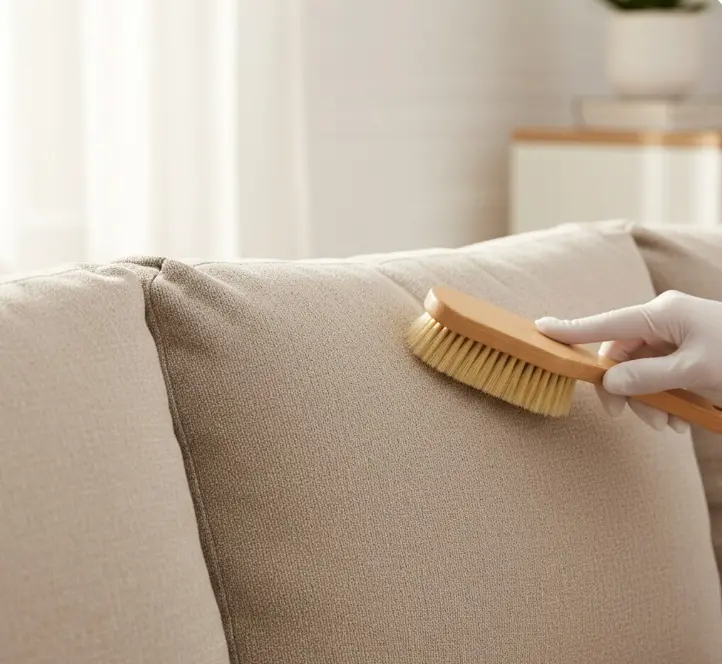
If we could give microfiber couch owners one single piece of advice, it would be this: brush your microfiber after every cleaning, and brush it regularly between cleanings. Brushing is the single most overlooked and most impactful maintenance step for microfiber upholstery. It is also free, takes 5 minutes, and can make a tired-looking couch look brand new.
Why Microfiber Gets Flat and Crunchy
Microfiber's suede-like texture comes from its raised nap — millions of tiny fiber tips standing upright. Over time, daily use compresses these fibers:
- Body weight and pressure flatten the nap in seating areas, creating visible "wear paths" that look like dark or shiny spots
- Body oils and sweat coat the fibers and cause them to stick together, creating stiff, matted patches (especially on armrests and headrests)
- Cleaning with liquid (even the correct method) can temporarily compress the nap as the fabric dries
- Pet nesting causes concentrated compression in favorite spots
How to Brush Microfiber Properly
Best Brushes to Use
- Suede brush (best option — specifically designed for napped fabrics, available at shoe stores for $5–10)
- Soft-bristled nail brush or mushroom brush (widely available and very effective)
- Clean dry scrub brush with natural or soft synthetic bristles
- New toothbrush for small areas and tight spots around seams and buttons
Brushes to Avoid
- Wire brushes or stiff metal bristles — these will tear and permanently damage microfiber
- Hard plastic bristle brushes — too aggressive, can create pilling
- Pet deshedding tools with blades — designed to cut, not brush
- Lint rollers — they remove surface lint but do not restore nap. Useful for pet hair but not a substitute for brushing
Brushing Technique
- Start with the couch completely dry. Never brush wet or damp microfiber — you will stretch and damage the fibers.
- Brush in one direction first using firm, consistent strokes. Work in sections (one cushion at a time).
- Then brush in the opposite direction. This loosens fibers that were matted in a single direction.
- Finish by brushing in the direction that looks best — this is usually the direction that gives the most uniform color appearance from your primary viewing angle.
- Pay extra attention to armrests, headrests, and seat fronts — these high-use areas flatten the fastest and benefit most from regular brushing.
- Brush regularly — we recommend once a week for heavily used couches, or at minimum after every cleaning.
Common Mistakes That Ruin Microfiber Couches
Over the years, we have seen every possible microfiber cleaning mistake. Here are the most common — and most damaging — errors, along with what you should do instead:
DO NOT
-
Use water on S-code microfiber
This is the #1 mistake. Water causes permanent rings, matting, and stiffness. Even "just a little bit" of water can cause visible damage on S-code fabric. Always check the tag first.
-
Scrub aggressively in circles
Aggressive scrubbing pushes stains deeper into the dense fiber structure, spreads the stain outward, and damages the nap permanently. You end up with a larger stain surrounded by a matted, flat zone.
-
Use bleach or ammonia-based cleaners
Bleach destroys the dye in microfiber, leaving permanent discolored patches. Ammonia can break down the polyamide (nylon) component of the fiber blend, weakening the fabric structurally.
-
Over-saturate the fabric with any liquid
Too much liquid — even the correct cleaning agent — can soak through to the cushion padding, causing mold, mildew, and odor problems. It also increases drying time, which increases the risk of water marks and rings.
-
Use colored cloths or sponges
Dye from colored cleaning cloths can transfer to wet microfiber, creating a secondary stain that is often harder to remove than the original problem.
-
Use a steam cleaner on S-code microfiber
Steam is water. It will cause the same damage as liquid water on S-code fabric. Steam cleaners are only appropriate for W-code and WS-code microfiber.
-
Skip the brushing step after cleaning
Cleaning without brushing leaves the microfiber nap compressed and stiff. The couch may look clean but will feel rough and have an uneven appearance that makes it look old and worn.
DO THIS INSTEAD
-
Always check the cleaning code tag first
Take 30 seconds to find and read the tag before applying any liquid. This single step prevents the vast majority of microfiber cleaning disasters. Photograph the tag and keep the image on your phone.
-
Blot gently or use light one-direction strokes
For stains, press and lift (blotting). For general cleaning, wipe in one direction following the nap. Light pressure is more effective than aggressive scrubbing because it keeps the stain at the surface level.
-
Use rubbing alcohol for S-code, mild soap for W-code
These are the two safe, proven cleaning agents for each code type. For eco-friendly alternatives, see our guide on eco-friendly upholstery cleaning in Seattle.
-
Use minimal liquid and blot dry immediately
Apply cleaning agents to your cloth rather than the fabric when possible. Use the least amount of liquid that gets the job done. Follow every wet step with a dry blotting step.
-
Always use white cloths and sponges
White microfiber cloths are ideal. White paper towels work in a pinch. White eliminates any risk of dye transfer and lets you see exactly how much soil or stain you are removing.
-
Use steam cleaners only on W-code or WS-code fabric
Steam can be very effective on water-safe microfiber. Keep the steam head moving, do not over-saturate, and allow thorough drying afterward.
-
Always brush the nap after cleaning and drying
This is the professional secret that transforms an average DIY cleaning into a result that looks like new. Spend 5 minutes brushing and you will not believe the difference.
When to Call a Professional for Microfiber Cleaning
We believe in honest advice: many microfiber cleaning tasks can be handled at home with the right knowledge and technique. However, there are specific situations where DIY cleaning is likely to fail or cause additional damage. Here is our honest assessment of when you need professional help:
Severe Water Damage
If large areas of your S-code microfiber have been water-damaged (from cleaning attempts, spills, or humidity), home rubbing alcohol treatment may not be sufficient. Professional solvent extraction equipment can treat the entire piece uniformly, restoring consistency across all surfaces. This requires specialized machinery that flushes and extracts solvent across the full cushion.
Unknown Cleaning Code
If the cleaning tag is missing, illegible, or was removed, do not experiment. A professional can identify the fabric type and appropriate cleaning method through fiber testing and experience. Using the wrong method on an unknown code is a 50/50 gamble with your furniture. We would rather identify it correctly for you than have you risk permanent damage.
Set-In or Old Stains
Stains that have been on the fabric for weeks or months have bonded with the fibers at a chemical level. Professional-grade solvents, enzyme treatments, and extraction equipment can break bonds that consumer products cannot. Our success rate on set-in stains is significantly higher than DIY methods because we can apply stronger products safely under controlled conditions.
Whole-Couch Refresh
If your entire microfiber couch looks tired, dingy, or uneven in color, spot cleaning individual areas will create a patchwork appearance. Professional cleaning treats the entire surface uniformly, restoring consistent color and texture across all cushions, arms, and back. This is especially important for sectional couch deep cleaning where visual consistency across multiple pieces matters.
Pet Odor Issues
Surface cleaning can remove visible pet stains, but urine and other biological contaminants often soak through to the cushion padding where they cannot be reached with surface cleaning. Professional extraction reaches deep into the cushion core, and enzyme treatments neutralize odor-causing bacteria at the source. Read more in our pet stain and odor removal guide.
Failed DIY Attempts
If you have already tried cleaning a stain and it did not work — or if your cleaning attempt made things worse — call a professional before trying anything else. Additional DIY products layered on top of previous failed attempts create a chemical cocktail that becomes increasingly difficult to reverse. The sooner you call, the better the odds.
Our Professional Microfiber Cleaning Process
When you hire The Oven & Carpet Cleaning Company for microfiber couch cleaning, our IICRC-certified technicians follow a systematic process tailored specifically to your couch's cleaning code, fabric grade, and condition. Here is exactly what happens:
Step 1: Inspection & Code Verification
We inspect the entire piece, identify the cleaning code, test colorfastness, assess fiber type and quality grade, and document all existing stains, wear patterns, and damage. We photograph the couch before work begins so you can see the transformation.
Step 2: Deep Vacuum & Dry Soil Removal
Using commercial-grade HEPA vacuum equipment, we remove all loose debris, dust, allergens, and dry soil from every surface, crevice, and seam. This step alone removes 70–80% of the contaminants in your couch and is essential for preventing muddy residue during wet cleaning.
Step 3: Pre-Treatment of Stains
Individual stains receive targeted pre-treatment with professional-grade spotting agents matched to the specific stain type. Protein stains, tannin stains, oil stains, and dye stains each require different chemistry. We dwell the pre-treatment for 5–10 minutes for maximum effectiveness.
Step 4: Full Surface Cleaning
For W/WS codes: controlled low-moisture hot water extraction using upholstery-specific tools. For S codes: professional solvent cleaning with commercial dry-cleaning equipment. Both methods clean the entire surface uniformly to prevent patchwork color variations.
Step 5: Speed Drying & Nap Restoration
We set up professional air movers to accelerate drying. Once the fabric reaches the appropriate moisture level, we perform a full nap restoration using professional grooming tools. This is the step that transforms a clean couch into a couch that looks brand new.
Step 6: Protection & Final Inspection
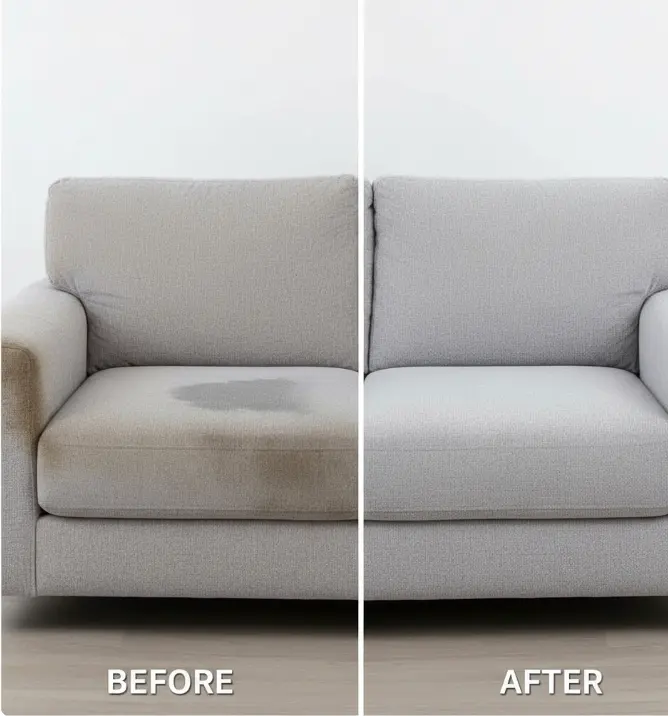
Optional fabric protectant application creates an invisible barrier that extends time between cleanings and makes future spills easier to manage. We do a final walkthrough with you, comparing before and after photos, and provide care recommendations specific to your couch.
Microfiber Care Between Professional Cleanings
Proper maintenance between professional cleanings keeps your microfiber couch looking great and extends the time between service appointments. Here is a maintenance schedule that works for most households. For a complete routine covering all fabric types, see our full guide on maintaining upholstery between cleanings.
Weekly
- Vacuum all surfaces with an upholstery attachment. Get into crevices and under cushions.
- Brush the nap on high-use areas (seat cushions, armrests) to prevent permanent compression.
- Rotate and flip removable cushions to distribute wear evenly.
- Remove pet hair with a lint roller or rubber glove (dampened rubber gloves work surprisingly well on microfiber).
Monthly
- Deep vacuum including the back, sides, and underside of the couch. Remove all cushions and vacuum the frame.
- Spot clean any fresh stains or marks using the appropriate method for your cleaning code.
- Wipe down armrests and headrests — these accumulate body oils fastest. Use rubbing alcohol for S-code or a damp cloth for W-code.
- Check for developing issues like pilling, seam loosening, or fabric wear.
Every 12–18 Months
- Professional deep cleaning to remove embedded soil, allergens, and accumulated body oils that home cleaning cannot reach.
- Fabric protectant reapplication to maintain stain resistance.
- Professional nap restoration to reverse compression from daily use.
- Learn more about scheduling in our guide on how often to clean your couch professionally.
Frequently Asked Questions About Microfiber Couch Cleaning
Look for the manufacturer's care tag, which is usually located under the seat cushions (on the decking), stapled to the underside of the frame, or sewn into a seam on the back or arm of the couch. The tag will have a single letter: W (water-safe), S (solvent-only), WS (either method), or X (professional/vacuum only). If you cannot find the tag, check the manufacturer's website with your couch model number, or contact the store where you purchased it. If you still cannot determine the code, call a professional for a fabric assessment before applying any liquid. Using the wrong method is the most common cause of permanent microfiber damage.
Only if your couch has a W or WS cleaning code. Steam is water vapor, so it carries the same risks as liquid water on S-code microfiber — water marks, fiber matting, and stiffness. On W-code and WS-code microfiber, steam cleaning can be very effective because the heat helps dissolve oils and sanitize the fabric. Use a handheld steam cleaner with an upholstery attachment, keep the steam head moving (do not hold it in one spot), and allow thorough drying afterward. Follow up by brushing the nap once dry.
This is one of the most common complaints we hear, and it almost always comes down to one of three causes: (1) Water was used on S-code fabric, creating water marks and rings. (2) The fabric was over-saturated, causing dirt and oils to redistribute and concentrate at drying edges. (3) The nap was not brushed after cleaning, leaving compressed fibers that reflect light differently and look discolored. The good news is that all three of these issues are usually fixable — water marks can be treated with rubbing alcohol, redistribution marks may improve with proper re-cleaning, and nap compression is fixed with brushing. If the damage is extensive, a professional cleaning can typically restore the couch.
Rubbing alcohol is safe for the vast majority of microfiber fabrics and colors. However, some dyes — particularly certain reds, bright oranges, and some purples — can be sensitive to alcohol. This is why we always recommend a spot test in a hidden area before treating the visible surface. Apply a small amount of alcohol to a concealed spot, wait for it to dry completely, and check for any color change. If the color holds, you are safe to proceed. If you notice any lightening or color bleeding, stop and consult a professional who can use a milder solvent.
For a typical household, we recommend professional microfiber cleaning every 12–18 months. If you have pets, young children, or your couch gets heavy daily use (more than 3–4 hours of sitting per day), every 6–12 months is more appropriate. If anyone in the household has allergies or asthma, annual cleaning helps remove embedded allergens that vacuuming alone cannot reach. Couches in formal living rooms that see light use may only need professional cleaning every 2 years. The key indicator is visual: when your couch starts looking dingy, flat, or uneven in color despite regular home maintenance, it is time for a professional refresh. See our detailed guide on how often to clean your couch professionally.
Only if the care tag specifically says the covers are machine washable. Many microfiber cushion covers have zippers for convenience, but the zipper is often intended for replacing the foam insert, not for removing the cover for washing. Machine washing microfiber can cause shrinkage (making the cover too tight to fit back over the cushion), color fading, and texture changes. If the tag does permit machine washing, use cold water, a gentle cycle, mild detergent (no bleach or fabric softener), and air dry — never put microfiber in the dryer, as heat can melt or warp the synthetic fibers. When in doubt, stick to spot cleaning or professional service.
Microfiber's dense, static-prone surface can attract and hold pet hair stubbornly. The most effective methods are: (1) A lint roller — use a fresh sheet frequently and work in one direction. (2) A dampened rubber glove — run your hand over the surface and pet hair will ball up for easy removal. (3) A squeegee or rubber-edged tool dragged across the surface. (4) Vacuuming with a motorized upholstery brush attachment. For persistent pet hair embedded in the nap, lightly mist the surface with water (W-code only) to reduce static, then vacuum. For S-code fabric, use the rubber glove or lint roller method. Regular brushing of the nap also helps release trapped pet hair.
Professional microfiber couch cleaning in the Seattle metro area typically costs between $100 and $250 for a standard 3-seat sofa, depending on the size, condition, cleaning code, and any add-on services like stain treatment or fabric protection. Sectionals, loveseats, and individual pieces are priced accordingly. S-code microfiber often costs slightly more than W-code because solvent cleaning requires specialized equipment and products. We provide free phone and email estimates — send us a photo of your couch and we will give you an exact quote. Call (425) 287-3619 or email info@ovencarpetcleaning.com. For detailed pricing information, see our upholstery cleaning cost guide for Seattle.
What Our Customers Say About Our Microfiber Cleaning
We have cleaned thousands of microfiber couches across the Seattle metro area. Here are some recent experiences from homeowners who trusted us with their furniture:
"I tried to clean a small juice stain off our gray microfiber sectional with a wet paper towel and ended up with a huge water mark that looked 10 times worse than the original stain. I was devastated — we had only bought the couch 6 months ago. The team from Oven & Carpet came out, explained that it was S-code fabric (I had no idea that was even a thing), and used their solvent system to treat the entire section. The water mark disappeared completely and the whole couch looked brand new. They even showed me how to use rubbing alcohol for future spot cleaning. Genuinely saved our couch."
"We have three kids and a dog, and our beige microfiber couch was looking absolutely disgusting after 4 years of daily abuse. The armrests were dark with body oil buildup, there were mystery stains on every cushion, and the whole thing looked flat and lifeless. The Oven & Carpet technician spent about two hours doing a full deep clean with stain pre-treatment and fabric protection. The transformation was unbelievable — my wife said it looked better than the day we bought it. The brushing they did at the end made such a huge difference in how soft and plush it felt. Worth every penny."
"Our two cats had been using the microfiber couch as their personal bed for years, and despite regular vacuuming, the smell and embedded fur were getting out of hand. I called Oven & Carpet for a deep clean. They were upfront that pet odor in cushion padding might need multiple treatments, which I appreciated — no false promises. After the first cleaning, 95% of the smell was gone and the couch looked amazing. They recommended fabric protectant to make future cat hair removal easier, and it has made a noticeable difference. We are now on a 6-month cleaning schedule with them."
"I manage a furnished rental property in Capitol Hill and the tenants left the microfiber couch looking terrible — ink stains, food stains, and what I think were makeup stains on the armrests. I was ready to throw it out and buy a new one. Called Oven & Carpet as a last resort before spending $1,200 on a replacement. Their technician removed every single stain and the couch looks completely refreshed. The cleaning cost a fraction of replacement. They also told me the couch was S-code and showed me how to add the cleaning information to my tenant welcome packet to prevent future damage. Incredibly knowledgeable and professional."
Professional Microfiber Couch Cleaning — Service Areas
If you've read this far and decided professional cleaning is the right call, here are the areas we serve across the Seattle metro and South King County:
Couch Cleaning in Kent, WA
East Hill, West Hill, Panther Lake, Downtown Kent. Specializing in S-code microfiber and diverse household fabrics — including imported pieces without English care tags.
Couch Cleaning in Renton, WA
Kennydale, Highlands, Talbot Hill, The Landing, South Renton. Hot-water extraction with air mover drying adjusted for Lake Washington humidity.
Couch Cleaning in Federal Way, WA
Twin Lakes, Steel Lake, Dash Point, West Campus, Marine Hills. Same pricing, same process, no travel surcharge from Kent or Renton jobs.
Professional Microfiber Couch Cleaning in Seattle & Eastside
Whether your microfiber couch needs a whole-couch deep clean, stubborn stain removal, water mark repair, or a maintenance refresh, The Oven & Carpet Cleaning Company has the expertise and equipment to make it look like new. Our IICRC-certified technicians specialize in microfiber upholstery cleaning for all codes — W, S, WS, and X — using fabric-safe methods that protect your investment.
IICRC Certified
Trained and certified in professional upholstery and fabric cleaning
Free Estimates
Send us a photo for a no-obligation quote within minutes
Satisfaction Guaranteed
If you are not happy with the results, we will re-clean at no charge
Serving Seattle, Bellevue, Kirkland, Redmond, Bothell, Woodinville, Lynnwood, Edmonds, Shoreline, Tacoma, Renton, Kent, Federal Way, and surrounding areas
