Remove Sharpie from Upholstery
How Sharpie Ink Actually Behaves on Fabric — and Why That Matters
A Sharpie is an alcohol-based permanent marker. The ink is made of a colorant (usually a xanthene or triarylmethane dye), an alcohol solvent carrier (typically ethanol or isopropyl alcohol), and a resin binder that holds the dye to the surface once the solvent evaporates.
When Sharpie touches fabric, here's what happens in the first few seconds: the alcohol carrier rapidly wicks into the fiber, carrying the dye with it. The alcohol evaporates almost immediately, and the resin binder begins hardening around the dye molecules, anchoring them to the fiber structure. Within minutes, the dye has bonded to the fiber. This is what "permanent" actually means — not that nothing can dissolve it, but that water alone won't, and the bond becomes stronger as time passes.
Understanding this tells you exactly why certain approaches work and others don't:
- Water doesn't work because the dye-resin bond is not water-soluble
- Dish soap doesn't work because surfactants break up oils, not alcohol-resin bonds
- Baking soda doesn't work because it doesn't dissolve or displace the dye at all
- Isopropyl alcohol works because it re-solubilizes the resin binder, freeing the dye molecule so it can be lifted from the fiber
The key word in that last point is "re-solubilizes." You're essentially re-dissolving the original solvent carrier and using fresh blotting to pull the dye out rather than letting it re-deposit. This is why technique matters as much as chemistry — you can have the right product and still spread the stain badly by using it wrong.
The Core Method: Isopropyl Alcohol
For most upholstery fabrics, 91% or higher isopropyl alcohol is your best tool. Higher concentration is better — 70% isopropyl contains 30% water, which can leave watermarks on some fabrics and slows the process. Get 91% or 99% from a drugstore or hardware store.
Step-by-Step Removal Process
- Act quickly, but don't panic. Fresh marks are easier to remove, but even old ones are often treatable. Don't immediately grab the nearest liquid and douse the stain — that usually spreads it.
- Test first on a hidden area. Dampen a white cloth with isopropyl alcohol and press it against the back of a cushion or under the skirt. Wait 30 seconds and check for color transfer onto the cloth. If the fabric's dye bleeds onto your cloth, stop and call a professional — attempting this on a dye-bleeding fabric will make things much worse.
- Place a clean white cloth underneath the stained area if possible (for cushion covers you can remove). This catches ink pushed through the fabric from behind.
- Dampen a clean white cloth with isopropyl alcohol. Don't pour directly onto the fabric — the goal is controlled application, not flooding the area. You want the cloth damp, not dripping.
- Blot from the outside edge of the mark inward. This is critical. Working from the outside in keeps you from spreading the dissolved ink into a larger area. Press the cloth against the stain and lift — don't rub back and forth, which spreads the dye laterally.
- Move to a clean section of your cloth after each blot. You're picking up dissolved ink on the cloth. If you keep using a section that already has ink on it, you're redepositing dye back into the fabric.
- Repeat, working from the outside edge inward. You'll see the mark lighten with each pass. Most fresh marks on microfiber or polyester will be mostly gone within 10-15 passes.
- Once the mark is as light as it's going to get, blot the area with a clean damp cloth (plain water) to remove residual alcohol. Then blot dry with a dry cloth.
- Allow to dry completely before evaluating results. Some faint discoloration visible while wet may be gone once dry. Some marks look lighter while wet and then look darker again as they dry — this usually means there's still ink in the fiber and you need another pass.
The Single Most Common Mistake:
Rubbing instead of blotting. When you rub, you push the dissolved ink sideways into fibers that weren't originally stained, and you also push it deeper into the fabric. You end up with a larger, more diffuse stain that's harder to remove than the original. Blot — press and lift, press and lift.
How Different Fabrics Respond
Microfiber — Best Results
Microfiber is a synthetic polyester or polyester/nylon blend with tightly woven fine fibers. Isopropyl alcohol works well on microfiber because the synthetic fiber doesn't absorb the dye as deeply as natural fibers, and the tight weave means the ink doesn't spread far from the application point.
Most Sharpie marks on microfiber that haven't been there more than a few days respond well to the isopropyl method. Even older marks often lighten significantly, though they may not disappear entirely.
Caution: Some microfiber couches have a water code of S or X — meaning they're solvent-clean only or vacuum-only. Check the tag before you start. For S-code microfiber, isopropyl alcohol is actually appropriate (it's a solvent), but be extra careful to not over-wet the area.
Polyester Blends — Good Results
Polyester and polyester blend fabrics respond similarly to microfiber. The synthetic fiber structure doesn't bond as strongly with the dye, and the isopropyl method works reliably on fresh marks. Older marks (weeks to months) may take more passes and may not come out completely.
If the fabric has a pattern with multiple colors, test for colorfastness in each color area separately — dye stability varies between colors even in the same fabric, and some dark or bright dyes are more prone to bleeding than neutral tones.
Cotton — More Difficult
Natural cotton fibers absorb the Sharpie dye more deeply than synthetics. The dye-fiber bond is stronger on cotton, and the capillary structure of the fiber means the ink spreads further from the initial mark. Isopropyl alcohol will still help — it's the right approach — but results are less predictable and more labor-intensive.
Fresh cotton marks have the best chance. A 10-minute-old Sharpie mark on cotton can often be substantially reduced. A mark that's been there for a week on cotton may only lighten partially no matter what you do.
Cotton is also more prone to water marking, so if you're using isopropyl alcohol (which contains some water even at high concentrations), feather the edges of your treatment area with a damp cloth before it dries to avoid a distinct ring.
Leather — Different Approach Required
Leather requires a different approach than fabric. Do not use high-concentration isopropyl alcohol on finished leather — it strips the protective finish and can cause discoloration or cracking.
For leather, use a product specifically formulated for leather ink removal, or a small amount of rubbing alcohol diluted with water (1:3 ratio) applied very sparingly with a cotton swab directly on the mark only. Follow immediately with a leather conditioner.
For unfinished or aniline leather (these tend to be soft and buttery), do not attempt DIY ink removal — the dye will spread deeply and treatment without professional products will likely make it permanent. Call a leather specialist.
Velvet — High Risk
Velvet has a dense, directional pile that traps the Sharpie dye in the individual pile fibers. Even if you can get some of the dye out with isopropyl alcohol, the alcohol and the mechanical blotting action can crush or mat the pile, leaving a texture mark even if the ink mark is gone.
For velvet, call a professional upholstery cleaner with experience in delicate pile fabrics. Attempting this yourself with a cotton cloth and isopropyl risks permanent pile damage that may be worse than the original mark.
Silk and S-Code Delicates — Professional Only
Silk and other delicate natural fibers are highly vulnerable to color bleeding and texture damage. The dye in silk upholstery is particularly sensitive — even the solvents that work on synthetic fabrics can cause dye migration or fiber damage on silk.
Do not attempt Sharpie removal on silk furniture at home. The risk of causing more damage than the original mark is too high. A conservator or professional upholstery cleaner experienced with delicate fabrics is the right call here.
What Doesn't Work and Why
Water Alone
Water cannot break the alcohol-resin bond that holds Sharpie dye to fabric fibers. All water does is spread the mark by carrying dissolved surface dye outward. You'll end up with a larger, more diffuse stain. If you've already tried water and spread the mark, let it dry completely before trying isopropyl alcohol — working on a wet area makes it harder to see what you're doing and increases the risk of further spreading.
Dish Soap
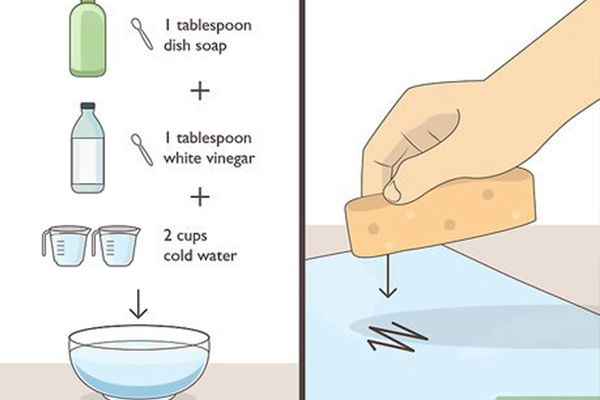
Dish soap is designed to break up oil and grease through surfactant action. Sharpie ink is not oil-based — the dye is carried by alcohol and bound with a resin. Surfactants can't break that bond. Dish soap may do nothing at all, or it may leave a soap residue that complicates subsequent attempts with the right product.
Baking Soda
Baking soda is sodium bicarbonate — an alkaline powder useful for odor absorption and neutralizing some acidic compounds. It has no mechanism for removing dye. The Sharpie dye is chemically bonded to the fiber, not just sitting on the surface waiting to be absorbed. Sprinkling baking soda on a Sharpie mark will not affect it. Some home remedy websites recommend baking soda-and-water paste, which has the same problem with the addition of spreading the mark with water.
Hairspray — The Outdated Myth
You'll find hairspray recommended constantly online as a Sharpie remover. This advice dates from an era when most hairsprays were heavy-alcohol formulas — they worked because the high alcohol content dissolved the ink, not because of anything unique to hairspray.
Modern hairsprays have almost universally switched to polymer-based formulas with little to no alcohol. They don't work on Sharpie marks. Using them leaves a sticky polymer residue on your fabric that then needs to be cleaned off separately. If you happen to have an older, alcohol-heavy formula hairspray, it might work — but you'd do better using straight isopropyl alcohol, which you can get for less money and which works more reliably.
When the Mark Is Not Removable
It's worth being honest about this: some Sharpie marks on fabric furniture cannot be fully removed. The factors that make removal impossible or impractical:
Deep-Set in Natural Fiber
A Sharpie mark that's been on a cotton or linen fabric for months has had time for the dye-fiber bond to fully strengthen. Professional-grade solvent spotters (stronger than consumer products) can still lighten it substantially, but "substantially lighter" is not the same as "gone." Set realistic expectations.
Large Coverage Area
A large mark — anything bigger than a few square inches — that covers patterned fabric is difficult to remove without the treatment itself being visible. The area you treat will have a different sheen or texture from the surrounding untreated fabric. On a solid-colored couch this is less of an issue, but on patterned upholstery it can be as noticeable as the original mark.
On Velvet Pile
As mentioned above, the dense directional pile of velvet traps the dye in individual fibers and makes complete removal without damaging the pile nearly impossible. Professional solvent cleaning by someone experienced with velvet can lighten the mark and minimize pile disturbance, but this is one of the more difficult cases even for professionals.
A Practical Note on Expectations:
If isopropyl alcohol lightens a mark 70% but can't get the last 30%, a professional cleaner with Prochem or Chemspec solvent-based spotters may be able to get another 20% — but not necessarily 100%. It's worth a call to get an honest assessment before spending money on a service that may not achieve what you're hoping for. Any reputable professional will tell you upfront what they think is achievable based on the fabric type, age of the stain, and size of the mark.
Professional Treatment Options
When DIY approaches aren't working or the fabric is too delicate to risk, professional upholstery cleaners have access to stronger chemistry:
Solvent-Based Professional Spotters
Products like Prochem Ink & Dye Remover, Chemspec InkOut, and similar professional-grade solvent spotters contain alcohol blends with higher solvency than consumer isopropyl alcohol. They also often contain additional agents that help prevent the dissolved dye from redepositing in adjacent fibers during treatment.
These are not available at regular retailers — they're sold through cleaning supply distributors. The concentration and formulation are genuinely different from what you can buy at a drugstore, which is why professional results on stubborn marks often exceed what's achievable at home.
Extraction After Treatment
A professional cleaner doesn't just apply solvent and blot — they follow treatment with hot water extraction or solvent extraction to remove the dissolved dye and solvent residue from the fabric. This final extraction step is part of why professional results differ from home results. The dissolved dye is physically pulled out of the fabric rather than left in the fiber as the treatment dries.
This matters particularly for deeper marks where the dye has penetrated into the fabric structure — extraction pulls material out from depth in a way that surface blotting cannot.
Fresh Furnish Cleaners
We handle permanent marker removal regularly, including Sharpie on microfiber, polyester, cotton blends, and leather. We'll give you an honest assessment on the phone — if you describe the fabric type, the size of the mark, and roughly how old it is, we can tell you what's realistically possible. Serving Seattle, Bellevue, and the Eastside.
Some marks we can get out completely. Some we can reduce 70-80% but not fully eliminate. We'll tell you which situation you're likely in before you pay for anything.
Professional Stain Removal Pricing in Seattle
Fresh Furnish Cleaners serves Seattle, Bellevue, and the broader Eastside. Permanent marker and stain removal pricing depends on fabric type, the size of the mark, and whether full extraction is needed after treatment. Microfiber and polyester typically respond faster than natural fibers, which affects both time and cost.
| Service | Price Range |
|---|---|
| Single spot treatment — small mark, synthetic fabric | $45–$65 |
| Single spot treatment — larger mark or natural fiber | $75–$110 |
| Multiple stains on the same piece | $95–$150 |
| Full upholstery cleaning with stain treatment included | $150–$250 |
| On-site assessment (credited toward service if booked) | Free |
Prevention
The best approach to Sharpie marks on furniture is reducing the chance they happen in the first place:
- Designate a writing or art surface — a clipboard, a dedicated table, anywhere that isn't upholstered — for any activity involving permanent markers or pens.
- Use washable markers for children's art projects. They're not as vivid, but they wash out of fabric with water.
- Store Sharpies with the cap on in a container rather than loose in a drawer. A loose Sharpie with its cap off, sitting on a cushion, is a common scenario that ends badly.
- Keep fabric protector applied to upholstered furniture. Scotchgard and similar products don't make fabric impervious, but they buy you critical seconds when a fresh mark happens — the ink absorbs more slowly, giving you a better chance to blot before it sets.
If It Just Happened:
- Don't rub — blot only, with a dry cloth first
- Don't pour water on it
- Get 91% isopropyl alcohol from any drugstore — this is probably the fastest productive step you can take
- Work from outside in, with a clean section of cloth for each blot
- Let it dry fully before evaluating results
- If the fabric is silk, velvet, or you're not sure of the fabric code, stop and call a professional rather than risking more damage
