Rug Cleaning in Everett, WA
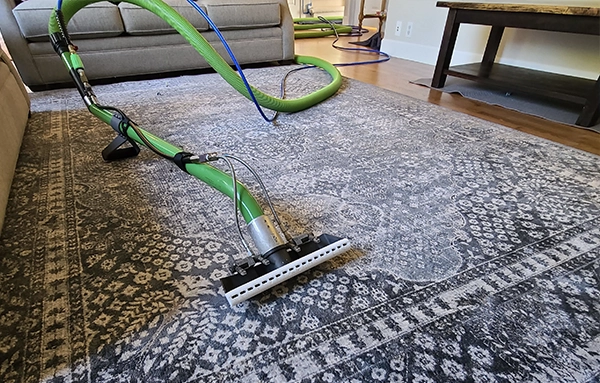
Rug Cleaning in Everett: Why the Local Environment Matters
Everett sits on Port Gardner Bay at the mouth of the Snohomish River — it's a port city in a real, functional sense. The Naval Station is there. The Port of Everett handles commercial shipping. The Boeing Everett factory, the largest building by volume in the world, employs tens of thousands of workers in the city.
This matters for rug cleaning because the environment in Everett is slightly different from inland Seattle or the Eastside suburbs in ways that affect textile care:
- Humidity is consistently high. The combination of the bay, the Snohomish River estuary, and the same Pacific Northwest rain patterns as Seattle means Everett is a damp place for most of the year. Rugs absorb airborne moisture. Damp rugs take longer to dry after cleaning. In Everett, this isn't a seasonal concern — it applies nine months out of twelve.
- The air near the port and waterfront carries salt. Salt air doesn't damage rug fibers the way it damages metal, but it does increase the moisture content of the air and can affect how natural dyes in older wool rugs behave over time.
- Everett has genuine older housing. The city grew during the logging and paper mill era — there are homes here from the 1910s through 1960s that are still occupied and well-maintained. Families who have been in Everett for generations often have older wool rugs, some of them hand-knotted oriental pieces, that have real value and require careful handling.
None of these factors make rug cleaning harder in principle — they just make it important to work with someone who knows the local conditions and won't use a one-size approach on everything.
The Rugs You're Most Likely to Have in Everett
Older Wool Family Rugs
Many Everett households — particularly families in the older neighborhoods like Downtown, Mukilteo border area, Silver Lake, and Cascade View — have wool rugs that have been in the family for decades. Some are machine-made wool from mid-century American manufacturers. Some are hand-knotted rugs brought from elsewhere. These are often the rugs people are most concerned about cleaning, and rightly so — they have sentimental and sometimes significant monetary value.
What Wool Rugs Need
The Chemistry Requirements
Wool is a protein fiber. Its natural scale structure — the overlapping scales on each fiber that give wool its warmth and resilience — reacts badly to alkaline cleaners and hot water. High pH causes the scales to open and physically interlock, which is the process of felting. Once a wool rug felts, the damage is permanent. The pile compacts, the texture changes, and the rug may shrink.
Proper wool cleaning uses pH-neutral solutions (pH 5-7) and temperatures that won't trigger the scale-interlocking response. This is not how most consumer carpet products are formulated — most are alkaline, because alkaline chemistry works well on synthetic fiber and most carpet in the U.S. is synthetic. Using standard carpet cleaner on wool is a common way to damage it.
Machine Washing is Not an Option
This comes up often with older wool rugs: people ask whether the rug can just be taken to a laundromat or put in a home washing machine. The answer is no. Mechanical agitation in a washing machine felts wool reliably and predictably. The drum's tumbling action does exactly what felting requires — wet wool fibers being mechanically worked against each other until the scales interlock permanently.
A wool rug that's been machine-washed may come out smaller, thicker, stiffer, and with a changed texture — and all of that is permanent. Even "cold delicate" cycle in a home washer is not appropriate for a wool rug of any significant size.
Machine-Made Synthetic Rugs
The other common category is modern machine-made synthetic rugs — the polypropylene, nylon, and polyester rugs that come from home goods stores. These are in many Everett homes alongside or instead of older wool pieces.
Synthetic rugs are much more forgiving than wool. They don't shrink, they tolerate a wider pH range, and they dry faster. But they still need proper extraction to avoid over-wetting the backing, and the latex or rubber backing common on many synthetic area rugs can delaminate if repeatedly over-wetted or dried with excessive heat.
The Most Practical Advice for Synthetic Rugs:
Vacuum frequently — at least once a week in high-traffic areas. Synthetic fibers capture dry soil effectively, and that soil acts like sandpaper between the fibers with every footstep. A synthetic rug that's vacuumed regularly and spot-treated when spills happen will last significantly longer than one that isn't, and won't need professional cleaning as often. When you do have it professionally cleaned, make sure the cleaner extracts thoroughly so the backing doesn't stay wet.
Hand-Knotted Oriental Rugs
Some Everett families — particularly those with longer local history and those who've moved here from elsewhere in the country or internationally — have hand-knotted oriental or Persian rugs. These can range from relatively recent Indian or Pakistani production pieces to genuine antique Turkish, Persian, or Caucasian rugs with real collector value.
Hand-knotted oriental rugs require:
- Dye bleeding testing before any cleaning — natural and early-synthetic dyes used in traditional oriental rug production vary enormously in their stability when wet. Reds from certain rug-producing regions are notorious for running. This must be checked before the rug is wetted.
- Full immersion washing for deeply soiled pieces — proper plant-based washing gets a hand-knotted rug genuinely clean in a way that in-home surface extraction cannot. The rug is submerged, gently agitated, thoroughly rinsed, and dried in controlled conditions.
- Controlled drying — in Everett's humidity, drying time matters. A freshly washed oriental rug needs to dry in conditions where the air can carry the moisture away. In a plant environment, this means hanging the rug vertically with good airflow and dehumidification.
Everett's Neighborhoods and Rug Care Considerations
| Neighborhood | Housing Character | Common Rug Situations | Specific Considerations |
|---|---|---|---|
| Downtown Everett | Mix of older commercial buildings converted to lofts and apartments, some historic single-family homes | Both modern synthetic area rugs and older wool pieces in established homes | Proximity to port means higher ambient humidity; good ventilation during drying important |
| Mukilteo border area | Mix of 1960s-80s single-family homes, some newer development | Machine-made synthetic and wool area rugs, some hand-knotted pieces in established households | Closer to water — salt air effect more noticeable; ensure complete drying |
| Silver Lake | Residential neighborhood, mix of post-war and later-construction homes | Family-use rugs, synthetic and wool mix; some older family heirlooms | Lakeside proximity adds to ambient moisture; mold in backing is a real risk if drying is incomplete |
| Cascade View / Pinehurst | Established residential neighborhoods, some older stock from 1940s-60s | More likely to find older wool rugs and family heirlooms in established households | Older homes may have original hardwood floors — critical that rugs dry before returning to wood floors |
How Often Should Rugs Be Cleaned?
The right answer depends on actual use, not a fixed schedule. But as general guidance:
Frequency by Use
- High-traffic areas (entryway, main hallway, family room): every 12-18 months. Everett's muddy seasons make fall cleaning after summer or spring cleaning before fall practical choices.
- Low-traffic areas (bedroom, formal rooms): every 2-3 years, or when visible soil accumulates
- Any rug with odor or visible staining: as soon as practical — some stains become permanent with time, and odor sources get worse, not better, if left alone
- Homes with pets: every 6-12 months, more frequently if there are urine accidents
Signs Your Rug Needs Cleaning Now
- Visible traffic-lane darkening — the path where people walk is noticeably darker than less-used areas
- The rug looks dull or gray compared to how it looked when new, even after vacuuming
- You can smell the rug — mustiness, pet odor, or just a general "dirty" smell
- Allergy symptoms in household members that improve when time is spent away from home
- Stains that have been there for weeks or months and have set into the fiber
- The rug feels gritty or stiff underfoot — a sign of embedded dry soil
In-Home Cleaning vs. Drop-Off Plant Washing in Everett
In-Home Cleaning
Right for: Synthetic rugs with moderate soil, large rugs that are difficult to transport, lightly soiled wool rugs, and situations where you need minimal disruption.
In-home cleaning in Everett's climate requires active drying with air movers after the cleaning is done. The ambient humidity means that leaving a rug to air-dry naturally takes too long — more than a few hours in a damp state risks mold in the backing.
Ask any cleaner you hire: Do you use air movers after cleaning? If the answer is no or "only if needed," that's a problem for Everett conditions specifically.
Drop-Off Plant Washing
Right for: Hand-knotted oriental and Persian rugs, heavily soiled wool rugs, any rug with significant pet contamination, and rugs where a genuinely thorough clean is needed rather than surface maintenance.
Plant washing involves pre-dusting the rug before wetting (this removes an enormous amount of embedded dry soil that water-based cleaning can't extract), full immersion washing, thorough rinsing, and drying in a controlled environment. The result is meaningfully cleaner than what in-home surface extraction achieves on a rug with significant soil accumulation.
Turnaround is typically 3-7 days. Fresh Furnish Cleaners offers free pick-up and delivery throughout Everett and Snohomish County — you don't need to transport the rug yourself.
The Drying Problem in Everett
Drying is worth addressing specifically for Everett because the local humidity makes it a genuine concern, not just a theoretical one.
What Happens If a Rug Doesn't Dry Fast Enough
Mold and mildew begin growing in wet rug backing within 24-48 hours. In Everett's ambient humidity, a rug that's been cleaned and left to air-dry without active drying equipment may stay in this risk window for an uncomfortably long time. Once mold establishes in the jute or cotton backing of a rug, treating it is difficult and the rug may need to be discarded.
A rug with mold in the backing often smells fine on the surface — the smell becomes noticeable when the rug is moved or vacuumed. By then the mold is well established.
Wood Floor Damage
A wet rug left on a hardwood floor transfers dye and moisture into the wood as it dries. The wicking action pulls the rug's dye into the floor finish and can penetrate the wood itself. This staining is often permanent — refinishing the floor removes it, but that's an expensive remedy for an avoidable problem.
Many Everett homes from the 1940s-70s have original hardwood floors. These floors are worth protecting. Allow any cleaned rug to dry fully before returning it to the wood surface.
How to Dry Properly
After in-home cleaning, the cleaner should set up air movers (not just one fan — actual industrial air-moving equipment) directed at the rug and leave them in place for several hours. If you have a dehumidifier, run it in the same room.
Test for dryness by pressing a dry white cloth firmly against the back of the rug. If the cloth picks up any moisture, the rug isn't ready to lay back on the floor. For large rugs, check multiple areas — corners and center.
What to Ask Before Hiring a Rug Cleaner in Everett
The rug cleaning market includes everyone from carpet cleaners who do the occasional area rug as a side service to specialists who handle nothing but textile cleaning. The difference matters when you have a wool or oriental rug. Key questions:
Certification and Knowledge
- "Do you pre-test for dye bleeding?" The right answer is yes, always. A cleaner who doesn't test doesn't know whether the rug's dyes will run until after they've already run.
- "What pH products do you use for wool?" The right answer is pH-neutral or slightly acidic (pH 5-7). "We use our professional cleaning solution" without specifics on pH is not a reassuring answer for a wool rug.
- "Do you have IICRC certification?" This indicates training in fiber types and appropriate chemistry. Not all competent cleaners are IICRC certified, but it's a useful baseline indicator.
- "Have you cleaned hand-knotted oriental rugs before?" Ask for specifics — what they do differently for these rugs, how they handle dye bleeding, and how they approach drying.
Equipment and Process
- "Do you use air movers after cleaning?" In Everett, this isn't optional. If they say air movers are an add-on service, the base service leaves your rug wet and dependent on ambient air — not appropriate for this climate.
- "For plant washing, do you pre-dust the rug before wetting?" Pre-dusting mechanically removes dry embedded soil before the wash. It's a mark of a proper rug washing operation as opposed to someone who just runs rugs through a carpet cleaning machine.
- "How long will it take to dry?" A realistic estimate, not just "a few hours." For Everett in October, expect in-home cleaning to require 6-10 hours of drying with air movers.
Red Flags:
- Very low prices for quality rugs. Cleaning a hand-knotted oriental rug properly costs more than cleaning a synthetic rug. A price that's the same for both suggests the rug type isn't being accounted for.
- Guaranteed complete stain removal on anything. This isn't possible. Some stains — particularly old protein stains in wool — are permanent. An honest cleaner tells you what's likely, not what you want to hear.
- Skipping pre-testing. If a cleaner starts wetting a rug without checking for dye bleeding first, stop them.
- Not asking about your rug before giving a quote. Fiber type, construction, size, and condition all affect the price and the right approach. A quote without these questions suggests the cleaner isn't differentiating.
Rug Cleaning Price Guide — Everett Area
| Rug Type | Typical Price Range | Notes |
|---|---|---|
| Machine-made synthetic (polypropylene, nylon, polyester) | $2 – $4 per sq ft | Most routine cleaning situation; good results from in-home or drop-off |
| Machine-made wool (Karastan, Berber, wool blend) | $3 – $6 per sq ft | pH-neutral chemistry required; more careful handling than synthetic |
| Hand-knotted oriental / Persian | $4 – $7 per sq ft | Dye pre-testing, careful chemistry, proper drying required |
| Silk or silk-blend | $8 – $15 per sq ft | Specialist care; most require low-moisture or solvent methods |
| Antique rugs (pre-1940, fragile) | Case-by-case assessment | Some antique rugs cannot or should not be fully wetted; inspection required first |
| Pet urine surcharge | +$1 – $3 per sq ft | Enzyme treatment and additional extraction required |
A common 8x10 rug (80 sq ft) runs approximately $160-$320 for machine-made synthetic, $320-$560 for hand-knotted oriental. These are ballpark figures — get a quote for your specific rug, as size, condition, and soil level affect the final price.
Fresh Furnish Cleaners — Serving Everett and Snohomish County
Our Everett Service
- IICRC certified — trained on fiber types, dye chemistry, and appropriate cleaning methods
- Dye pre-testing on every wool and oriental rug before cleaning begins
- pH-neutral products for all wool cleaning
- Air movers on every in-home job — we understand Everett's humidity
- Honest stain assessments — we'll tell you what's likely to come out and what probably won't
- Free pick-up and delivery for drop-off rug washing throughout Everett and Snohomish County
- Plant washing available for oriental, wool, and heavily soiled rugs — properly equipped facility, not just a carpet cleaning machine
- Pet urine enzyme treatment for contaminated rugs
- We serve Downtown Everett, Silver Lake, Mukilteo border, Cascade View, Pinehurst, and surrounding areas
Call or email for a quote. If you describe the rug fiber, size, and what you're dealing with, we can give you a realistic estimate and recommendation on in-home vs. drop-off.
