Leather vs Fabric Upholstery Cleaning: Key Differences
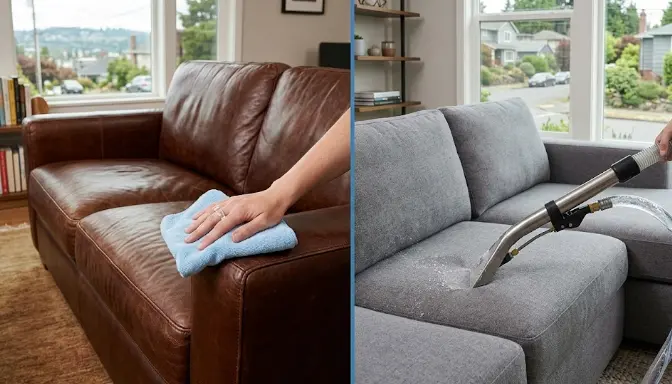
Leather and Fabric Sofas: Why the Cleaning Method Matters
Walk into any professional upholstery cleaning company in Seattle and the first thing they will do before touching your furniture is identify the material and check the care code. That is because leather sofa cleaning and fabric upholstery cleaning are genuinely different processes — different chemistry, different equipment settings, different drying requirements, and completely different things that can go wrong.
Using a fabric cleaning method on leather strips the finish and dries out the surface. Using water-based products on a solvent-only fabric causes shrinkage, watermarks, and sometimes permanent discoloration. This is why professional assessment before cleaning is not optional — it is the entire foundation of getting a good result without damaging your furniture.
This guide covers the key differences between leather sofa cleaning in Seattle and professional fabric upholstery cleaning: what each method involves, what damages each material, care codes explained, and how to know when your furniture needs professional attention.
Side-by-Side Comparison: Leather vs Fabric Upholstery Cleaning
| Factor | Leather | Fabric |
|---|---|---|
| Cleaning method | pH-neutral leather cleaner + conditioner | Depends on care code: water-based, solvent, or dry-only |
| Can use water? | Minimal — excess water damages finish | Only if care code is W or WS |
| Steam cleaning safe? | No — heat damages leather fibers | Only on certain synthetic fabrics |
| Conditioning required? | Yes — always after cleaning | No — fabric protector optional |
| Drying time | 1–2 hours | 2–6 hours depending on method and thickness |
| Stain pre-treatment | Leather-specific pre-cleaner | Enzyme, oxidizer, or degreaser matched to stain type |
| Most common damage from DIY | Finish cracking, discoloration, drying out | Watermarks, shrinkage, color bleeding |
| Pet odor treatment | Possible — enzyme treatment on surface only | Full extraction — enzyme penetrates into padding |
| Professional cleaning frequency | Once a year in Seattle climate | Every 12–18 months for normal use |
Leather Sofa Cleaning in Seattle: What the Process Involves
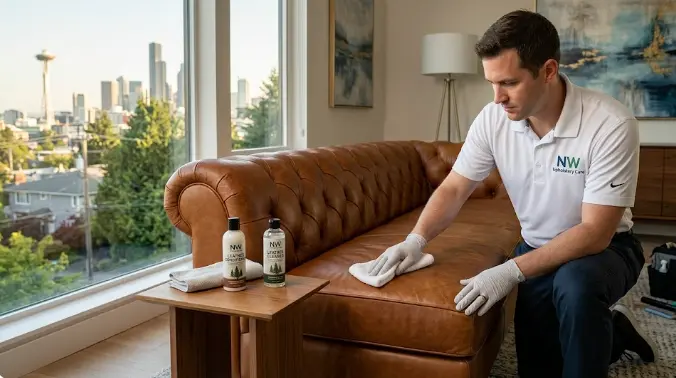
Leather is a natural material — treated animal hide that has been tanned, finished, and sometimes coated. That coating is thinner than most people realize, and it is what gives leather its color, sheen, and stain resistance. Professional leather sofa cleaning in Seattle works with this coating, not against it.
What Professional Leather Cleaning Involves
- Leather type identification — full-grain, top-grain, bonded, or suede/nubuck each require slightly different products and care
- Dry soil removal — vacuuming seams and crevices before any liquid is applied
- pH-neutral leather cleaner applied with a soft microfiber cloth — worked in small sections, never rubbed aggressively
- Spot treatment for stains — leather-specific pre-cleaner for grease, ink, or food marks
- Conditioner applied after cleaning to replenish oils and maintain suppleness
- Buffing and inspection — finish checked for uniformity, any dull areas re-conditioned
What Damages Leather — Never Do These
- Steam cleaning — heat breaks down leather proteins and shrinks the hide
- Bleach or ammonia-based cleaners — strip the finish entirely and cause color loss
- Saddle soap on finished leather — too alkaline for modern finished leather coatings
- Baby wipes and antibacterial wipes — contain alcohol and detergents that dry out and dull the finish over time
- Rubbing stains aggressively — abrades and removes the thin color coat
- Over-wetting — excess water seeps behind the finish and causes cracking when it dries
- DIY conditioning with olive oil or coconut oil — goes rancid, attracts bacteria, and darkens leather permanently
Fabric Upholstery Cleaning: Methods and Care Codes
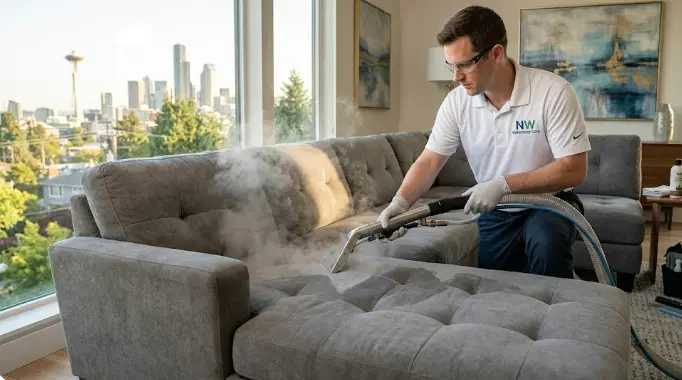
Fabric upholstery cleaning is more variable than leather because there are dozens of fabric types — microfiber, polyester, velvet, linen, cotton, wool, performance blends — and each responds differently to moisture, heat, and cleaning chemistry. The care code tag (sewn into a cushion or under the frame) is the starting point for any professional fabric cleaning job.
Fabric Care Codes Explained
W — Water-Based Cleaning
Water-based detergents and hot-water extraction are safe. This is the most common code for modern upholstery — polyester, most microfibers, performance fabrics, and many synthetic blends.
Method: Hot-water extraction (most effective for deep cleaning and stain removal)
S — Solvent-Based (Dry) Cleaning Only
Water causes damage — shrinkage, watermarks, or color bleeding. Only dry solvent-based cleaning products are safe. Common on rayon, silk, and some wool blends.
Method: Dry solvent applied and extracted without introducing water into the fabric
WS — Water or Solvent Safe
Either water-based or solvent-based cleaning is appropriate. Professionals choose based on the specific soiling — water-based for most stains, solvent for oils and greases.
Method: Professional's choice based on stain type and fiber assessment
X — Vacuum Only
No liquid cleaning of any kind — only dry vacuuming. Any liquid application risks permanent damage. Common on vintage fabrics, jute, and some specialty natural fiber upholstery.
Method: Dry vacuuming only; stains may require professional re-upholstering rather than cleaning
Fabric Types and How They Clean
Beyond the care code, the specific fiber type determines how a fabric responds to professional cleaning. Here is what Seattle homeowners encounter most often:
Microfiber
The most common fabric in Seattle homes. Usually code W. Cleans very well with hot-water extraction — stains release easily and drying time is fast (2–3 hours). Pet hair removal before cleaning is critical as it blocks extraction.
Performance Fabric
Brands like Crypton, Sunbrella, or proprietary stain-resistant weaves. Code W or WS. Designed for easy cleaning — stains sit on the surface rather than penetrating. Professional extraction is still more effective than DIY on set-in stains.
Velvet
Often code S or WS. The pile (raised fibers) must be brushed in the correct direction during cleaning to prevent crushing. Velvet is high-risk for DIY cleaning — watermarks are common and visible. Professional cleaning preserves the pile structure.
Linen and Cotton
Usually code WS. Natural fibers that can shrink if over-wet. Low-moisture extraction is preferred. Colors can fade or bleed if the wrong pH cleaner is used — always test in a hidden area first. Professional pre-treatment is important for food stains on these materials.
Wool Blends
Often code S or WS. Wool shrinks easily with hot water and agitation. Solvent-based dry cleaning is typically preferred. Wool cleans well professionally but is high-risk for DIY. Common on premium sectionals and traditional upholstered chairs.
Polyester Blends
Code W. The most durable and cleanable fabric type for upholstery. Resists staining, handles extraction well, and dries quickly. Pet odor treatment is highly effective on polyester because enzyme solutions penetrate the fiber easily.
Signs Your Leather or Fabric Sofa Needs Professional Cleaning
Both materials show different signs of needing professional attention. Here is what to look for:
Leather — Time to Call a Professional
- Surface feels tacky or sticky — body oil buildup that home wipes cannot remove
- Dull or uneven color — conditioning product residue and soil creating a flat look
- Small cracks beginning to appear — leather is drying out and needs conditioning
- Persistent smell even after wiping — bacteria embedded in pores
- Ink, grease, or food stains that have been on the surface for more than 48 hours
- Any pet accident — urine soaks through leather quickly and requires immediate professional treatment
Fabric — Time to Call a Professional
- Visible staining that home products have not removed
- Watermarks from previous DIY cleaning attempts
- Persistent musty or pet odor after surface cleaning
- The fabric looks duller or darker in high-use areas (body oil and soil buildup)
- You have a code S or code X fabric and any staining — do not attempt DIY
- It has been more than 18 months since last professional cleaning and the furniture gets regular use
How We Clean Leather vs Fabric at Fresh Furnish Cleaners
Our technicians are trained to handle both material types. The process branches immediately at the inspection stage:
Our Leather Cleaning Process
- Identify leather type (full-grain, top-grain, bonded, suede/nubuck)
- Vacuum all seams and crevices — dry soil removal first
- Apply pH-neutral leather cleaner in small sections with soft microfiber cloth
- Pre-treat specific stains with leather-safe spot cleaner — grease, ink, food separately
- Wipe down all surfaces systematically, never scrubbing
- Allow surface to dry — typically 30 to 60 minutes
- Apply professional leather conditioner to restore oils and suppleness
- Buff to uniform finish and inspect for any remaining dull areas
Our Fabric Cleaning Process
- Identify fiber type and check care code tag
- UV scan if pets were present — locate contamination zones
- Full dry vacuuming including seams, tufts, and under cushions
- Select cleaning method: hot-water extraction (W), dry solvent (S), or professional's choice (WS)
- Apply targeted pre-treatment to stains — enzyme for organic, oxidizer for beverage, degreaser for oil
- Deep extraction or dry cleaning pass across all surfaces
- Set up air movers to accelerate drying — 2 to 4 hours for most fabrics
- Final walkthrough inspection — second pass on any remaining stains before leaving
For leather sofa cleaning in Seattle, we carry leather-grade products by HydroForce and Leather Master. For fabric cleaning, our extraction equipment runs at consistent 210°F water temperature for code W fabrics, and we carry dry solvent solutions for code S materials. We do not use one method for all furniture.
What Seattle Homeowners Say
"We have a full-grain leather sectional and I had been using baby wipes to clean it for two years. The technician showed me that the finish was starting to dull and dry out. After professional cleaning and conditioning, it looks better than when we bought it. I had no idea the wipes were doing damage — I thought I was being careful."
"I have a velvet sofa in code S and I made the mistake of trying a spray cleaner on a wine stain. Created a huge watermark. I thought it was ruined. The technicians came in, assessed it as a dry-clean-only fabric, and used the correct solvent method. The watermark is gone. I will never try DIY on velvet again."
"My cat scratched at one corner of the leather sofa and I was worried it was permanently marked. The cleaning and conditioning process smoothed out a lot of the surface scratching and the conditioner blended the finish well. Not invisible, but dramatically better. Worth every dollar."
"Our living room has both a leather loveseat and a large microfiber sectional. I was curious whether one cleaning company could handle both in the same visit. Not only could they — they explained exactly what they were doing differently on each piece and why. Really impressed by the knowledge level."
Frequently Asked Questions: Leather vs Fabric Upholstery Cleaning
No — leather and fabric sofas require completely different cleaning products. Fabric sofas are cleaned with water-based detergents or dry solvents depending on their care code. Leather requires a pH-neutral leather-specific cleaner, followed by a conditioner. Using a fabric cleaner on leather can strip the finish and cause cracking. Using water-based products on a solvent-only fabric (care code S) causes shrinkage and water marks. Always check the care code tag before applying any product.
Leather is generally faster and more predictable to clean professionally — the cleaning method is consistent across most full-grain and top-grain leather regardless of soiling type. Fabric cleaning is more variable: the method depends on the fiber type, weave, and care code (W, S, WS, or X), and different stains may need different pre-treatments. Both materials clean very well with professional equipment; fabric jobs just require more assessment time upfront.
Most leather sofas in Seattle benefit from professional cleaning once a year. The Pacific Northwest climate — with high humidity and frequent temperature changes — accelerates the buildup of body oils and conditioning product residue on leather surfaces. Households with pets or children may benefit from cleaning every 6 to 9 months. Regular conditioning between professional cleanings (every 3 to 4 months) keeps the leather supple and prevents cracking.
A fabric care code is a letter tag sewn into upholstered furniture that tells you what cleaning method is safe for that material. W means water-based cleaning is safe. S means solvent-based (dry) cleaning only — water will cause damage. WS means either method is safe. X means only vacuuming — no liquid cleaning of any kind. Using the wrong method based on the care code can permanently damage the fabric. Professional cleaners always identify the care code before selecting a cleaning method.
Yes, in most cases. Fresh water marks on leather can often be removed by a professional with a leather-safe cleaner and a controlled drying process. Old or set water marks are more difficult but still treatable. The key is not to rub the stain or use DIY products — leather finish is a thin coating that abrades and discolors easily. Conditioning after cleaning helps restore the surface uniformity and prevent future water spotting.
No — professional leather cleaning done correctly does not damage leather. It uses pH-neutral cleaners designed for leather, followed by a conditioner that replaces the natural oils removed during cleaning. What damages leather is using harsh chemicals, too much water, steam cleaning (high heat damages leather fibers), or abrasive scrubbing. Always confirm that your cleaning company has specific experience with leather upholstery — it is a different skill set from fabric cleaning.
Book Professional Upholstery Cleaning in Seattle
Leather or fabric — we handle both. Free assessment before every job. Serving Seattle, Bellevue, Kirkland, Redmond, Bothell, and all of King and Snohomish Counties.
No obligation • Free quote before we start • Same-week appointments available
Related Cleaning Guides
Leather Furniture Cleaning in Seattle
Full guide to professional leather sofa and chair cleaning in Seattle — what methods protect your finish and how often to clean and condition.
Read Leather Cleaning GuideBefore & After Upholstery Cleaning Results
Real before and after results from professional upholstery cleaning jobs across Seattle — see what both leather and fabric sofas look like post-cleaning.
See Before & After ResultsUpholstery Cleaning Cost in Seattle
Current 2026 pricing for professional sofa, chair, leather, and rug cleaning across the Seattle metro area — what to budget for each material type.
View Seattle Cleaning Prices