Outdoor Sofa & Sectional Cleaning: Deep Clean Guide for Patio Sets
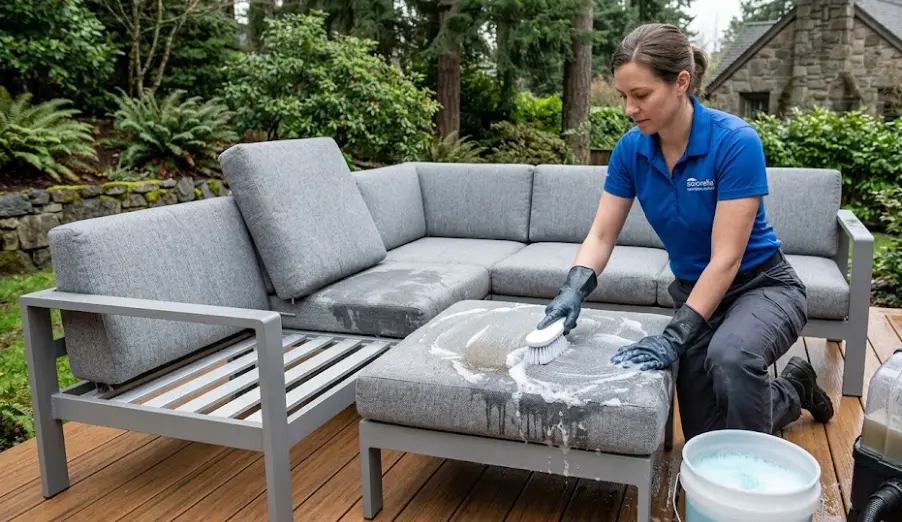
Cleaning a three-piece outdoor sectional is a different job from cleaning a set of individual patio chairs, and the difference is not just scale. A sectional has problem zones that loose furniture does not: the tight seam where two modules connect traps leaves, spiders, and two winters of compressed organic matter; attached box cushions cannot be stood on edge to dry the way removable cushions can; the sofa geometry means the back cushions face north on many patios — catching less sun, retaining more moisture, developing mold faster than anything on the ground-facing seat. Approach a full sectional the same way you approach spot-cleaning a loose chair and you will either miss these zones or, worse, soak foam that takes 48 hours to dry in a Seattle May.
This guide covers the full sequence for deep cleaning an outdoor sofa or sectional — from dry prep through fabric cleaning, frame treatment by material, and drying. The order matters as much as the products.
Outdoor Sectional Cleaning: Time and Drying Schedule
The most common mistake with outdoor sectional cleaning is underestimating the drying window — especially in Seattle's climate. Reassembling wet cushions traps moisture in the foam and guarantees mold within 48 hours. Plan around this schedule:
| Task | Time Required | Notes |
|---|---|---|
| Dry prep (brush, vacuum, disassemble) | 20–40 min | Do this before any water touches the fabric |
| Fabric cleaning (scrub + rinse) | 45–90 min | Depends on size; 3-piece L-shape ≈ 90 min |
| Frame cleaning | 20–30 min | Easiest while cushions are off and drying |
| Surface dry (touch-dry to sit on) | 2–4 hours sunny day | 4–6 hours overcast; cushions feel dry but foam is not |
| Foam fully dry (safe to reassemble) | 6–12 hours | In Seattle May–September; 12–24 hours in fall |
| Protective treatment (303 Fabric Guard) | 20 min | Apply only after foam is fully dry |
Seattle tip: Start cleaning by 9 AM on a clear day to have cushions safely dry and reassembled by evening. A sectional cleaned at noon will still have damp foam cores at sunset from October through April.
Know What You Have Before You Start
The cleaning approach changes based on two things: the cushion construction (whether covers are removable) and the frame material. Both are worth confirming before you wet anything.
Cushion Fabric Type
Sunbrella / solution-dyed acrylic
Sunbrella: The most forgiving. Tolerates mild bleach solution, oxygen bleach, soap and water. The acrylic fibre itself does not absorb mold — mold grows on organic matter on the surface. Regular cleaning is highly effective prevention.
Polyester / olefin outdoor fabric
Polyester and olefin: Commonly used on mid-range sectionals. Cleans well with soap and water. Avoid bleach on olefin — it can strip colour on some dye lots. Check the tag if you are uncertain.
Canvas / cotton-blend
Natural fibre: Found on older or budget outdoor furniture. Susceptible to shrinkage when wet. Treat gently, avoid hot water, dry flat if possible rather than machine drying. The least suitable fabric for Seattle's wet climate.
Cushion Construction
Removable covers with zipper: Check whether the zipper runs the full perimeter or just one side — full-perimeter zippers allow foam removal and separate drying, which is the ideal setup. Single-side zippers usually mean the foam is too large to slide out easily.
Box cushions without zipper: Common on cheaper sectionals and some premium brands that sew the cover permanently around the foam. These must be cleaned in place — you cannot separate cover from foam. The risk of saturating the foam is higher.
Attached back cushions: Back cushions fixed to the sectional frame (bolted or strapped) need to dry in position. Ensure the back faces outward and gets airflow — turn the section so the back cushion faces the sun if possible during drying.
Frame Material
Aluminum: The most common frame material on modern sectionals. Lightweight, rust-proof. Cleans with mild soap and water. Does not require any special treatment — just clean and rinse.
Resin wicker: Plastic resin strands woven over an aluminum or steel core. Hose down and scrub with a soft brush. Do not pressure wash — high pressure dislodges strands from the frame welds. Inspect for cracked or separating strands and reattach or clip before they worsen.
Teak: Requires separate treatment. Clean with a teak-specific cleaner or a mild oxalic acid solution, then decide whether to seal or leave it to weather to grey. Do not use bleach on teak — it dries out and greys the wood unevenly.
Steel / wrought iron: Inspect for rust before wetting. Touch up any paint chips first — water on bare steel accelerates corrosion.
The Cleaning Sequence
The sequence matters because wet debris is harder to remove than dry debris, and because wet foam cushions left reassembled on a damp frame dry significantly slower than cushions in open air. Do the dry work first, cushions second, frame third, and dry everything before putting the set back together.
Disassemble and Dry-Brush Before Any Water
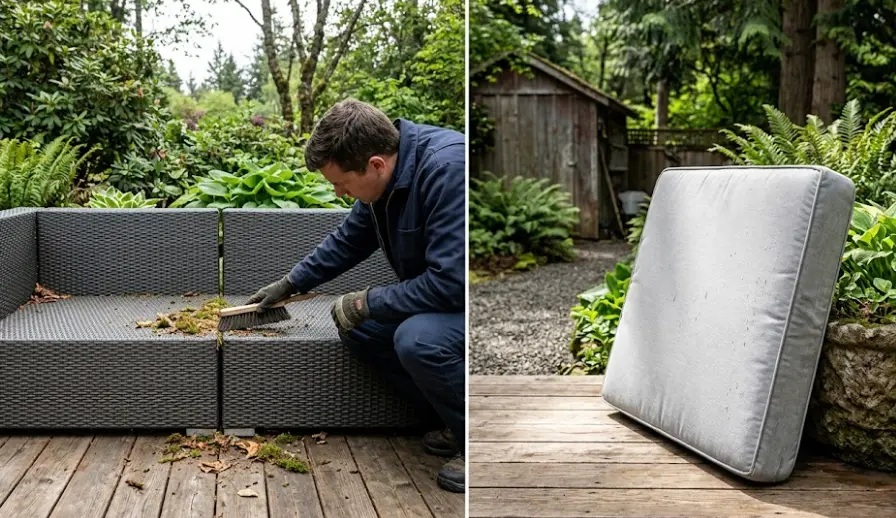
Separate the sectional modules where they connect. Most sectionals have interlocking brackets or simply butt against each other — pull them apart enough to access the seam between modules. Brush out the accumulated debris from these seams with a stiff dry brush: compressed leaves, spider webs, and decomposed organic matter collect here in quantities that are genuinely unpleasant to discover. Remove all cushions from the frame and stand them upright on a clean dry surface. Vacuum between the seat slats if the frame has a slatted base — debris here gets wet during cleaning and becomes packed material that holds moisture against the frame and the cushion underside.
Prepare Cleaning Solution and Pre-Wet Cushions
For standard soiling and light mold: dissolve 1/4 teaspoon of mild dish soap (not a degreaser) in one gallon of warm water. For visible mold on Sunbrella or polyester: mix 1/4 cup of oxygen bleach powder into one gallon of warm water and allow it to fully dissolve before use. Pre-wet the cushion fabric with plain water from a garden hose before applying either solution. Pre-wetting matters: dry outdoor fabric — especially tightly woven Sunbrella — pulls solution in unevenly, concentrating it at certain points and leaving others undertreated. Pre-wetted fabric distributes the solution evenly across the surface. Do not soak through to the foam — a thorough surface wetting is enough.
Scrub With the Weave, Not Against It
Apply the cleaning solution generously to the cushion surface and work it in with a soft-bristle brush — a medium-stiffness scrub brush or a dedicated upholstery brush works well. Scrub back-and-forth following the direction of the fabric weave rather than in random circular motions. Working against the weave can catch and pull fibres on woven outdoor fabrics, visible particularly on Sunbrella as slight pilling along the weave ridges. Allow the solution 5–10 minutes of dwell time on visibly mold-affected areas before scrubbing — the chemistry needs contact time to work. Do not rush by scrubbing harder; add dwell time instead. On the underside of seat cushions — the face that sits against the frame — pay particular attention, as this surface often has more mold than the visible top face.
Rinse Thoroughly and Check for Soap Residue
Rinse cushions very thoroughly with a garden hose. Soap residue left in outdoor fabric acts as a dirt magnet — the surface re-soils faster after a poor rinse than before cleaning. When rinsing, run the hose over the entire surface in overlapping passes, long enough that you see clear water running off with no visible suds. A useful check: press your hand firmly against the rinsed area — if it feels even slightly slippery, continue rinsing. On Sunbrella, the fabric should feel slightly rough to the touch, not slick, when fully rinsed. After rinsing the fabric surfaces, hose down the cushion piping and zipper tracks, where soap tends to concentrate and dry to a white residue.
Clean the Frame While Cushions Are Off
With cushions off and drying, clean the frame with the method appropriate to the material (see the next section). The cushion-off window is the only practical time to reach the underside of seat supports, the inside faces of the arms, and the base rails where the cushions normally sit. These areas accumulate mold, salt, and organic debris that transfer back to clean cushions the moment you reassemble the set. On aluminum frames, a soapy sponge and a thorough rinse is all that is needed. On wicker frames, a soft brush into the gaps between strands removes debris that a wipe-over misses entirely.
Dry Cushions on Edge — This Step Determines the Result
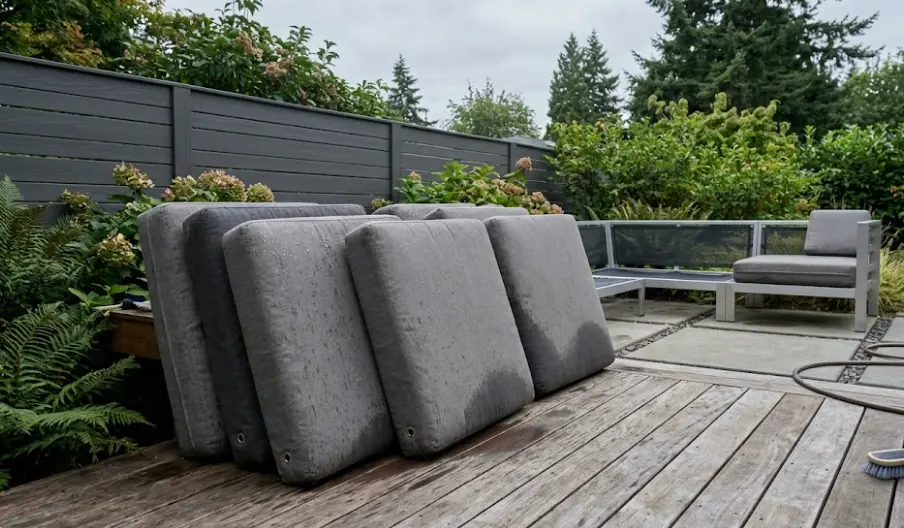
Stand cushions on their edge — never flat — so air circulates on both faces simultaneously. Cushions left flat dry only from the exposed top face; the bottom face stays damp, the foam core retains moisture, and surface mold returns within days. On a clear Seattle spring or summer day, a seat cushion stood on edge in direct sun takes 4–8 hours to dry fully. Back cushions, which are usually thinner, dry faster. Test dryness by squeezing the cushion at its thickest point — it should spring back immediately and firmly. A slow, slightly resistant return means moisture remains in the foam. In Seattle's overcast conditions, drying takes 12–18 hours or longer; bringing cushions inside overnight to continue drying in a heated room is a practical option.
Frame Cleaning by Material
The frame is the part of the job most people either skip entirely or clean wrong. Mold and organic residue on the frame transfers back onto clean cushions at contact points — the seat support edges, the back cushion face brackets, the arm rests. Clean the frame every time you deep-clean the cushions.
Aluminum Frames
Aluminum does not rust, but it develops a chalky oxidation layer over several seasons that feels rough and appears as a dull white film on the surface. This is aluminum oxide — cosmetically similar to the mineral deposits that appear on cushions, and equally simple to remove. A solution of equal parts white vinegar and water applied with a sponge, left 5 minutes, and wiped off removes light oxidation. For heavier oxidation build-up, a non-scratch automotive aluminum polish works well and leaves a light protective layer. Rinse any cleaning solution from aluminum welds and joints thoroughly — acid-based cleaners left in crevices can cause pitting in the aluminum over time with repeated exposure.
After cleaning, inspect the plastic end caps on the frame legs — these often hold moisture inside and develop mold where they contact concrete or wood decking. Remove them, clean them separately, and let the leg interior dry before replacing.
Resin Wicker Frames
Resin wicker — high-density polyethylene (HDPE) woven over an aluminum or steel core — is the dominant frame material on mid-range outdoor sofas and sectionals. It cleans reasonably well with a soft-bristle brush and soapy water worked into the gaps between strands, followed by a thorough hose-down. The brush reach into the gaps matters: mold grows in the crevices between strands where organic debris collects, not on the exposed faces. A standard cleaning that only wipes the outside strand faces misses most of the contamination.
Inspect the condition of the weave while it is clean and wet — this is when damaged areas are most visible. Strands that are separating from frame supports, cracking along UV-exposed outer faces, or pulling away from corner welds should be addressed now. Separated strands catch leaves and debris and worsen quickly once they start to go.
Teak Frames
Teak requires a completely separate approach from the other frame materials. Do not use bleach on teak — it strips the natural oils from the wood and causes uneven greying that cannot be reversed without sanding back to bare wood. The correct cleaner for teak is either a dedicated teak cleaner (two-part products that include a mild acid first step and a neutraliser) or a diluted oxalic acid solution — the same chemistry used for mineral deposits and rust on fabric.
After cleaning, you choose: seal the teak with a teak oil or sealant to maintain the golden-brown colour, or leave it untreated and allow it to weather to its natural grey. The grey patina is not damage — it is the wood's natural surface protection — but it is irreversible without sanding. If you prefer the original colour, apply a sealant annually after the spring clean.
Steel and Wrought Iron
Painted steel and wrought iron clean easily with soap and water, but the cleaning visit is the right moment to inspect for rust before the rust finds the cushions. Any paint chip that has exposed bare steel to Seattle's wet season will have started to develop surface rust — orange-brown discoloration under and around the chip. Wipe these areas with a dry cloth and look carefully at any scratches or dents in the paint.
Touch up rust spots before the set goes back into service: sand lightly with fine sandpaper to remove loose rust, apply a rust-inhibiting primer (Rust-Oleum or equivalent), and repaint with an outdoor-rated enamel matched to the original colour. A 15-minute repair in spring prevents the frame-to-cushion rust transfer that requires oxalic acid treatment to fix on the fabric side. Our full guide on patio furniture restoration in Seattle covers iron frame treatment in detail.
Foam Inside the Cushion: The Problem You Cannot See
The most persistent cleaning failure on outdoor sectionals in Seattle is interior foam mold — contamination that develops inside the foam core and is not visible from the cushion surface. A cushion can pass a surface inspection, smell clean, and have active mold 2 centimetres into the foam because the surface dried while the interior stayed damp for 48 hours after the previous cleaning or rain event.
The indicators of foam mold that has not yet surfaced: a cushion that smells musty after it has been in the sun for an hour (interior mold released into air by heat that the surface mold alone would not produce); a cushion that develops surface mold spots within 2–3 weeks of cleaning (the surface is being recolonised from below); foam that feels slightly spongy and dense in a specific area that springs back slowly when pressed (the foam cell structure has degraded from prolonged moisture — this is irreversible).
Do Not Reassemble on a Damp Frame
Putting freshly cleaned cushions back on a frame that has not fully dried — particularly a wicker or slatted wood frame with standing water in the gaps — recontaminates the cushion undersides within hours. After cleaning and rinsing the frame, allow at least 1–2 hours of air drying in sun before replacing cushions. Wicker frames need longer — probe the inner gap between strands with a dry finger before declaring the frame dry.
If you have a cushion with advanced interior foam mold — where squeezing the cushion produces a visible mold odour, or where the foam feels degraded in specific spots — the foam insert is the item to replace rather than deep-clean. The cover can often be salvaged: remove it via the zipper, machine wash on cold (if the care label allows), and air dry flat. Purchase a replacement foam insert cut to the original dimensions from an upholstery supplier or foam specialty shop (Seattle has several options). This extends the life of quality outdoor covers significantly at a fraction of the replacement cost.
Seattle Timing: When to Clean and When It Matters Most
The Seattle climate creates a specific outdoor furniture calendar that is different from warmer, drier regions. The nine months of overcast, wet weather from October through May means that outdoor sectionals in this climate face sustained mold conditions that a Phoenix or Los Angeles patio set never encounters. The cleaning timing that matters most is the one most people skip: the end-of-season clean before covering or storing the set.
Cushions covered in October with even mild surface mold spend the following seven months in a covered, low-airflow environment at the exact temperature range (40°F to 60°F) where mold grows most actively. By the time the cover comes off in April, what was a surface spot treatable in 20 minutes has become deeply embedded contamination that requires professional extraction or foam replacement. The same cushion cleaned in October, dried thoroughly, and stored in a dry location is reassembled in spring with no more contamination than it had when it went away.
What Seattle Homeowners Have Found
"We have a large L-shaped resin wicker sectional on our covered patio in Bellevue. Every spring we would clean it ourselves — soap and water, hose down — and it looked fine. By July the back cushions would be spotted with mold again. Fresh Furnish came out in May and the first thing they did was flip the back cushions over and show us the mold coverage on the face that sat against the frame. We had been cleaning the visible side and missing the entire contaminated face. After a proper clean and getting the cushions dried properly off the frame, we had no mold return through the rest of the summer."
"Our outdoor sofa cushions smelled musty even after cleaning. We could not figure out why — the fabric looked clean, dried in the sun, no visible mold. Fresh Furnish identified the foam inside as the actual problem. The outside was fine, the foam had internal mold from being left covered too long the winter before without cleaning first. They cleaned what they could, we replaced the foam inserts (it was actually cheaper than I expected), and now we clean at the end of every season and have had no issues since."
When Professional Cleaning Makes Sense for a Sectional
A sectional that has been stored or covered without end-of-season cleaning — particularly one that has spent a Seattle winter covered on an outdoor patio rather than in a garage — is a realistic candidate for professional cleaning rather than DIY. The scope of contamination across a three-piece set, combined with the drying logistics for 6–8 cushions that need to be completely dry before reassembly, is a significant undertaking. The risk of incomplete drying, which causes mold to return within weeks, is substantially higher when the starting level of contamination is severe.
Hot water extraction at professional pressure — the same equipment used for upholstered furniture indoors — penetrates foam-backed outdoor cushions more thoroughly than hand scrubbing and rinses more completely. For cushions with interior foam mold, professional extraction can reach contamination that surface cleaning cannot address. It is not a guarantee of full mold removal on cushions with advanced interior contamination (those may need foam replacement regardless), but it is the most effective tool available for cushions in the moderate-to-heavy range.
Fresh Furnish Cleaners handles outdoor sectionals and full patio set cleaning across Seattle, Bellevue, Kirkland, Redmond, Bothell, Woodinville, and the greater Eastside — contact us for a quote. If you are not sure whether your cushions need professional cleaning or can be handled DIY, send a photo of the worst-affected cushion face and we will give you an honest assessment before you commit to either option.
Frequently Asked Questions
Work in a fixed sequence: dry-brush and vacuum all debris from the frame and cushion seams first, remove all cushions from the frame, pre-wet cushion fabric with a garden hose, apply cleaning solution (1/4 tsp mild dish soap per gallon of water for general soiling; oxygen bleach solution for mold), scrub with a soft-bristle brush following the fabric weave, rinse very thoroughly until no soap remains, and stand all cushions on their edge to dry — never flat. While cushions dry, clean the frame with the method appropriate to the material (soap and water for aluminum; soft brush and hose for resin wicker; teak cleaner or diluted oxalic acid for teak; soap and water plus rust inspection for steel). Reassemble only after both cushions and frame are fully dry. The most important variables are dwell time (let the cleaning solution work before scrubbing) and drying position (on edge, not flat).
With significant caution. If you use a pressure washer on outdoor sofa cushions, keep the pressure below 1,000 PSI and hold the nozzle at least 18 inches from the fabric surface. At that pressure and distance, you are essentially using a strong rinse rather than a true pressure wash — it is safe on Sunbrella and tight-weave polyester. The risk is driving water deep into the foam core: pressure washing saturates foam faster than hand cleaning, and foam cushions that get fully wet take 3–4 days to dry in Seattle conditions, which is a near-guarantee of interior mold. A garden hose with a spray nozzle set to a strong stream achieves the same cleaning and rinsing effect with less penetration risk. On resin wicker frames, avoid pressure washing entirely — high pressure separates the wicker strands from frame welds and pulls the weave loose from corners.
The goal is thorough surface cleaning without saturating the foam. Pre-wet the cushion exterior with a garden hose — enough to wet the fabric surface, not to soak through to the foam. Apply cleaning solution, work it in with a soft brush, allow dwell time, scrub, then rinse with sweeping hose passes that remove the solution without forcing a large volume of water through the fabric into the foam. Stand the cushion on edge immediately after rinsing — this drains any moisture that did penetrate toward the foam, and allows both faces to dry simultaneously. Test dryness by pressing firmly at the thickest point: the cushion should spring back immediately and firmly. Slow or resistant return means moisture remains in the foam — continue drying before use or storage. In Seattle's overcast conditions, build in 12–18 hours of drying time.
Three times a year is the practical minimum for Seattle's climate: a pre-season deep clean in late April or May before regular use; a mid-season check in July (focusing on back cushion undersides and frame contact points, where mold develops first); and an end-of-season deep clean in late September before the rains return. The end-of-season clean is the most important of the three — storing or covering cushions with any level of mold contamination through a Seattle winter allows that mold to establish deeply over 7 months in ideal mold conditions (cool, damp, low airflow). Between major cleans, brush loose debris off cushions weekly during the October–November leaf-fall period and rinse with a hose after heavy pollen events in spring.
Some can — check the care label first. Covers with full-perimeter zippers and loose-fitting construction around the foam insert often survive a cold gentle machine wash and air dry. The risks are: shrinkage at the seam allowances that makes the cover impossible to re-fit over the foam; distortion of piping (the cord trim) that creates permanent puckering; and for Sunbrella specifically, heat damage from a warm wash or machine dryer that degrades the acrylic coating. Sunbrella's own guidelines allow cold machine wash with a non-detergent mild soap followed by air drying. If the cover label says "spot clean only" or has no wash instructions, hand clean on the cushion rather than machine washing. If you have already removed the cover and machine washed it and it no longer fits the foam insert, a replacement foam cut to dimension is often more practical than a replacement cover.
For general dirt and early mold: mix 1/4 teaspoon of mild dish soap per gallon of warm water, pre-wet the fabric, apply the solution with a soft-bristle brush, allow 15 minutes of dwell time on any mold spots, scrub gently with the weave direction, and rinse thoroughly. For established mold on Sunbrella specifically, diluted chlorine bleach is safe — the solution-dyed acrylic fibre is colour-stable against bleach (unlike many other outdoor fabrics). Use 1 cup bleach and 1/4 cup dish soap in one gallon of water, apply with a brush, dwell 15 minutes, scrub, and rinse very thoroughly — multiple times, since bleach residue damages the fibres with prolonged contact. After cleaning, 303 Fabric Guard applied annually restores the water-repellent surface coating that UV exposure gradually removes. Sunbrella itself is inherently mold-resistant; what grows on it is mold feeding on organic surface matter — thorough regular cleaning that removes the food source is the best prevention.
Related Outdoor Furniture Guides
Mold on Patio Cushions
Surface mold vs. interior foam mold — the treatment and the outcome are different. Our guide on removing mold from patio cushions covers severity assessment and what level of contamination is treatable vs. a foam replacement situation.
Water Stains & Mineral Deposits
Chalky white rings, orange rust marks, brown tannin staining — water stains on outdoor cushions need different treatments than mold. Our water stains on outdoor cushions guide covers the chemistry behind each type and the correct removal method.
Sunbrella Cleaning in Seattle
Sunbrella-specific cleaning in depth — product selection, bleach safety, 303 Fabric Guard application, and what distinguishes proper Sunbrella care from general outdoor fabric cleaning. See our Sunbrella cleaning guide for Seattle.
Full Sectional Too Big to Tackle Alone? We Handle Patio Sets Across the Eastside
A three-piece sectional with 6–8 cushions and two winters of contamination is a full day of work. Fresh Furnish Cleaners provides outdoor sofa and sectional deep cleaning across Seattle, Bellevue, Kirkland, Redmond, and the greater Eastside — professional extraction equipment, proper drying protocol, and an honest assessment of what can be cleaned vs. what needs a foam insert replacement.
Full Sets
Sofas, sectionals, loveseats, ottomans — full patio set service in a single visit
Same-Day Service
Call before 2 PM for same-day outdoor furniture cleaning across the Seattle metro
Photo Quote
Send a photo of your sectional for a no-obligation quote and assessment within the hour
Serving Seattle, Bellevue, Kirkland, Redmond, Bothell, Woodinville, Lynnwood, Edmonds, Shoreline & surrounding areas
