How to Identify Your Upholstery Fabric Before Cleaning
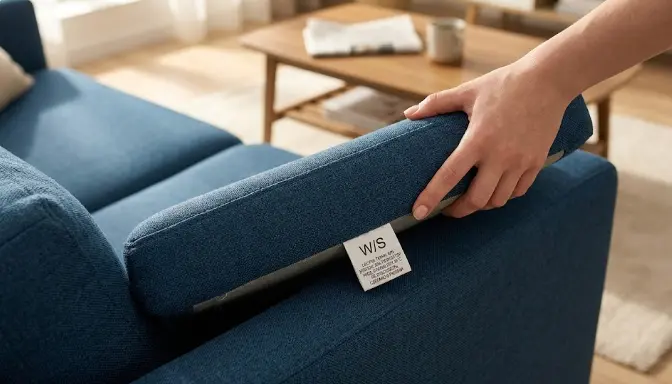
Why Fabric Identification Comes Before Everything Else
The single most common cause of irreversible sofa damage is cleaning with the wrong method for the fabric. A homeowner sprays water-based cleaner on an S-coded linen sofa and gets permanent water rings. Someone steam-cleans a viscose velvet and permanently crushes the pile. A rental carpet cleaner gets used on a cotton sofa and causes shrinkage distortion that cannot be reversed.
Before applying any cleaner — water, solvent, enzyme, or otherwise — you need to know two things: what your upholstery fabric is made of and what cleaning code it carries. These two pieces of information determine every cleaning decision that follows. This guide walks through both, systematically.
Couch Cleaning Codes: What Every Letter Means
The cleaning code system was developed by furniture manufacturers and the Association of Specialists in Cleaning and Restoration (ASCR) to give consumers and cleaners a standardized guide to safe cleaning methods. There are four codes. Every upholstered piece of furniture shipped for retail sale in the United States is required to carry one.
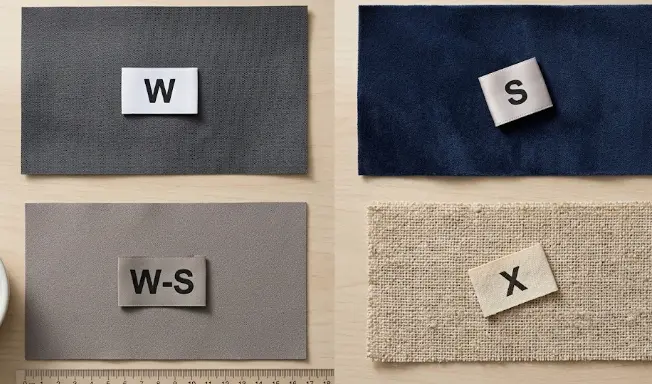
Code W — Water-Based Cleaners
What it means: The fabric can be cleaned with water-based cleaning products, including hot water extraction (steam cleaning), upholstery shampoo, and water-diluted enzyme cleaners.
Typical fabrics: Polyester, microfiber, most synthetic blends, performance fabrics (Crypton, Sunbrella), some cotton blends.
Professional method: Hot water extraction — the most effective method for deep cleaning and sanitization. Removes allergens, body oils, stains, and odors from deep within the fiber.
DIY caution: W-coded does not mean waterproof. Over-wetting can cause foam saturation, slow drying, and mildew growth. Use moisture sparingly and ensure thorough drying.
Code S — Solvent Cleaners Only
What it means: The fabric must only be cleaned with water-free dry-cleaning solvents. Water of any kind — including steam — will damage the fabric, causing shrinkage, water rings, or color changes that cannot be reversed.
Typical fabrics: Acetate, triacetate, viscose (rayon), some silk upholstery, some wool and wool blends, some linen.
Professional method: Dry solvent extraction — uses non-aqueous cleaning agents that dissolve soiling without introducing water to the fiber structure.
Critical warning: Never use water, water-based spray, steam, or wet cloths on S-coded fabric. Even a small amount of water can leave permanent marks on viscose and acetate.
Code W/S — Water or Solvent
What it means: The fabric tolerates both water-based and solvent-based cleaning. This code gives the most flexibility — cleaners select the best method based on the specific type of soiling.
Typical fabrics: Many polyester and nylon blends, some cotton-synthetic blends, velvet with synthetic backing, many modern performance fabrics.
Professional method: Method selected by soiling type — water-based extraction for general body oils and protein stains; solvent pre-treatment for grease-based soiling; combination approach for complex multi-stain situations.
Common misunderstanding: W/S does not mean the fabric is indestructible. Technique still matters — velvet coded W/S still requires careful low-moisture handling to avoid pile distortion.
Code X — Vacuum or Brush Only
What it means: No liquid cleaners of any kind — neither water-based nor solvent-based. The fabric can only be maintained by vacuuming and dry brushing. Liquid contact will cause permanent damage.
Typical fabrics: Certain delicate wools, some heavily textured decorative fabrics, some antique or vintage upholstery, fabrics with unstable dyes or fragile construction.
Professional approach: X-coded upholstery cannot be wet-cleaned. If soiling is significant, re-upholstering with a more cleanable fabric is often the practical option. Professional dry brushing with specialized tools can lift surface soiling.
Prevention is key: X-coded furniture should be covered with removable, washable throws in high-use areas. Spot-treating a spill on X-coded fabric almost always makes the damage worse.
Common Upholstery Fabric Types and How to Recognize Them
Knowing the cleaning code tells you what cleaner is safe. Knowing the upholstery fabric type tells you how aggressively that cleaning can be applied, how the fabric will respond to moisture, how quickly it dries, and what pre-treatment approach works best for the specific soiling present. Here are the most common fabric types found in residential upholstery:
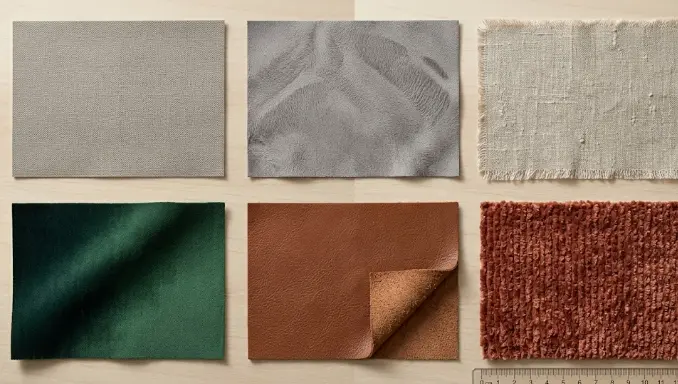
Polyester and Polyester Blends
How to recognize: Smooth or lightly textured surface, uniform weave, slightly shiny in certain lights. Feels consistently resilient — springs back quickly when pressed. Does not wrinkle easily.
Typical code: W or W/S
Cleaning characteristics: The most forgiving upholstery fabric type for cleaning. Polyester fibers release soiling well under extraction. Resists shrinkage and color bleeding. Dries relatively quickly compared to natural fibers.
Common in: Mid-range and budget sofas, sectionals, and family-use furniture. The majority of sofas sold in the US have polyester or polyester-blend upholstery.
Microfiber
How to recognize: Extremely soft and plush surface — noticeably softer than regular polyester. Pile changes direction when stroked, leaving visible "nap marks." Feels almost suede-like. Liquids bead on the surface rather than absorbing immediately.
Typical code: W or W/S
Cleaning characteristics: Excellent stain resistance due to tight fiber structure. Responds dramatically to professional cleaning — often the most visually impressive transformation. Requires low-moisture technique to prevent water rings, which form when excess water pushes soiling to the drying perimeter.
Common in: Popular across all price points. Frequently marketed as "ultra-suede," "microsuede," or "faux suede."
Cotton and Cotton Blends
How to recognize: Matte surface with visible weave texture. Feels natural and slightly rough compared to synthetic fabrics — similar to cotton clothing. Wrinkles more easily than polyester. Absorbs moisture readily and visibly darkens when wet.
Typical code: W or W/S (for blends); pure cotton may be S if the dye is unstable
Cleaning characteristics: Absorbs spills quickly, which means stains penetrate fast. Responds well to enzyme pre-treatment. Requires careful moisture management — cotton holds water and can take several hours to dry fully. Prone to shrinkage if over-wetted.
Common in: Casual, relaxed-style sofas and accent chairs. Often used in slipcovered furniture.
Linen and Linen Blends
How to recognize: Distinctive irregular slubby texture — small variations in fiber thickness visible in the weave. Crisp feel, slightly stiff compared to cotton. Natural neutral colors (cream, beige, tan, grey). Wrinkles noticeably with use.
Typical code: S (pure linen), W/S (linen blends with synthetic content)
Cleaning characteristics: Pure linen is water-sensitive — moisture causes shrinkage and distortion. Linen-blend upholstery with 30%+ synthetic content can usually tolerate low-moisture water-based cleaning. Always check the specific code. Soiling shows distinctly on linen's natural texture.
Common in: Contemporary, minimalist, and Scandinavian-style furniture. High-end and designer upholstery.
Velvet
How to recognize: Dense, soft pile that changes appearance dramatically when the nap is stroked in different directions — creates lighter and darker areas depending on pile direction. Highly reflective. The pile crushes flat under use and at contact points (armrests, seat centers).
Typical code: W/S (polyester velvet), S (cotton or viscose velvet), W (performance velvet)
Cleaning characteristics: Requires specialist technique — pile must be restored after cleaning to prevent permanent distortion. Over-saturation causes irreversible pile crushing. Previous DIY water contact on viscose velvet often leaves permanent water rings that professional cleaning cannot fully reverse.
Common in: Statement furniture, accent chairs, luxury and Victorian-inspired sofas. Increasingly popular in jewel tones (emerald, navy, mustard).
Chenille
How to recognize: Thick, soft, tufted pile with a distinctly fuzzy or caterpillar-like texture. Heavier weight than regular upholstery fabrics. Pile is multi-directional — no clear nap direction like velvet. Extremely soft to touch.
Typical code: W/S or S depending on fiber content (polyester chenille is W/S; cotton or viscose chenille may be S)
Cleaning characteristics: Dense pile traps pet hair and debris effectively. Requires thorough vacuuming before any wet cleaning. Pile can distort if over-saturated. Check fiber content on the tag — chenille is made from several different base fibers each with different water tolerance.
Common in: Traditional and transitional sofas, accent chairs, and footstools. Often in warm earth tones and neutrals.
Leather — Genuine and Full-Grain
How to recognize: Smooth, cool surface that warms to body temperature. Shows natural grain variation and minor imperfections (genuine quality indicators). Develops a patina with age. Creases naturally at flex points. Distinct smell. Heavier and more rigid than fabric upholstery.
Typical code: No standard code — leather uses its own pH-balanced products and conditioning treatments
Cleaning characteristics: Cannot be wet-extracted. Requires pH-balanced leather cleaner to avoid drying and cracking. Conditioning after cleaning is essential to maintain suppleness and prevent cracking. Full-grain and top-grain leather respond very well to professional cleaning and conditioning.
Common in: Traditional, executive, and contemporary styles. The most durable upholstery type when properly maintained.
Faux Leather, Bonded Leather & PU
How to recognize: Uniform, perfectly consistent surface — no natural grain variation. Cooler to touch than genuine leather and remains cool. Does not breathe — feels slightly plastic. Bonded leather (a layer of leather scraps over polyurethane backing) eventually peels and flakes at stress points.
Typical code: W for most faux leather and PU vinyl
Cleaning characteristics: Surface soiling wipes off easily with mild water-based solution. Does not benefit from conditioning. The primary risk is peeling — once the surface coating begins delaminating, cleaning cannot restore it. Heavily peeling bonded leather is a replacement situation, not a cleaning one.
Common in: Budget and mid-range furniture. Often marketed as "PU leather," "vegan leather," or "bonded leather."
Viscose (Rayon) and Acetate
How to recognize: Very high sheen — silky, lustrous appearance. Extremely soft and drapey. Often used in velvet pile. Feels luxurious but less resilient than synthetic fabrics — does not spring back as firmly. Commonly found in blended fabrics rather than 100% viscose.
Typical code: S — highly water-sensitive
Cleaning characteristics: The most water-sensitive upholstery fabric type. Even a small amount of water causes water rings and color change. Must be cleaned with dry solvent only. Any DIY water contact — including wet cloths, spray cleaners, or steam — creates permanent damage in most cases.
Common in: Formal and decorative furniture, velvet-pile chairs and sofas, high-end accent pieces.
Performance Fabrics (Crypton, Sunbrella, Etc.)
How to recognize: Labeled explicitly on the tag — "Crypton," "Sunbrella," "Perennials," or similar brand names. Feels like high-quality upholstery fabric but liquids bead and roll off without absorbing. Stain and moisture resistant by construction, not coating.
Typical code: W or W/S
Cleaning characteristics: The most cleanable residential upholstery fabric type. Performance fabrics are engineered with moisture barriers built into the fiber — liquids cannot penetrate to the backing. Respond extremely well to hot water extraction. Even older, deep-set stains typically release fully because soiling cannot bond to the fiber interior.
Common in: Family rooms, pet-friendly households, hospitality-grade furniture, and outdoor-rated indoor upholstery.
How to Identify Upholstery Fabric: Step-by-Step
If the care tag is present and readable, the cleaning code tells you what you need for method selection. But identifying the actual fiber type gives you a complete picture. Here is a reliable identification sequence:
Step 1: Read the Care Tag
Find and read the care tag. It carries the cleaning code (W, S, W/S, or X) and usually the fiber content as a percentage breakdown (e.g., "58% Polyester / 42% Viscose"). The fiber content is your primary identification.
If the tag is missing or illegible, move to the next steps. Never assume a cleaning code — a wrong assumption is the most common source of irreversible fabric damage.
Step 2: Visual and Touch Assessment
Look and feel systematically:
- High sheen + very soft → likely viscose or acetate (S code)
- Suede-like + nap marks → microfiber (W or W/S)
- Dense pile + directional → velvet (code varies by fiber)
- Slubby irregular texture → linen or linen blend
- Liquid beads on surface → microfiber or performance fabric
- Cool, non-porous, no weave → leather or faux leather
Step 3: Water Drop Test
In an inconspicuous area (under a cushion seam or on the deck fabric), apply one drop of distilled water. Observe:
- Beads and stays on surface → microfiber or performance fabric (W)
- Absorbs slowly, no mark → polyester or cotton blend (likely W or W/S)
- Absorbs instantly, darkens → cotton or linen blend — test dry result
- Leaves a ring after drying → likely viscose or acetate (S code — do not wet clean)
Fabric Type and Cleaning Code Reference Table
| Fabric Type | Typical Cleaning Code | Key Risk | Professional Method |
|---|---|---|---|
| Polyester / Poly blend | W or W/S | Over-wetting causing slow dry and mildew | Hot water extraction |
| Microfiber | W or W/S | Water rings from excess moisture | Low-moisture extraction with even technique |
| Cotton blend | W or W/S | Shrinkage from over-wetting | Controlled extraction, thorough drying |
| Linen (pure) | S | Shrinkage and distortion from water | Dry solvent cleaning |
| Linen blend (30%+ synthetic) | W/S | Color change if over-wet | Low-moisture water-based or solvent |
| Velvet — polyester | W/S | Pile distortion from saturation | Low-moisture + pile restoration |
| Velvet — viscose/cotton | S | Permanent water rings, pile crush | Dry solvent only + pile restoration |
| Chenille (poly-based) | W/S | Deep pile traps soil, slow to dry | Extraction with extended pre-treatment |
| Viscose / Rayon | S | Permanent water damage from any moisture | Dry solvent only — no water whatsoever |
| Acetate | S | Fiber dissolves in acetone solvents too | Specialist dry cleaning only |
| Genuine leather | No standard code | Drying and cracking without conditioning | pH-balanced leather cleaner + conditioning |
| Faux leather / PU vinyl | W | Surface peeling — pre-existing damage | Mild water-based wipe down |
| Performance fabric | W or W/S | Very little risk — engineered for cleaning | Hot water extraction, strong results |
| Decorative/X-coded | X | Any liquid causes permanent damage | Dry brush and vacuuming only |
What Happens When You Use the Wrong Cleaning Method
Understanding the consequences of method mismatch reinforces why fabric identification matters. These are real outcomes from incorrect cleaning:
Water on an S-coded Fabric
Applying water to viscose velvet, acetate, or other S-coded fabrics causes the fiber to absorb water unevenly. As it dries, a ring forms at the perimeter where the water migrated during drying. On viscose, this ring is typically permanent — the fiber structure changes at a molecular level when wet. Professional cleaning cannot reverse it.
The irony: Most people apply more water to try to remove the water ring, making it progressively larger. The only correct response to a water ring on S-coded fabric is immediate dry towel blotting — no more water — and professional dry solvent treatment as soon as possible.
Steam Cleaning an S-coded or Delicate Fabric
Steam cleaners are frequently rented and used on sofas without any fabric identification. Steam introduces both heat and moisture simultaneously. On viscose or acetate, the moisture alone causes permanent damage. On protein-based stains (food, pet), the heat component sets the stain — bonding it to the fiber in a way that dramatically reduces what professional cleaning can subsequently achieve.
The pattern: The steam appears to lift surface soiling, giving a false impression of success. The deeper damage — water rings, heat-set stains — only becomes apparent as the fabric dries over the following hours.
Over-Wetting W-coded Fabric
W-coded does not mean unlimited water can be applied. Saturating the foam padding of a sofa — which happens easily with consumer-grade wet/dry vacuums or rented extraction machines — creates a moisture reservoir inside the cushion that takes days to dry. During drying, mold and mildew can establish in the foam, creating a worse odor problem than the original soiling.
On microfiber specifically: Over-wetting pushes surface soiling outward as the water wicks through the tight fiber network, depositing a visible ring at the drying perimeter. This is the primary cause of water ring complaints after DIY microfiber cleaning.
Wrong Solvent on Acetate
Acetate fibers are dissolved by acetone — a common component in some dry-cleaning solvents and nail polish removers. While this is an uncommon error among professionals (who identify fiber before selecting solvent type), it occurs in DIY situations when the fiber content is not checked before applying a solvent-based spot remover.
The result: Physical dissolution of the fiber in the treated area — the weave breaks down and the area becomes thin, distorted, or develops holes. This damage is irreversible. Acetate must be cleaned with acetone-free solvents only, which requires knowing the fiber is acetate before selecting the product.
Why Professional Cleaners Identify Fabric Before Every Job
At Fresh Furnish Cleaners, fabric identification is the first step on every upholstery job — before equipment is set up, before any product is applied. Here is the identification protocol used on every residential and commercial upholstery cleaning appointment:
Tag Reading and Fiber Content
Every care tag is located and read. Cleaning code and fiber content percentage breakdown are both recorded. If multiple cushions or sections have different tags, each is checked — on some sectionals and custom pieces, different sections carry different fiber content.
Pre-Clean Spot Test
Even with tag information, a small spot test with the intended cleaning solution is applied to an inconspicuous area before full treatment. This confirms the tag information is accurate (some tags are incorrect or refer to the frame fabric, not the face fabric) and verifies that the dye is stable under the chosen cleaning method.
Soiling Assessment
Fabric type determines method. Soiling type determines pre-treatment. Both are assessed together — a W-coded microfiber with a grease stain needs a different pre-treatment than a W-coded microfiber with a protein stain. Method selection is the combination of fabric code, fiber type, and soiling type — not fabric type alone.
Frequently Asked Questions: Upholstery Fabric and Cleaning Codes
Upholstery cleaning codes are standardized letters found on the care tag. W means water-based cleaners are safe. S means only dry-cleaning solvents — no water. W/S means both methods are acceptable. X means vacuum or brush only — no liquid cleaners of any kind. Using the wrong method for the code is the most common cause of permanent sofa damage.
Check under seat cushions, on the back of cushions, along the bottom edge of the frame, or on the deck fabric beneath all cushions. On built-in seating, check the underside of the frame near the legs. If the tag has been removed, check the manufacturer's website or contact a professional for fiber testing.
The most common types are polyester and polyester blends (by far the most widely used), microfiber, cotton and cotton blends, linen and linen blends, velvet (polyester, cotton, or viscose pile), chenille, wool, leather, and performance fabrics (Crypton, Sunbrella). Each has different cleaning requirements — which is why identification before cleaning is essential.
No. Using water on an S-coded or X-coded fabric can cause permanent damage including water marks, shrinkage, and color change. If you do not know the fabric type, perform a water drop test on an inconspicuous area. If the drop leaves a ring or color change after drying, the fabric requires solvent or professional cleaning only. When in doubt, contact a professional before applying any liquid.
Microfiber is a type of polyester with extremely fine fibers — less than one denier thick, compared to several denier for standard polyester. This creates a much softer, denser surface that repels liquids and resists staining. Both are typically W or W/S coded, but microfiber requires low-moisture technique to prevent water rings — standard high-volume extraction can leave rings if not applied evenly and carefully.
Professional cleaners can safely clean virtually all upholstery fabric types by matching the cleaning method to the specific fabric. W-coded fabrics receive hot water extraction. S-coded fabrics receive dry solvent cleaning. Leather receives pH-balanced cleaner and conditioning. X-coded fabrics can only be vacuumed and dry-brushed. The key is fabric identification before any treatment — which eliminates the risk of using the wrong approach.
Not Sure What Fabric Your Sofa Is?
We identify fabric type, check the cleaning code, and select the right method before any cleaning begins. Free pre-clean assessment on every job — no obligation, honest advice. Serving Seattle, Bellevue, Kirkland, Redmond, Everett, Lynnwood, Edmonds, Bothell, Sammamish, and the greater Puget Sound area.
Free quote before we start • Right method for every fabric • Satisfaction guaranteed
Related Upholstery Cleaning Guides
Leather vs Fabric Upholstery: Cleaning Compared
A side-by-side comparison of cleaning requirements, costs, and maintenance for leather and fabric upholstery.
Read Comparison GuideHow to Clean a Microfiber Couch
Step-by-step guide to safe microfiber upholstery cleaning — avoiding water rings and getting the best results from this popular fabric type.
Read Microfiber GuideHow to Maintain Upholstery Between Cleanings
Practical maintenance tips for all fabric types — how to vacuum, spot-treat safely, and extend the time between professional cleaning appointments.
Read Maintenance Guide