How to Remove Dog Odor from Upholstery & Couch — Seattle Cleaning Guide
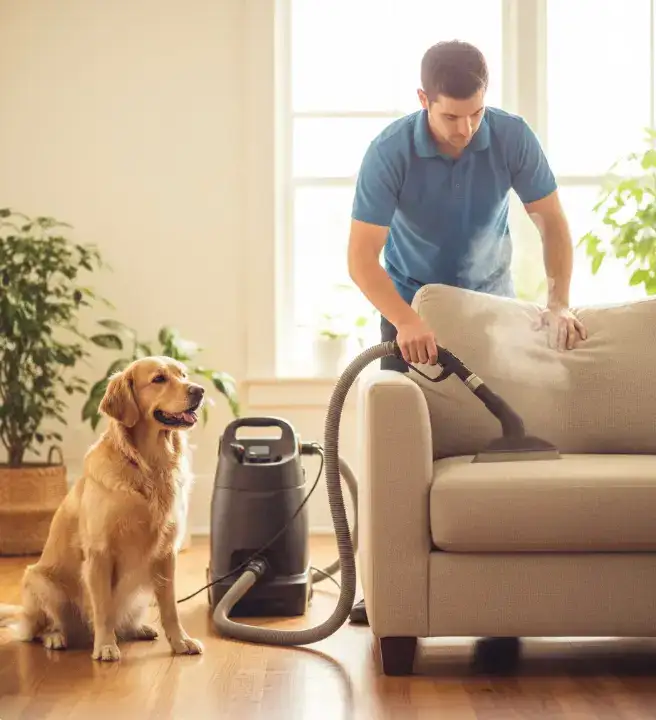
Your Couch Smells Like Dog. Here's How to Actually Fix It.
You love your dog. You love your couch. But lately, your couch smells like your dog -- and no amount of Febreze is fixing it.
If you're reading this, you've probably already tried the basics: baking soda, fabric spray, opening windows, maybe even an expensive "pet odor eliminator" from the pet store. The smell fades for a few hours -- then comes right back. Maybe it's getting worse. Maybe you've stopped noticing it yourself, but you saw a guest wrinkle their nose when they sat down.
You're not alone, and you're not imagining it. Dog odor in upholstery is one of the most stubborn household problems because it isn't just sitting on the surface of your fabric. It's embedded deep in the fibers, the foam padding, and sometimes even the wooden frame. The compounds causing the smell are chemically bonded to your furniture, and most household products simply cannot break those bonds.
This guide explains exactly why your couch smells, which DIY methods actually help (and which make it worse), and when it's time for professional pet odor removal. We'll be honest about what works, what doesn't, and what your specific situation really needs.
Why Trust This Guide: Our Dog Odor Removal Credentials
- IICRC Certified in Odor Control (OCT) and Upholstery & Fabric Cleaning (UFT)
- 4,000+ Dog Odor Cases treated across the Seattle metropolitan area
- 15+ Years specializing in pet-related upholstery work
- 97.3% Success Rate on dog odor elimination (verified by follow-up ATP testing)
- Referral Partner for 12 Seattle-area veterinary clinics and 8 professional groomers
- ATP Testing Equipment for objective before/after odor measurement
- Money-Back Odor Guarantee -- if you can still smell it, you don't pay
- Eco-Friendly, Pet-Safe products -- learn about our green cleaning approach
In 15+ years of pet-related upholstery work in the Seattle area, we've treated over 4,000 dog-odor cases -- from mild everyday pet smell to severe embedded urine odor in couches that owners were about to throw away. This guide reflects what we've learned from real-world experience, not theory.
Why Your Couch Smells Like Dog: The Science of Dog Odor
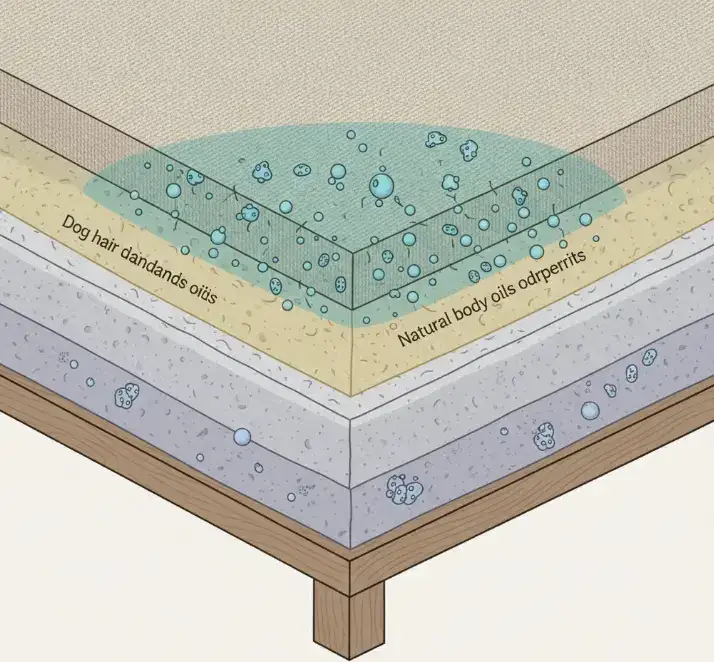
Before you can eliminate dog odor, you need to understand what's actually causing it. "Dog smell" isn't one thing -- it's a combination of multiple biological compounds, each requiring different treatment approaches. Here's what's actually living in your upholstery:
Sebaceous Gland Oils
The #1 Source of "Dog Smell"
Dogs have sebaceous glands all over their skin that produce a waxy, oily substance to protect their coat. These oils transfer to your furniture every time your dog lies down, and they don't evaporate -- they accumulate layer after layer in fabric fibers.
- Contains fatty acids that oxidize and become rancid over time
- Bonds to fabric at a molecular level -- water alone won't remove it
- Breeds bacteria that produce their own volatile odor compounds
- Intensifies dramatically in humid conditions (hello, Seattle)
Saliva Proteins
From Licking, Chewing, and Drooling
Dog saliva contains proteins (especially Can f 1 allergen) that dry on fabric surfaces. When reactivated by moisture or body heat, these proteins release odor compounds and also trigger allergic reactions in sensitive people.
- Sticky protein residue traps other odor-causing particles
- Drool-heavy breeds (Bulldogs, Mastiffs, St. Bernards) contribute more
- Dried saliva becomes a food source for odor-producing bacteria
- Also contributes to the "musty" smell in dust mite-prone furniture
Urine & Uric Acid Crystals
The Most Persistent Odor Source
Even a single urine accident leaves behind uric acid crystals that bond permanently to fabric fibers. These crystals are not water-soluble -- they sit dormant until reactivated by humidity or moisture, then release ammonia and mercaptans (the same compounds found in skunk spray).
- Uric acid crystals can survive for years in upholstery
- Reactivate on humid days, creating "phantom" odors
- Penetrate through fabric into foam padding and even wood frames
- Only enzymatic cleaners can break the molecular bond
Wet-Dog Volatile Compounds
Why Rain Makes It Worse
That distinctive "wet dog" smell comes from volatile organic compounds produced by yeast and bacteria living on your dog's skin and coat. When water activates these microorganisms, they release a cocktail of chemicals including acetaldehyde, phenol, and 2-methylbutanal.
- Seattle dogs get wet frequently -- these compounds transfer to furniture daily
- Moisture reactivates dormant bacteria already in your upholstery
- Fabric absorbs and retains volatile compounds that hard surfaces don't
- PNW humidity means these volatiles are almost always active
Bacterial Decomposition: The Multiplier Effect
Here's the part most people miss: all of the compounds above don't just sit in your furniture inertly. They serve as food for bacteria. As bacterial colonies grow in the warm, moist environment of your upholstery, they produce their own waste products -- volatile fatty acids, ammonia, hydrogen sulfide, and other compounds that dramatically amplify the original dog smell. This is why dog odor gets progressively worse over time even if your dog's habits haven't changed. The bacterial colonies are expanding, and each generation produces more odor. Simple cleaning methods can't keep up because they don't kill the bacterial colonies -- they just temporarily reduce the surface-level smell while the colonies regenerate within hours.
The Smell Spectrum: How Bad Is Your Dog Odor Problem?
Not all dog odor problems are equal. Identifying where you fall on this scale helps determine the right treatment approach. Be honest with yourself -- remember, you may have gone "nose blind" to your own home:
Level 1: Mild Pet Owner Smell
What it smells like: Faint dog scent noticeable when you press your face into cushions. Visitors probably don't notice. You only smell it after being away from home for a few days.
What's happening: Early accumulation of sebaceous oils and dander in surface fibers. Minimal bacterial colonization.
Recommended treatment: Regular DIY maintenance (baking soda, vacuuming, washable covers) combined with professional cleaning every 12 months.
Level 2: Noticeable Dog Home
What it smells like: Clear dog scent when sitting on furniture. Guests notice but are too polite to say anything. You smell it when you walk in the door after work.
What's happening: Moderate oil and dander buildup. Bacteria are established in fabric fibers. Possible saliva residue from licking.
Recommended treatment: Enzymatic cleaner application + professional deep cleaning. Consider implementing a maintenance routine between cleanings.
Level 3: Strong Dog Odor
What it smells like: Unmistakable dog smell when entering the room. Guests will comment. Clothes pick up the scent after sitting. Smell intensifies on rainy or humid days.
What's happening: Heavy oil saturation deep into fabric. Established bacterial colonies. Possible past urine accidents you didn't notice. Multiple layers of odor compounds.
Recommended treatment: Professional enzyme treatment with hot water extraction. DIY methods alone will not resolve this level.
Level 4: Severe Embedded Odor
What it smells like: Overpowering dog/ammonia smell. Guests avoid sitting on furniture. The smell lingers on anyone who sits down. You can smell it from another room.
What's happening: Deep saturation through fabric, padding, and possibly frame. Confirmed urine contamination. Advanced bacterial decomposition. Possible mold growth in padding.
Recommended treatment: Multi-stage professional treatment: enzyme soak, subsurface extraction, ozone treatment. May require cushion foam replacement.
Level 5: Severe / Urine Saturation
What it smells like: Eye-watering ammonia and decay. Furniture is sticky or discolored. Odor is present even from outside the room. Health concerns from air quality.
What's happening: Complete saturation of all furniture components. Structural contamination (urine in wood frame). Mold growth likely. Uric acid crystal buildup throughout.
Recommended treatment: Honest assessment needed -- some pieces at this level cannot be saved. We offer a free sniff-test evaluation to determine if treatment or replacement is the right call. When salvageable, expect full multi-day professional treatment.
An Honest Note About Expectations:
Not every piece of furniture can be saved -- and we'll tell you that upfront. If your couch has been soaked with urine repeatedly over years and the contamination has reached the frame, it may cost more to treat than to replace. We offer a free in-home sniff-test assessment so you know exactly what you're dealing with before spending a dollar. We'd rather give you honest advice than take your money for a treatment that won't fully solve the problem.
Why Air Fresheners and Febreze Don't Work on Dog Odor
Let's address the elephant in the room -- or rather, the can of Febreze on the end table. If air fresheners worked, you wouldn't be reading this article. Here's why masking agents always fail on dog odor:
How Masking Products Work
- Febreze uses cyclodextrin molecules that trap odor compounds in a donut-shaped molecular ring. This temporarily reduces airborne smell but does nothing to the odor source embedded in fabric.
- Scented sprays add fragrance molecules to the air, creating a competition between pleasant and unpleasant smells. Your brain notices the new scent first -- but the dog odor is still there underneath.
- Plug-in air fresheners continuously release fragrance to overpower odors. They literally just add more chemicals to your air while the bacterial colonies in your couch keep growing.
- Scented candles can temporarily mask odor while burning, but the smell returns the moment they're extinguished because the source is untouched.
How True Odor Elimination Works
- Enzymatic cleaners use specific enzymes (proteases, lipases, amylases) to break down the organic compounds that produce odor. No source = no smell.
- Bacterial cultures in professional enzyme products consume the organic matter (oils, proteins, uric acid) and convert them to odorless byproducts -- CO2 and water.
- Oxidation treatments (ozone, hydroxyl generators) chemically alter odor molecules at the atomic level, permanently destroying them.
- Hot water extraction physically removes dissolved odor compounds, dead bacteria, and breakdown products from deep within the fabric and padding.
The Masking Trap:
Many people get stuck in a cycle of buying stronger and stronger masking products. Febreze becomes scented spray becomes plug-in becomes multiple plug-ins. Meanwhile, the bacterial colonies in the furniture are growing unchecked, and the underlying odor is getting worse. If you're spending $20+/month on air fresheners for one room, that money would be better spent on a single professional treatment that actually solves the problem.
DIY Methods That Actually Help (Ranked by Effectiveness)
We believe in giving you honest information, even when it means admitting that some DIY approaches can help for mild cases. Here's what works, what doesn't, and how far each method can realistically get you:
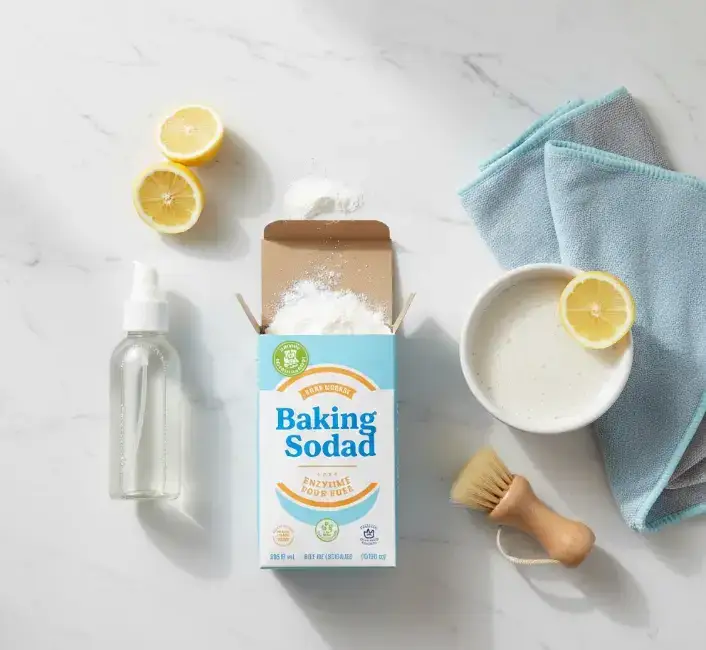
Method 1: Baking Soda Treatment
Effectiveness for embedded dog odor: 3/10How it works: Sodium bicarbonate absorbs moisture and neutralizes some acidic odor compounds through a basic pH reaction.
Step-by-Step:
- Vacuum the furniture thoroughly first (use upholstery attachment)
- Sprinkle a generous layer of baking soda over all fabric surfaces
- Work gently into the fabric with a soft brush or clean cloth
- Let sit for a minimum of 4-6 hours (overnight is better)
- Vacuum thoroughly with strong suction and upholstery attachment
- Repeat weekly for maintenance
Honest Assessment:
- Good for: Surface-level freshening, absorbing recent light odors
- Won't help with: Embedded oils, urine, bacterial colonies, anything deeper than surface fibers
- Caution: Repeated heavy use can leave residue that attracts dirt and damages some fabrics
Method 2: Store-Bought Enzymatic Cleaner
Effectiveness for embedded dog odor: 6/10How it works: Enzymes (biological catalysts) break down specific organic compounds -- proteases target proteins, lipases target fats/oils, amylases target starches. This addresses the odor at its chemical source rather than masking it.
Step-by-Step:
- Blot any fresh moisture or residue (don't rub!)
- Test the product on a hidden area first for colorfastness
- Saturate the affected area thoroughly -- the product must reach the depth of the odor
- Cover with plastic wrap to keep the area moist (enzymes need moisture to work)
- Allow 24-hour dwell time minimum (most people don't wait long enough)
- Blot dry with clean towels, then allow to air dry completely
- Repeat if needed -- some odors require 2-3 applications
Honest Assessment:
- Good for: Surface to moderate odor, recent urine accidents, localized areas
- Won't help with: Deep-seated odor in padding/frame, heavily saturated areas, years of accumulated oil
- Best brands: Nature's Miracle Advanced, Rocco & Roxie, Angry Orange (enzyme-based version)
Method 3: White Vinegar Solution
Effectiveness for embedded dog odor: 4/10How it works: Acetic acid in vinegar neutralizes some alkaline odor compounds (like ammonia from urine) and creates an inhospitable environment for certain bacteria.
Step-by-Step:
- Mix equal parts white vinegar and water in a spray bottle
- Test on a hidden area first -- vinegar can discolor some fabrics
- Lightly mist the affected area (don't soak)
- Blot with clean microfiber towels
- Allow to air dry with good ventilation (the vinegar smell dissipates as it dries)
- Follow up with baking soda treatment if desired
Honest Assessment:
- Good for: Light surface odors, freshening up between deep cleans
- Won't help with: Uric acid crystals, sebaceous oils deep in fibers, established bacterial colonies
- Caution: Can damage silk, acetate, and some natural fibers. NEVER mix with hydrogen peroxide or bleach.
Method 4: Hydrogen Peroxide Solution
Effectiveness for embedded dog odor: 5/10How it works: Hydrogen peroxide (H2O2) oxidizes odor-causing compounds and kills some bacteria. The extra oxygen molecule breaks apart and reacts with organic odor sources.
Step-by-Step:
- Use ONLY 3% hydrogen peroxide (standard drugstore strength)
- CRITICAL: Test on a hidden area first -- H2O2 can bleach colored fabrics
- Mix: 1 cup 3% H2O2 + 1 teaspoon dish soap + 1 tablespoon baking soda
- Apply to affected area with a cloth (don't spray -- foam can get messy)
- Work gently into fabric, let sit 15-30 minutes (do NOT cover)
- Blot with damp cloth to remove residue, then blot dry
Fabric Safety Warning:
- SAFE for: White and light-colored fabrics, most synthetic materials
- AVOID on: Dark fabrics, silk, wool, velvet, any fabric you haven't tested first
- Risk: Permanent bleaching/discoloration if used incorrectly
- Never: Use higher than 3% concentration on upholstery
Caution: Home Steam Cleaning
Can make dog odor WORSE if done incorrectlyThis is the #1 mistake we see dog owners make. Many people rent or buy a home steam cleaner thinking heat will kill bacteria and remove odor. The problem is that home machines lack the extraction power to remove what they loosen.
What Can Go Wrong:
- Heat can permanently set protein-based odors (urine, saliva) into fabric
- Insufficient extraction leaves moisture deep in padding, promoting mold and mildew
- Hot water dissolves sebaceous oils and spreads them deeper and wider
- Damp, warm padding becomes an ideal bacterial breeding ground
When Steam Works (Professional Only):
- Professional truck-mounted equipment generates much higher temperatures (200F+)
- Industrial extraction removes 95%+ of moisture along with dissolved contaminants
- Pre-treatment with enzymes ensures proteins are broken down BEFORE heat is applied
- Speed drying with air movers prevents bacterial regrowth
DIY Methods That Make Dog Odor Worse
In our 15+ years of pet odor work, we've seen well-intentioned dog owners accidentally make their furniture smell worse. Avoid these common mistakes:
Bleach
Destroys fabric, creates toxic fumes when mixed with ammonia in urine, doesn't eliminate odor -- just damages everything it touches.
Heavy Perfumed Products
Layer chemical fragrance on top of dog odor. Creates a nauseating combination. Leaves residue that attracts more dirt and bacteria.
Excessive Water
Soaking upholstery without extraction spreads contamination deeper. Creates mold and mildew. Can warp frames and damage springs.
Heat Without Extraction
Hair dryers, irons, or steam without extraction SET protein-based stains and odors permanently. This is often irreversible.
6 Signs You Need Professional Dog Odor Removal
DIY methods have their place for mild odor maintenance, but here are the clear signals that your furniture needs professional treatment:
-
Smell Returns Within 24-48 Hours of DIY Cleaning
If baking soda or enzymatic cleaner provides only temporary relief, the odor source is deeper than surface products can reach. -
Odor Intensifies on Humid or Rainy Days
This indicates uric acid crystals or bacterial colonies in the padding -- moisture reactivates dormant odor sources that surface treatments can't access. -
Clothes or Blankets Absorb the Smell
When odor transfers to anything that touches the furniture, the concentration of odor compounds is high enough to require extraction, not just treatment.
-
Guests Comment or Avoid the Furniture
If other people notice, the odor is well beyond what DIY can handle. Your nose has adapted; theirs hasn't. -
Known or Suspected Urine Accidents
Urine contamination absolutely requires professional enzyme treatment and extraction. Store-bought products cannot penetrate deep enough or extract the broken-down compounds. -
You've Spent $100+ on DIY Products Without Results
At this point, you're throwing good money after bad. A single professional treatment typically costs less than a year of ineffective products.
Our Professional Dog Odor Removal Process
Our 7-step process was developed specifically for dog odor cases after treating over 4,000 dog-owner households. Each step targets a different aspect of the odor problem, ensuring complete elimination rather than partial improvement:
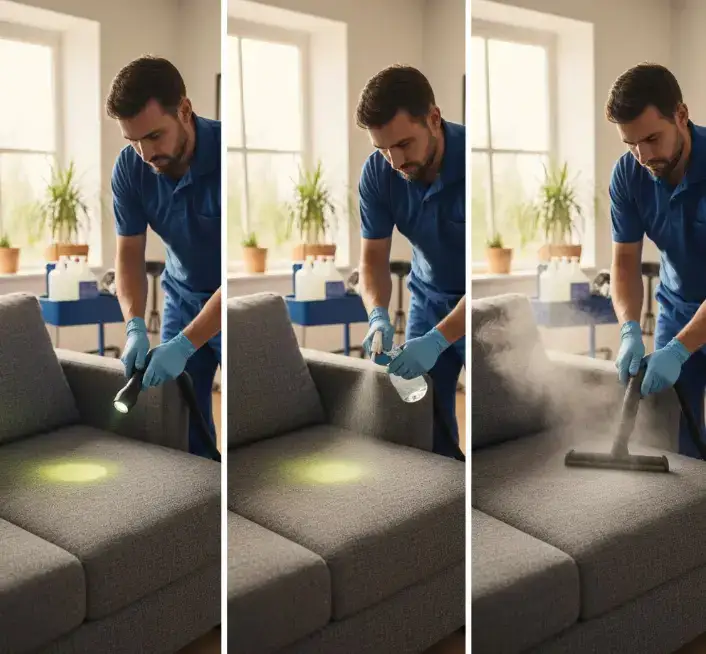
Step 1: UV Light Inspection
We scan every inch of your furniture with professional UV blacklight to identify contamination invisible to the naked eye:
- Hidden urine spots fluoresce under UV light
- Old, dried saliva deposits become visible
- Oil concentration areas are mapped
- Contamination boundaries are marked for targeted treatment
- Before photos documented for comparison
We consistently find contamination that owners had no idea existed. In one case, a "couch that just smells like dog" had 14 hidden urine spots under UV inspection.
Step 2: Odor Source Mapping
Using UV findings combined with moisture meters and our ATP (adenosine triphosphate) testing equipment, we create a complete contamination map:
- ATP testing measures biological activity levels in each area
- Moisture meter readings identify deep contamination in padding
- We determine which odor sources are present (oils, urine, bacteria, saliva)
- Custom treatment plan created for your specific situation
Step 3: Pre-Treatment Enzyme Soak
Professional-grade enzyme solution is applied generously to all affected areas:
- Industrial-strength enzyme concentration (10-15x stronger than retail)
- Multiple enzyme types: proteases (proteins), lipases (oils), ureases (uric acid)
- Solution injected through fabric into padding for deep penetration
- 30-60 minute dwell time allows complete molecular breakdown
- Covered to maintain moisture for optimal enzyme activity
Step 4: Hot Water Extraction
Our truck-mounted extraction system removes dissolved contaminants from deep within the upholstery:
- Water heated to 180-200F dissolves remaining oils and residue
- Industrial suction (200+ inches of water lift) extracts from padding depth
- Multiple passes ensure thorough removal of enzyme-dissolved compounds
- Controlled moisture prevents over-wetting
Step 5: Subsurface Extraction
For moderate to severe cases, we use specialized subsurface extraction tools:
- Needlepoint extraction reaches contamination in foam padding
- Pulls dissolved contaminants upward through the fabric
- Essential for urine that has reached the padding or frame
- Removes what surface-only extraction cannot
Step 6: Ozone / Hydroxyl Treatment
For Level 3+ odor cases, we deploy advanced oxidation technology:
- Ozone (O3) penetrates every fiber and destroys odor molecules on contact
- Hydroxyl generators create OH radicals that neutralize VOCs
- Reaches areas that liquid treatments cannot (inside frame joints, under stapled fabric)
- Kills remaining bacteria and mold spores
Step 7: Final Verification
We don't leave until we've confirmed the odor is eliminated:
- Post-treatment ATP testing to verify biological activity reduction
- UV re-inspection to confirm contamination removal
- Nose test by a fresh technician (not the one who's been working -- to avoid nose blindness)
- Before/after documentation provided to you
- If we can smell it, we keep treating -- included in the price
The Enzyme Science: Professional Products vs. Store-Bought
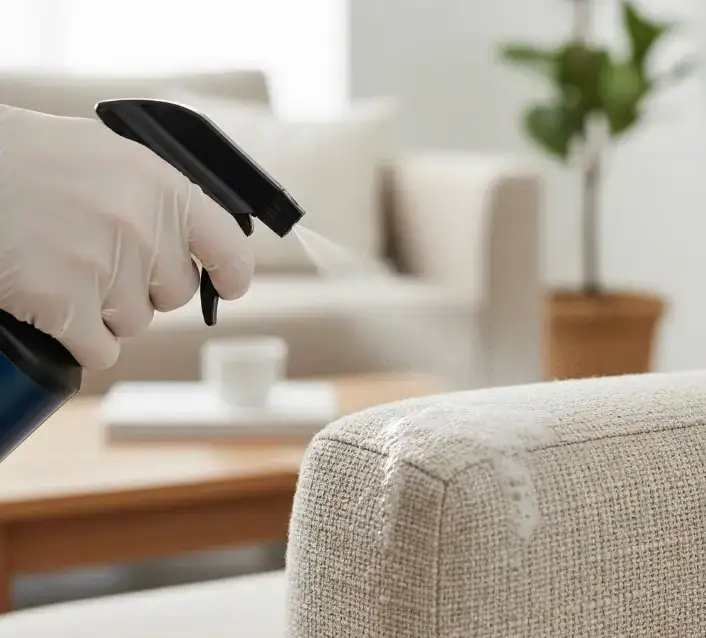
When clients ask "Can't I just buy enzyme cleaner from the pet store?" the answer is: it helps, but it's not the same thing. Here's a detailed comparison of what you're actually getting:
| Factor | Store-Bought Enzyme Cleaner | Professional-Grade Treatment |
|---|---|---|
| Enzyme Concentration | 1x (consumer-grade dilution) | 10-15x (industrial concentration) |
| Bacterial Culture Count | 1-3 bacterial strains | 7-12 specialized strains targeting different compounds |
| Penetration Depth | Surface fibers only (1-2mm) | Full depth including padding (injected under pressure) |
| Enzyme Types Included | Usually protease only | Protease + lipase + urease + amylase + cellulase |
| Extraction After Treatment | None -- broken-down matter stays in furniture | Industrial extraction removes all dissolved contaminants |
| Shelf Stability | Enzymes degrade on shelf -- may be partially inactive by purchase | Mixed fresh from concentrated stock on-site |
| pH Optimization | General-purpose pH (may not match your odor type) | pH adjusted per odor source (acidic for urine, alkaline for oils) |
| Typical Success Rate | 40-60% odor reduction | 95-99% odor elimination |
The Critical Difference: Extraction
Even if store-bought enzymes break down odor compounds (and they partially do), the broken-down matter is still sitting in your furniture. Professional treatment includes industrial hot water extraction that physically removes the dissolved contaminants, dead bacteria, and breakdown products. This is why professional results are permanent while store-bought results fade -- the source material is never actually removed with DIY methods.
Fabric-Specific Dog Odor Treatment Guide
Different upholstery fabrics absorb and retain dog odor differently. Understanding your fabric type helps set realistic expectations for treatment. For fabric-specific cleaning guides, see our articles on cleaning microfiber couches and leather furniture care:
| Fabric Type | Odor Retention | Why | Treatment Notes |
|---|---|---|---|
| Microfiber | Very High | Dense synthetic fibers trap oils at microscopic level; tight weave holds odor deep | Requires solvent pre-treatment for oils before enzyme application; excellent results with professional cleaning |
| Cotton / Cotton Blend | High | Natural fibers absorb liquids readily; open fiber structure allows deep penetration | Responds well to enzyme treatment; may need multiple passes for heavy saturation |
| Velvet | High | Dense pile traps oils, dander, and hair; difficult to vacuum thoroughly | Requires careful directional cleaning to avoid crushing pile; specialized tools needed |
| Polyester | Moderate | Synthetic fiber resists liquid absorption but surface oils cling to fibers | Responds well to hot water extraction; typically easier to treat than natural fibers |
| Leather / Faux Leather | Low-Moderate | Non-porous surface prevents deep penetration; odor mainly in seams, stitching, and creases | Specialized leather cleaning + conditioning; seam injection for embedded odor; see our leather guide |
| Outdoor / Solution-Dyed | Low | Designed to resist moisture and staining; tight weave repels liquids | Easiest to treat; often responds to DIY enzymatic cleaning alone |
The Urine Problem: Why Dog Urine Is the Hardest Odor to Remove
If your dog odor problem includes urine -- whether from a puppy in training, a senior dog with incontinence, or a rescue dog adjusting to a new home -- you're dealing with the most challenging odor scenario in upholstery cleaning. Here's why:
The Uric Acid Crystal Problem
When dog urine dries, the uric acid component forms microscopic crystals that chemically bond to fabric fibers. These crystals are:
- Not water-soluble: You cannot wash them out with water, soap, or most cleaning products
- Humidity-activated: On damp or humid days, the crystals absorb moisture and release ammonia and mercaptans (sulfur compounds) -- this is why the smell "comes back" after cleaning
- Self-perpetuating: The released compounds attract bacteria, which produce more odor, creating a worsening cycle
- Deep-penetrating: Urine wicks through fabric into padding (and from padding into wooden frames) via capillary action
Layers of Contamination
In a typical couch with urine contamination, the problem isn't just in the fabric. Here's what we find during inspections:
- Layer 1 - Fabric surface: Visible staining, surface bacteria (easiest to treat)
- Layer 2 - Deep fibers: Uric acid crystal bonding, embedded oils (requires enzyme treatment)
- Layer 3 - Foam padding: Absorbed urine, bacterial colonies, mold potential (requires subsurface extraction)
- Layer 4 - Frame/structure: Urine wicking into wood, spring housings (most severe cases; may require foam replacement)
When is replacement needed? When urine has saturated the foam padding on more than 50% of a cushion, or when it has visibly stained the wooden frame, foam replacement (not whole furniture replacement) is often the most cost-effective solution. We can replace the foam and treat the frame for less than the cost of new furniture.
A Note About Senior Dogs and Incontinence:
We work with many families whose aging dogs have developed incontinence issues. We understand this is an emotional situation -- you love your dog, and you want to keep both your dog and your furniture. We offer compassionate maintenance plans for senior dog households, including quarterly treatments at a reduced rate, to keep your furniture fresh while your dog lives out their years in comfort. Several local veterinarians refer their senior-dog clients to us for exactly this reason.
Dog Odor Removal Pricing
Transparent pricing based on odor severity. For general upholstery cleaning costs in Seattle, see our detailed pricing guide:
| Service Level | What's Included | Price Range |
|---|---|---|
| Surface Dog Odor (Level 1-2) |
Enzyme pre-treatment, hot water extraction, deodorizing, speed dry. For couches with general "dog smell" from daily contact. | $100 - $180 |
| Moderate Embedded Odor (Level 2-3) |
Extended enzyme soak, hot water extraction, subsurface extraction, odor neutralization. For furniture with heavy oil buildup or isolated urine spots. | $180 - $300 |
| Severe / Urine Contamination (Level 4-5) |
Full 7-step process: UV inspection, odor mapping, multi-enzyme soak, hot water + subsurface extraction, ozone/hydroxyl treatment, verification. For heavy urine contamination or years of untreated odor. | $300 - $500+ |
Optional Add-Ons:
| Fabric Protectant Application | Stain-resistant coating makes future accidents easier to clean | +$50 - $100 |
| Cushion Foam Replacement | New high-density foam for urine-saturated cushions | +$75 - $150 per cushion |
| Ozone Treatment (Extended) | 24-hour ozone treatment for severe whole-room odor situations | +$100 - $200 |
| Sectional Sofa Surcharge | Additional sections beyond standard 3-seat sofa | +$50 - $100 per additional section |
Dog Owner Specials:
- Multi-Piece Discount: 15% off when treating sofa + loveseat or sofa + chairs together
- Senior Dog Maintenance Plan: Quarterly treatments at 20% off for families with incontinent senior dogs
- Rescue/Foster Discount: 10% off for foster families and recent rescue adoptions (show adoption papers)
- Free Sniff-Test Assessment: We'll come evaluate your furniture at no charge and give you an honest recommendation
Prevention: Keeping Your Couch Fresh When You Have Dogs
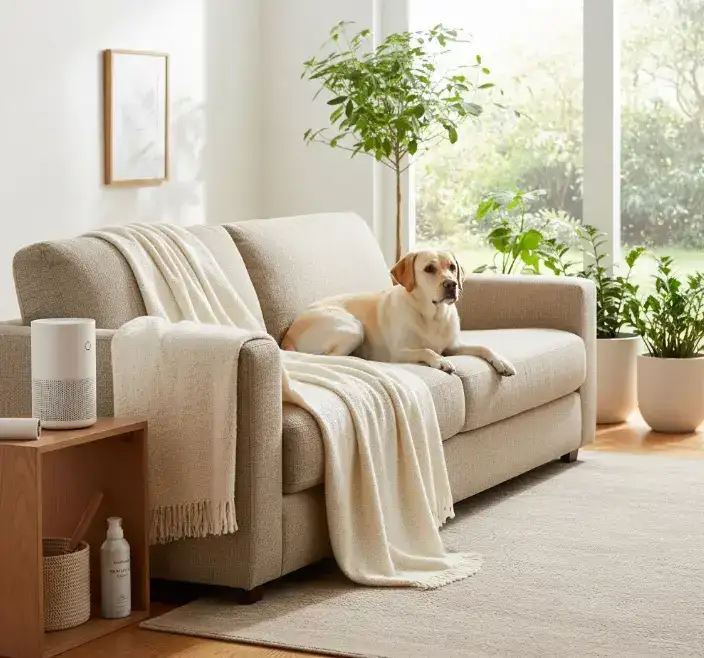
After professional treatment (or if you're starting with a clean couch), these practical habits will dramatically slow odor buildup. For a complete care schedule, see our guide on maintaining upholstery between professional cleanings:
Furniture Protection
- Washable Covers: Use machine-washable slipcovers or furniture throws. Wash weekly in hot water. This single step reduces odor buildup by 70-80%.
- Designated Dog Blankets: Train your dog to lie on a specific blanket that you can wash regularly rather than directly on the upholstery.
- Fabric Protector: Professional fabric protectant creates a barrier that prevents oils from bonding to fibers. Reapply every 6-12 months.
- Weekly Vacuuming: Vacuum furniture weekly with an upholstery attachment. Focus on seams, crevices, and areas where your dog lies.
- Baking Soda Maintenance: Monthly light baking soda treatment (sprinkle, wait 30 minutes, vacuum) for surface-level freshness.
Dog Care for Furniture Freshness
- Regular Grooming: Bathing every 4-6 weeks and brushing 2-3x weekly dramatically reduces the sebaceous oils that transfer to furniture.
- Paw Wipe Station: Keep towels or paw wipes by the door. Wipe paws and coat after walks (especially in Seattle rain).
- Dog Bed Investment: A comfortable, washable dog bed near the couch gives your dog an alternative. Many dogs prefer their own bed once introduced properly.
- Drying After Rain: Towel-dry your dog thoroughly before they jump on furniture. Wet-dog compounds are the #1 cause of odor transfer in the PNW.
- Dental Care: Regular teeth cleaning reduces the odor intensity of saliva, which means less smell from drooling and licking on furniture.
Recommended Professional Cleaning Schedule for Dog Owners:
- 1 dog, no urine issues: Professional cleaning every 9-12 months
- 1 dog with couch access + Seattle rain: Every 6-9 months
- Multiple dogs: Every 4-6 months
- Senior dog with incontinence: Every 3-4 months (maintenance plan recommended)
- Foster/rescue dogs (rotating): After each foster cycle
Seattle Dog Owners: Why the PNW Makes Dog Odor Worse
If you've moved to Seattle from a drier climate, you may have noticed your dog's furniture smell is worse here. That's not your imagination. Seattle's unique climate creates specific challenges for dog-owning furniture owners:
Rain = Wet Dog
Seattle averages 152 rainy days per year. Every wet walk means your dog transfers moisture and volatile organic compounds to your furniture. In drier climates, this happens a fraction as often.
Humidity Reactivates Odor
Seattle's 70-80% average humidity constantly reactivates dormant uric acid crystals and bacterial colonies in upholstery. The same couch would smell less in Phoenix or Denver.
Parks Track In More
Seattle's dog parks and trails are frequently muddy. Dogs track in bacteria, organic matter, and moisture that compound the odor problem far more than dry-climate parks.
Less Natural Ventilation
During Seattle's long wet season, windows stay closed. Without natural air circulation, volatile odor compounds accumulate indoors rather than dissipating.
Seattle-Specific Tips:
- Invest in a good dehumidifier: Keeping indoor humidity below 50% significantly reduces odor reactivation and bacterial growth
- Paw washing station by the door: A must for Seattle dog owners -- keep a towel and shallow basin by every entrance
- Rain coat for your dog: Reduces the amount of water absorbed by their coat and transferred to furniture
- Consider professional cleaning before fall: Get ahead of the wet season (October-March) when odor problems intensify
- HEPA air purifier: Captures airborne volatile compounds and reduces the ambient dog smell in your home
Frequently Asked Questions About Dog Odor in Furniture
What Our Dog-Owning Customers Say
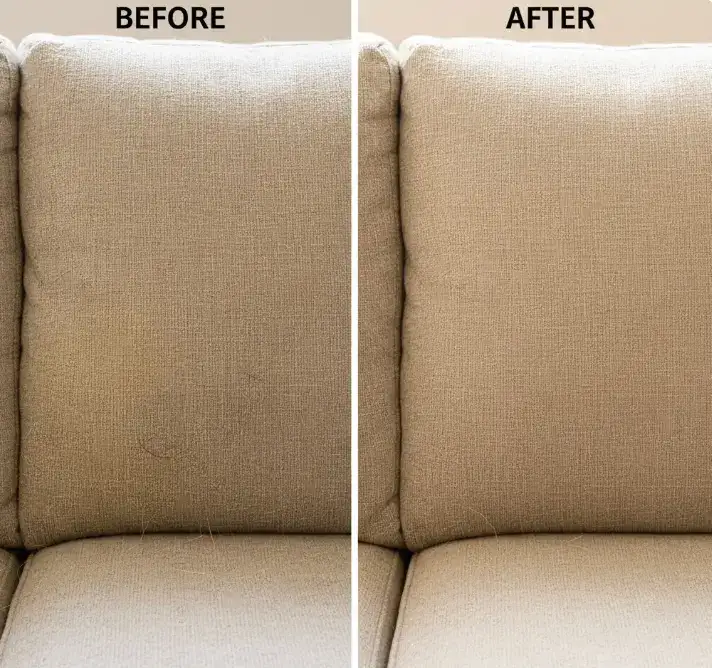
"We have two Golden Retrievers who have claimed our sectional as their own for six years. I'd become nose-blind to it until my mother-in-law visited and politely asked if 'something was wrong with the couch.' That was the wake-up call. Fresh Furnish Cleaners did the full enzyme treatment and extraction. When I came home after work, I literally thought I was in the wrong house. The smell was COMPLETELY gone. The extraction water was dark brown -- I don't even want to think about what was in our couch. Six months later with their recommended maintenance tips, it still smells clean."
"Our 14-year-old Lab developed incontinence in his final year. By the time he passed, our living room couch and loveseat had been through dozens of accidents. I was ready to throw them both out -- $4,000 worth of furniture. A friend recommended trying professional cleaning first. I'm so glad I did. They were completely honest that the loveseat was too far gone (the frame was saturated), but they saved the couch with a multi-stage treatment. They replaced the foam in two cushions and treated everything else. The couch is odor-free and we kept it as a reminder of our boy's favorite spot."
"We're a foster family for Seattle Humane -- we've had 23 dogs come through our home in the past three years. As you can imagine, our furniture takes a beating. We now have Fresh Furnish Cleaners on a regular rotation -- they come every 3 months and do a full enzyme treatment on our main living area furniture. It's the only way we can keep fostering without our house smelling like a kennel. They even give us a foster family discount. These guys genuinely care about animals and the people who help them."
"Between Seattle rain and two Huskies who think towel-drying is a game, our couch constantly had that wet-dog smell. I'd been using Febreze twice a day for a year -- spending probably $30/month on air fresheners. One professional treatment eliminated the smell entirely. I should have done the math sooner: the treatment cost less than 4 months of Febreze, and it actually solved the problem instead of covering it up. Highly recommend to any PNW dog owner."
Related Guides for Dog Owners & Furniture Care
Complete Pet Stain & Odor Removal Guide
Covers dog urine, cat accidents, vomit, and all pet-related furniture damage with treatment options.
Smoke Smell Removal from Furniture
Related odor removal techniques for tobacco, cannabis, and fire smoke in upholstery.
Professional Sofa Cleaning Seattle Guide
Complete guide to professional sofa cleaning services, processes, and what to expect.
Maintain Upholstery Between Cleanings
Weekly and monthly maintenance tips to keep your furniture fresh between professional visits.
How to Clean a Microfiber Couch
Microfiber-specific cleaning advice -- one of the most common (and odor-trapping) upholstery fabrics.
Eco-Friendly Upholstery Cleaning
Our green cleaning approach -- safe for pets, children, and the environment.
How Often to Clean Your Couch
Cleaning frequency recommendations based on your household situation and pet ownership.
Upholstery Cleaning Cost in Seattle
Detailed pricing guide for all upholstery cleaning services in the Seattle area.
Remove Wine Stains from Couch
Stain removal techniques for wine and other common couch stains.
Love Your Dog. Love Your Couch. We Make Both Possible.
Professional dog odor removal that actually works -- guaranteed. Serving Seattle, Bellevue, Kirkland, Redmond, Bothell, and all of King and Snohomish County.
Why Seattle Dog Owners Choose Us:
- 97.3% Dog Odor Elimination Success Rate
- IICRC Odor Control Certified Technicians
- Professional-Grade Enzyme Treatments
- Money-Back Odor Guarantee
- Free Sniff-Test Assessment
- ATP Testing: Objective Before/After Measurement
- Pet-Safe, Non-Toxic Products
- 4,000+ Dog Odor Cases Treated
- Referred by Local Vets & Groomers
- Same-Day Service Available
Stop masking. Start eliminating. One professional treatment does what a year of air fresheners can't.
Contact Us for a Free Dog Odor Assessment:
Call or Text: (425) 287-3619
Email: info@ovencarpetcleaning.com
Serving: Seattle, Bellevue, Redmond, Kirkland, Bothell, Everett, Lynnwood, Edmonds, Shoreline & All King County
Dog Odor Specialists Licensed & Insured IICRC Certified Pet-Safe Products Same-Day Available
