How to Remove Coffee Stains from Sofa
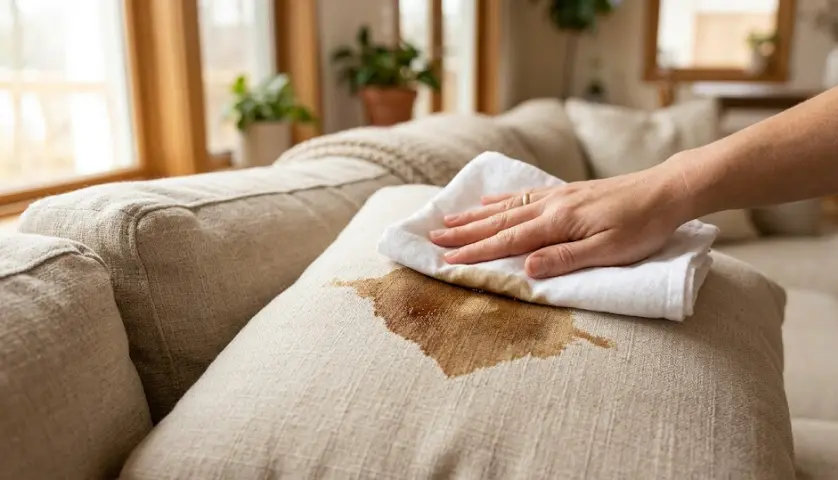
You reach for your morning cup, the sofa shifts, and suddenly there is a brown splash soaking into the cushion fabric. Coffee stains are one of the most common upholstery accidents — and one of the most stubborn to fully remove. The tannins in coffee behave similarly to those in red wine: they bond with fabric fibers rapidly, and every minute of delay deepens the stain and makes removal harder.
Whether you are dealing with a fresh spill or a dried coffee ring you just noticed, this comprehensive guide to coffee stain sofa removal covers the full process — the chemistry behind why coffee stains so aggressively, emergency steps for fresh spills, proven DIY methods for every fabric type, the mistakes that make stains permanent, and when professional cleaning is the right call. Our professional upholstery cleaning team serves Seattle, Bellevue, Kirkland, and the greater Eastside.
Why Coffee Stains Are So Difficult to Remove
Coffee looks like a simple brown liquid, but it is a chemically complex mixture that attacks fabric in multiple ways simultaneously. Understanding what is actually in your cup explains why a basic rinse with water never fully removes a coffee stain.
Tannins
Coffee contains high concentrations of tannins — the same polyphenolic compounds that give red wine its drying, astringent quality. Tannins are natural dyes that bond with organic fibers through hydrogen bonds and hydrophobic interactions, penetrating deep into textile structure. The darker and stronger the coffee roast, the higher the tannin concentration and the more aggressive the staining.
Why this matters: Tannins begin bonding with fabric fibers within seconds of contact. Heat — including hot coffee itself and any hot water used in cleaning — accelerates and deepens this bond.
Chromogenic Compounds
Coffee contains melanoidins and chlorogenic acid degradation products — large, dark-colored organic molecules that form during the roasting process. These chromogens are similar in structure to commercial fabric dyes and penetrate deep into textile fibers. When exposed to oxygen in the air, they undergo oxidation reactions that make the brown color progressively darker and more resistant to removal.
Why this matters: A coffee stain that looks light immediately after the spill can deepen to a dark brown within 30–60 minutes due to ongoing oxidation.
Proteins & Sugars (Milk & Cream)
Black coffee is already challenging — but coffee with added milk, cream, or sugar presents a compounded problem. Dairy proteins denature and bind with fabric fibers when exposed to heat or as they age, creating a second layer of staining that standard tannin-removal methods do not address. Residual dairy also creates an environment for odor-producing bacteria as it decomposes in the fabric.
Why this matters: White coffee stains often appear cleaner than black coffee stains visually, but the hidden protein and sugar residue can cause lasting odor and attract further soiling.
Emergency First Steps: What to Do in the First 60 Seconds
Coffee stains are already partially heat-set from the moment of the spill. This means the first minute of your response is more critical than with most other stains. Follow these steps in order and without skipping:
Act Immediately — Do NOT Wait
Grab the nearest clean cloth, paper towels, or napkins. Do not wait to find the "right" materials. The tannins are bonding with your fabric right now, and every second reduces your removal success rate.
Blot — Never Rub
Press your cloth firmly onto the spill and lift straight up. Rotate to a clean section of the cloth with each blot. Rubbing spreads the stain and pushes coffee deeper into the fiber structure. Work from the outer edge of the spill toward the center to prevent the stain from expanding.
Remove as Much Coffee as Possible Before Adding Anything
Keep blotting with fresh dry cloths until no more brown transfers. Do not apply water or any cleaning solution yet — first reduce the concentration of coffee in the fabric as much as possible through absorption alone. For large spills, press paper towels firmly and add weight on top to maximize absorption.
Apply Cold Water — Not Hot, Not Warm
Dampen a clean white cloth with cold water only. Cold water dilutes the remaining coffee and helps flush tannins from the fibers. Hot or warm water accelerates tannin bonding and sets the stain permanently. Blot with the cold damp cloth, then blot again with a dry cloth. Repeat several times.
Apply Baking Soda (Optional but Helpful)
While the area is still slightly damp, sprinkle a generous layer of baking soda over the stain. Baking soda absorbs additional moisture and coffee residue through osmosis and helps neutralize mild odors from milk or cream. Leave it for 5–10 minutes, then brush or vacuum it away gently.
Check Your Fabric Care Tag
Before applying any cleaning solution, locate the care tag on your sofa (usually underneath a cushion or on the frame). The cleaning code determines which method is safe: W = water-based cleaners safe, S = solvent-based only, SW = either type, X = professional cleaning only. Using the wrong solution on the wrong fabric can cause permanent water marks or color damage.
Apply Your Cleaning Solution
Based on your fabric's care code, proceed to the appropriate DIY method in the section below. If your sofa is coded X or S and you do not have rubbing alcohol available, stop and call a professional at (425) 287-3619 rather than risk causing additional damage.
DIY Coffee Stain Removal Methods by Fabric Type
Coffee stain removal is not one-size-fits-all. The wrong method on the wrong fabric can cause water rings, color loss, or fiber damage that is harder to fix than the original stain. Always test any cleaning solution on a hidden area of your fabric (the back or underside of a cushion) and wait 10 minutes before applying it to the stain.
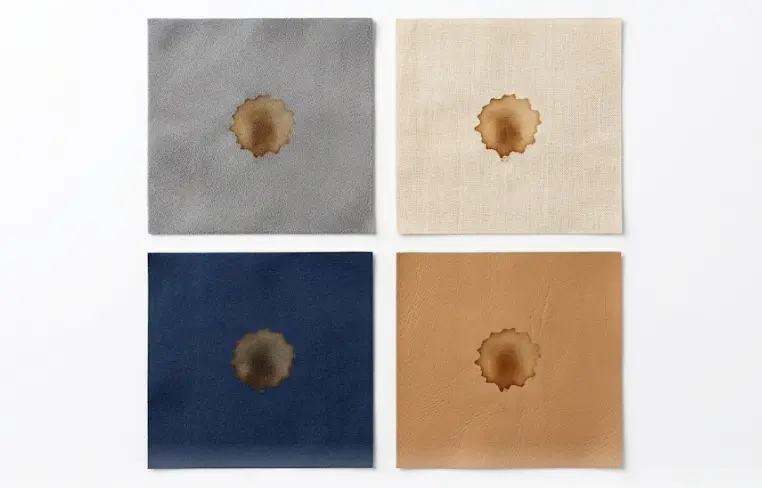
| Fabric Type | Care Code | Recommended Method | Solution Recipe | Difficulty |
|---|---|---|---|---|
| Cotton / Linen | W or SW | Dish soap + cold water solution. Natural fibers absorb quickly but respond well to water-based cleaning when treated promptly. | 1 tbsp clear dish soap + 1 tbsp white vinegar + 2 cups cold water | Easy |
| Microfiber (W-code) | W | Dish soap solution applied sparingly. Microfiber responds well to water-based cleaning but is prone to water rings if over-wet. | 1 tsp clear dish soap + 1 cup cold water. Apply to cloth, not directly to fabric. | Easy |
| Microfiber (S-code) | S | Rubbing alcohol only. Water-based solutions cause permanent water marks on S-code microfiber. Use alcohol to dissolve coffee without introducing water. | 70% isopropyl rubbing alcohol on a clean white cloth. Never pour directly on fabric. | Moderate |
| Polyester / Nylon | W or SW | Dish soap solution or hydrogen peroxide method for light fabrics. Synthetic fibers absorb more slowly, giving you slightly more time to respond. | Light fabric: 1 part 3% hydrogen peroxide + 2 parts cold water + 1 tsp dish soap. Dark fabric: dish soap + cold water only. | Moderate |
| Velvet | S or X | Blot dry only, apply baking soda, then call a professional. Water and water-based solutions permanently crush velvet pile and create visible marks. | Dry blotting + baking soda absorption only. Do NOT apply any liquid solution. | Call Pro |
| Performance Fabric | W | Mild soap and water. Performance fabrics (Crypton, Sunbrella) have stain-resistant coatings. Coffee often sits on the surface longer — blotting alone may fully remove fresh spills. | 1/4 cup mild liquid soap + 1 gallon lukewarm water. Sponge on, blot, air dry. | Easy |
| Leather | N/A | Wipe immediately with a slightly damp cloth. Coffee does not absorb through finished leather but seeps into seams. Use leather-specific cleaner afterward to restore conditioning. | Barely damp cloth + leather conditioner afterward. No soap on leather. | Moderate |
Detailed Method: Dish Soap + Vinegar Solution (Cotton, Linen, W-Code Fabrics)
- After completing the emergency blotting steps above, mix 1 tablespoon of clear, colorless dish soap with 1 tablespoon of white vinegar and 2 cups of cold water in a bowl or spray bottle.
- Apply the solution to a clean white cloth — not directly to the fabric. This gives you control over how much moisture enters the upholstery.
- Blot the stain with the damp cloth, working from the outer edge toward the center. You should see brown coffee color transferring to your cloth.
- Rotate to a clean section of the cloth with each blot. Never reuse a section that has absorbed coffee, or you will redeposit it onto the fabric.
- Let the solution sit on the stain for 3–5 minutes to break down the tannins.
- Blot with a cloth dampened with plain cold water to remove the cleaning solution residue.
- Finish with a clean dry cloth to absorb as much moisture as possible.
- Repeat the full cycle (steps 2–7) if the stain is still visible. Most fresh coffee stains require 2–3 cycles for complete removal.
- Place a thick layer of paper towels over the treated area and weigh them down with a heavy book overnight to absorb remaining moisture and prevent water rings as the fabric dries.
Detailed Method: Rubbing Alcohol (S-Code Microfiber)
- Open windows or turn on a fan for ventilation. Rubbing alcohol fumes can build up quickly in enclosed spaces.
- Pour a small amount of 70% isopropyl alcohol onto a clean white cloth. Never pour alcohol directly onto your fabric.
- Blot the coffee stain gently with the alcohol-dampened cloth. Alcohol dissolves the coffee tannins without introducing water, preventing the water ring problem common to S-code fabrics.
- As coffee transfers to your cloth, rotate to a fresh section and reapply alcohol. Use as much clean cloth as needed — do not keep blotting with a saturated section.
- Continue until no more coffee color transfers to the cloth.
- Once dry, use a soft-bristled brush (like a clean toothbrush) to gently restore the microfiber nap to its original direction and texture.
- Allow to air dry fully before using the sofa.
Detailed Method: Hydrogen Peroxide Solution (Light-Colored Polyester / Blends)
- Mix 1 part 3% hydrogen peroxide with 2 parts cold water and 1 teaspoon of clear dish soap.
- Apply to a clean cloth and blot onto the coffee stain. Do not saturate the fabric.
- Allow the solution to sit for 10–15 minutes. The mild oxidizing action of the peroxide breaks down the coffee chromogens. You may see slight bubbling — this is normal.
- Blot with a cold-water-dampened cloth to remove the solution.
- Finish with a dry cloth to absorb moisture. Repeat if needed — stubborn stains may require 2–3 applications.
- Once the stain is removed, blot thoroughly with cold water to remove all peroxide and soap residue, then allow to air dry completely.
Critical Mistakes vs. Correct Actions
When panic hits after a coffee spill, it is easy to reach for the wrong thing or apply the wrong technique. Here is a direct comparison of what makes coffee stains permanent versus what removes them effectively:
What NOT to Do
-
Rub or scrub the stain
Rubbing spreads coffee outward, pushes it deeper into fiber layers, and can damage the fabric surface. Always blot with a lifting motion only.
-
Use hot or warm water
Heat permanently bonds coffee tannins and proteins to fabric fibers. Hot water is the single most common cause of permanent coffee stains on sofas.
-
Apply bleach to colored fabric
Bleach strips fabric dye along with the coffee stain, leaving a bleached spot that is irreversible. Never use bleach on upholstery unless it is specifically rated for it.
-
Ignore the spill and clean it later
Tannins oxidize and deepen with every passing minute. A 5-minute response rate yields far better results than a 30-minute response. A stain left overnight is significantly harder to remove.
-
Use colored cloths for blotting
Dyes from colored towels or cloths can transfer to wet upholstery, creating a dye stain on top of the coffee stain. Use only white or undyed cloths.
-
Over-saturate the fabric
Flooding the fabric with cleaning solution soaks through to the cushion padding, risking mold growth and water rings. Apply solutions sparingly via a cloth, not by pouring.
-
Use water on S-code microfiber
Water causes permanent circular water stain marks on S-coded microfiber. Always check the care tag before applying any liquid. S-code requires solvent-based cleaning only.
What TO Do
-
Blot immediately with a pressing and lifting motion
Speed and correct technique are your two biggest advantages. Get a cloth on the stain within seconds and keep blotting until no more coffee transfers.
-
Use cold water exclusively
Cold water dilutes coffee without triggering the heat-set reaction. Repeat cold water blotting cycles to progressively flush tannins from the fabric.
-
Check the care tag before applying any solution
Thirty seconds spent reading your care tag can save your sofa from permanent damage. W, S, SW, and X codes each require a completely different cleaning approach.
-
Apply cleaning solution via cloth, not directly to fabric
Dampening your cloth rather than spraying or pouring onto the fabric gives you control over moisture levels and prevents the over-saturation that causes water rings and padding damage.
-
Test your solution on a hidden spot first
Apply a small amount to the back or underside of a cushion and wait 10 minutes before treating the visible stain. This catches unexpected adverse reactions before they affect visible fabric.
-
Address milk and cream residue separately
If your coffee contained dairy, use an enzyme-based cleaner after removing the visible stain to break down protein residue. Untreated dairy residue can create persistent odor as it decomposes.
-
Weigh down paper towels overnight
After treatment, place stacked paper towels over the area and add weight. This draws remaining moisture up from the fabric before it can dry into a water ring or re-deposit residue.
How to Treat Dried or Old Coffee Stains
Dried coffee stains require a different approach than fresh spills. The tannins have had time to fully oxidize and bond with the fiber structure, so you need to re-wet and loosen the stain before attempting removal. Do not use the same blotting-only method you would for a fresh spill.
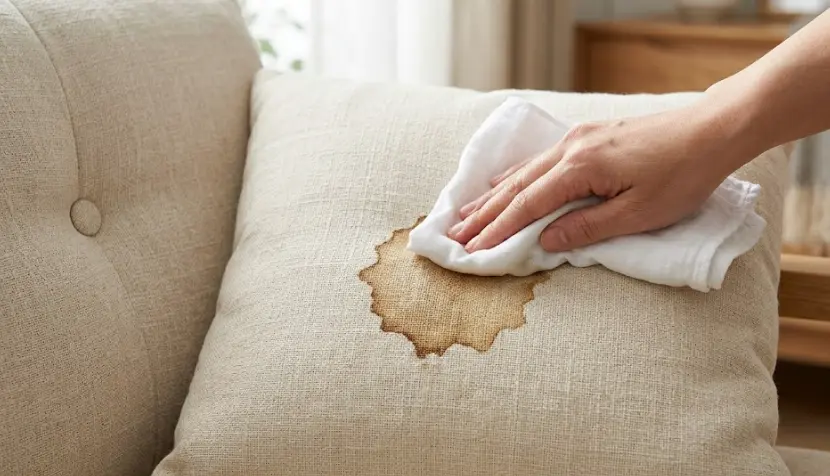
Step-by-Step for Dried Coffee Stains (W-Code Fabrics)
- Re-wet the stain with cold water. Dampen a cloth with cold water and gently press it onto the dried stain for 30–60 seconds to rehydrate the tannins. Do not scrub — just allow the moisture to soften the dried material.
- Prepare a stronger cleaning solution. Mix 1 tablespoon dish soap, 1 tablespoon white vinegar, and 1 teaspoon of baking soda in 2 cups of cold water. The slight effervescence from the baking soda-vinegar reaction helps lift the loosened tannins.
- Apply and let dwell. Apply the solution via a cloth and allow it to sit on the stain for 10–15 minutes. Longer dwell time is necessary for dried stains to allow the surfactants to penetrate the oxidized tannin layer.
- Blot vigorously but carefully. Use a clean white cloth to blot the treated area repeatedly, rotating to a fresh section each time. You may need 5–10 minutes of patient blotting for significant progress on old stains.
- Rinse and assess. Blot with a cold-water cloth to remove solution residue, then evaluate. Repeat the full process 2–3 times before concluding that the stain requires professional treatment.
Realistic Expectations for Old Stains
The age of the stain significantly affects removal outcomes. Here is what to expect based on how long the coffee has been on your sofa:
| Stain Age | DIY Success Rate | Professional Success Rate |
|---|---|---|
| Under 1 hour | 85–95% | 97–99% |
| 1–6 hours | 60–80% | 90–97% |
| 6–24 hours | 30–60% | 80–90% |
| 1–7 days | 10–30% | 70–85% |
| 1+ weeks | Under 15% | 50–75% |
Success rates reflect full stain removal. Significant improvement (70%+ lightening) is achievable in most cases regardless of age with professional treatment.
When to Call a Professional for Coffee Stain Sofa Removal
DIY methods are effective for many coffee stain situations, but there are scenarios where calling a professional is the right decision — and acting on this quickly rather than late leads to significantly better results. Our stain and odor removal team serves the full Seattle metro area.
Old or Dried Stains
If the coffee has been sitting for more than 24 hours and DIY attempts have not produced significant improvement, professional-grade enzyme pre-treatments and extraction equipment are likely the only option for meaningful removal. The sooner you call, the better the outcome.
Delicate or Premium Fabrics
Velvet, silk, antique upholstery, and high-end designer fabrics require specialized knowledge and techniques. An incorrect DIY approach on a premium fabric can permanently crush the pile, cause water rings, or strip the finish — damage that costs far more to repair than professional cleaning.
Large Spills or Full Mug
If an entire mug tipped and coffee has soaked through the cushion into the padding, surface treatment is insufficient. Professional extraction equipment removes coffee from deep within cushion cores and prevents ongoing tannin migration deeper into the foam over time.
Failed DIY Attempts
If you have tried one or more home methods without success, additional DIY attempts risk causing fabric damage. Residues from over-application of dish soap, vinegar, or hydrogen peroxide also interfere with professional treatments, so calling sooner rather than later gives professionals the best conditions to work with.
S-Code or X-Code Fabric
If your sofa is coded X (professional only) or S (solvent only) and you do not have rubbing alcohol on hand, do not apply any water-based DIY solutions. Water will cause permanent marks on these fabrics. Call immediately while the stain is still fresh.
Persistent Odor After Cleaning
If your sofa smells sour or musty after you have treated the visible stain, residual dairy proteins from milk or cream coffee are decomposing in the fabric or padding. Professional enzyme-based extraction eliminates the source of the odor rather than masking it. Read more about our upholstery odor removal services.
Our Professional Coffee Stain Sofa Removal Process
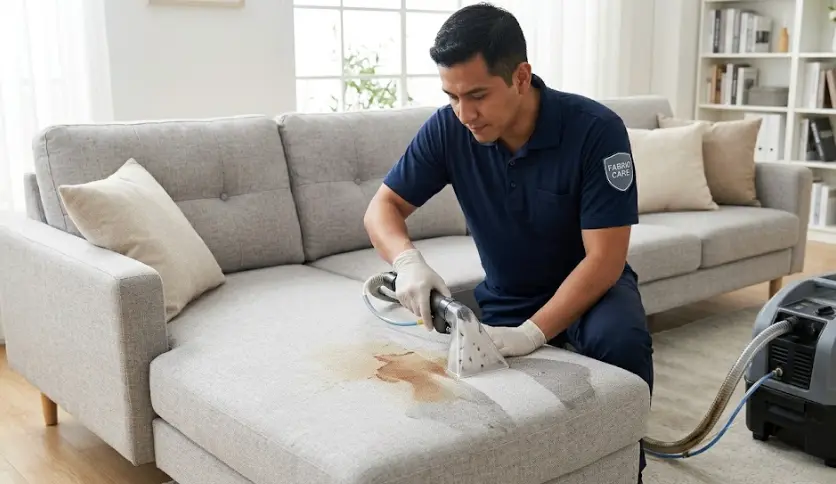
When you contact The Oven & Carpet Cleaning Company for coffee stain removal, our certified technicians follow a systematic process designed to address every component of the stain — tannins, chromogens, and any dairy residue — safely across all fabric types.
Step 1: Fabric & Stain Assessment
We identify your exact fabric type, care code, and construction. We test colorfastness in a hidden area and assess the stain's age, depth, and composition (black coffee vs. milk coffee). This determines which professional products and techniques are both safe and most effective for your specific sofa.
Step 2: Enzyme Pre-Treatment
We apply a professional-grade enzyme solution formulated to break down both tannin pigments and dairy proteins. For white or cream coffee stains, we use an additional protease enzyme formula that targets the milk protein components not addressed by standard tannin removers. This is the key step most DIY attempts skip.
Step 3: Controlled Dwell Time
The pre-treatment solution is given adequate dwell time — typically 10–20 minutes — to penetrate the stained area and begin breaking the molecular bonds between coffee pigments and fabric fibers. For older stains, we may apply a secondary penetrant to help rehydrate and loosen the oxidized tannin layer before proceeding.
Step 4: Hot Water Extraction
Using professional upholstery extraction equipment, we flush the treated area with controlled-temperature water and simultaneously vacuum it out at high pressure. This physically removes dissolved coffee compounds, cleaning solution residue, and any loosened debris from deep within the fiber structure — something no DIY method can replicate.
Step 5: Inspection & Secondary Treatment
We inspect the treated area under bright light to detect any remaining discoloration. If residual tannin pigment remains, we apply a secondary targeted treatment — typically an oxidizing agent for stubborn old stains — and extract again. No job is marked complete until the stain is visually gone or we have reached the maximum achievable improvement for the stain's age and type.
Step 6: Protection & Drying
Once the stain is fully addressed, we apply a professional-grade fabric protectant that creates an invisible hydrophobic barrier against future spills — giving you extra time to blot up coffee before it can soak in. We then use air movers to speed drying. Most sofas are ready for use within 2–4 hours of treatment.
Prevention: Protecting Your Sofa from Future Coffee Stains
The easiest coffee stain is the one you never have. And when accidents do happen, preparation makes the difference between a stain that vanishes in two minutes and one that needs professional treatment. For a complete care routine, see our guide on maintaining upholstery between professional cleanings.
Fabric Protectant
Have your sofa professionally treated with a fabric protectant such as Scotchgard or a professional-grade equivalent. The protectant creates a hydrophobic barrier that causes coffee to bead on the surface instead of absorbing, giving you critical extra seconds to blot it away completely.
Reapply: Every 12–18 months, or after each professional cleaning.
Use Travel Mugs
Swap open cups for travel mugs with lids when relaxing on the sofa. A lid eliminates the spill risk entirely — no matter how much the cushion shifts or the mug tips. Insulated travel mugs also keep coffee hot longer, reducing the temptation to rush drinks.
Bonus: Mugs with silicone grip bases add extra stability on soft cushion surfaces.
Stain Emergency Kit
Keep a small kit within arm's reach of your sofa seating area: white paper towels, a container of baking soda, a spray bottle of cold water, and a bottle of clear dish soap. Having everything within 5 seconds of the spill is more valuable than any individual cleaning product.
Storage: A small basket or drawer in your coffee table works perfectly.
Smart Fabric Choices
If you are buying a new sofa, consider performance fabrics like Crypton or Sunbrella, which are engineered with built-in stain and moisture resistance. Dark-toned or patterned fabrics also disguise minor staining far better than light solids. Removable, machine-washable slipcovers are another practical option for coffee-drinking households.
Best for: Families with children, home office workers, coffee enthusiasts.
Use Side Tables Consistently
Always place your coffee on a stable side table or tray rather than directly on sofa armrests or cushions. A flat, rigid surface reduces spill risk dramatically. A small sofa-arm caddy or tray table positioned beside your regular seating spot makes this easy to maintain as a habit.
Schedule Regular Professional Cleaning
Professional upholstery cleaning every 12–18 months removes accumulated grime and residue that makes fabrics more susceptible to permanent staining. It also provides the opportunity to reapply fabric protectant. Read our guide on how often to clean your couch professionally to build the right schedule for your household.
What Our Customers Say About Coffee Stain Removal
We have helped hundreds of Seattle-area homeowners rescue their sofas from coffee disasters. Here are some recent customer experiences:
"I knocked over a full oat milk latte on my cream linen sofa. I immediately did the dish soap and cold water method from this guide and got about 80% of it out, but there was still a faint brown ring. Called The Oven & Carpet Cleaning Company and their technician came out next morning. Twenty minutes later, no trace of the stain. He also explained that the milk protein was what was leaving the ring and why standard cleaning doesn't fully address it. So much more informative than I expected."
"We have a gray microfiber sectional and I had no idea it was S-coded. I used a soapy water solution and made the stain twice as bad — the water mark was worse than the coffee. Called for help and the technician arrived within a few hours. He used alcohol-based treatment and somehow got rid of both the coffee stain and the water ring I had created. Said he sees this exact situation all the time. Worth every penny and I now keep rubbing alcohol in the kitchen just in case."
"I found a coffee stain on the back cushion of our white sofa that must have been there for months — completely missed it under a throw pillow. I assumed it was permanent and was shopping for replacement cushions. On a friend's advice I called and was honestly told it might not be fully removable given the age. The team got it about 90% gone, which is far better than I expected. They were honest about the limitations upfront and didn't charge me until I approved the result. That kind of transparency is rare."
"I run a small home office and my clients occasionally sit on the sofa in the reception area. A client spilled coffee across two cushions right before a meeting. I followed the emergency steps I found in this guide while my meeting was going on, which bought me time. Called afterward and the technician came out that afternoon. By the following morning the sofa looked completely normal. The fabric protectant they applied afterward has already saved me twice since — spills now just bead up and wipe off."
Frequently Asked Questions About Coffee Stain Sofa Removal
Yes — dried coffee stains can often be significantly reduced or fully removed, though success depends heavily on the stain's age, the fabric type, and whether any previous cleaning attempts have affected the stain. Fresh stains treated within the first hour have the best outcomes. Stains more than a week old are the most challenging but professional enzyme treatment combined with hot water extraction can still achieve meaningful improvement — typically 70–90% lightening even on stubborn old marks. If you have already attempted DIY methods without success, call a professional before making further attempts, as continued DIY treatment can set the stain further or damage the fabric.
Always use cold water. Hot water heat-sets tannins and proteins from coffee into the fabric fibers through a chemical process similar to what happens when you cook food — the compounds bind permanently to the textile structure. Cold water dilutes the coffee and helps flush pigment from the fibers without triggering this heat-setting reaction. This is especially important because coffee is already a hot liquid that has begun heat-setting the moment it spills, so adding further heat during cleaning compounds the problem significantly.
Baking soda is a useful first-response tool for absorbing fresh coffee and neutralizing mild odors from dairy-containing drinks, but it does not remove the tannin pigments that cause the brown stain. Baking soda works through physical absorption and mild odor neutralization, not through any chemical action on coffee chromogens. Use baking soda as a step in the emergency blotting process, then follow with an appropriate cleaning solution based on your fabric's care code — dish soap and cold water for W-coded fabrics, or rubbing alcohol for S-coded microfiber. Baking soda alone will not fully remove a coffee stain.
The answer depends entirely on your microfiber sofa's care code, which you will find on a tag under the cushion or on the frame. W-coded microfiber: blot the fresh spill immediately with dry cloths, then apply a small amount of clear dish soap solution (1 teaspoon dish soap in 1 cup cold water) to a white cloth and blot — never pour solution directly onto the fabric. S-coded microfiber: do not use any water or water-based solution. Apply 70% isopropyl rubbing alcohol to a white cloth and blot the stain. Water on S-coded microfiber causes permanent circular water stain rings that can look worse than the original coffee stain. After treatment and drying, restore the microfiber nap with a soft-bristled brush.
Yes, if left untreated or treated incorrectly. The tannins in coffee undergo oxidation reactions continuously after the spill, bonding more deeply with the fiber structure over time. This process is irreversible beyond a certain point — which is why a stain left for a week is dramatically harder to treat than one addressed within an hour. Additional factors that cause permanent damage include applying hot water (which heat-sets the stain), using bleach on colored fabric (which strips the dye), rubbing instead of blotting (which permanently works pigment deeper into fibers), and using water on S-coded fabrics (which creates water rings). Prompt, correct action is the key to preventing permanent damage.
Professional coffee stain spot treatment in the Seattle metro area typically ranges from $65 to $130 for a single stain, depending on the fabric type, stain size, stain age, and whether additional services such as full-sofa cleaning or fabric protectant application are included. Combining stain removal with a full sofa cleaning is usually more cost-effective than spot treatment alone. We offer free phone estimates and can give you an exact quote based on photos of the stain. Call us at (425) 287-3619 or email info@ovencarpetcleaning.com for a no-obligation estimate.
Related Cleaning Guides
Coffee is just one of many challenges your upholstered furniture faces. Explore our expert guides for keeping your sofa looking its best through every situation:
Red Wine Stain Removal
Wine and coffee share the same core chemistry challenge: tannins that bond rapidly with fabric. Our complete guide to removing wine stains from couch fabric covers every fabric type and every scenario from fresh spill to dried stain.
Pet Stain & Odor Removal
Pets create some of the most persistent sofa stains. Our professional pet stain and odor removal service uses enzyme treatment to eliminate stains and odor at the source rather than masking them.
Professional Sofa Cleaning
For accumulated stains, general soiling, or a thorough refresh, our professional sofa cleaning guide for Seattle explains what to expect from a full-service cleaning appointment.
Coffee Stain on Your Sofa? We Can Help Today
Fresh or old, black coffee or latte — The Oven & Carpet Cleaning Company provides professional coffee stain sofa removal throughout Seattle, Bellevue, Kirkland, Redmond, and the greater Eastside. Our certified technicians arrive with professional-grade enzyme treatments and extraction equipment ready to address your specific fabric type and stain age.
Same-Day Service
Call before 2 PM for same-day emergency service on fresh coffee stains
Free Phone Advice
Call anytime for free emergency guidance on immediate steps while we are on the way
Free Estimates
Send a photo of the stain for a no-obligation quote within minutes
Serving Seattle, Bellevue, Kirkland, Redmond, Bothell, Woodinville, Lynnwood, Edmonds, Shoreline, and surrounding areas
