Why Does Carpet Smell After Professional Cleaning?
You booked a professional carpet cleaning expecting the house to smell fresh. Instead, your carpet smells worse than it did before the technician left — or it smells fine at first and then develops an odor over the next few days. This is one of the most common complaints after carpet cleaning, and it almost always has a specific, fixable cause. Understanding what's actually happening inside your carpet explains why the smell occurs, how long it should last, and what to do when it doesn't go away on its own.
The short answer is this: most post-cleaning odors are temporary and tied to moisture that hasn't fully evaporated yet. But some odors signal that something went wrong during the cleaning process — either inadequate extraction, the wrong pre-treatment for a contamination type, or a problem that existed in the carpet before cleaning and was only temporarily masked. Knowing which situation you're in determines what to do next.
The Most Common Cause: Moisture Reactivating Dormant Odors
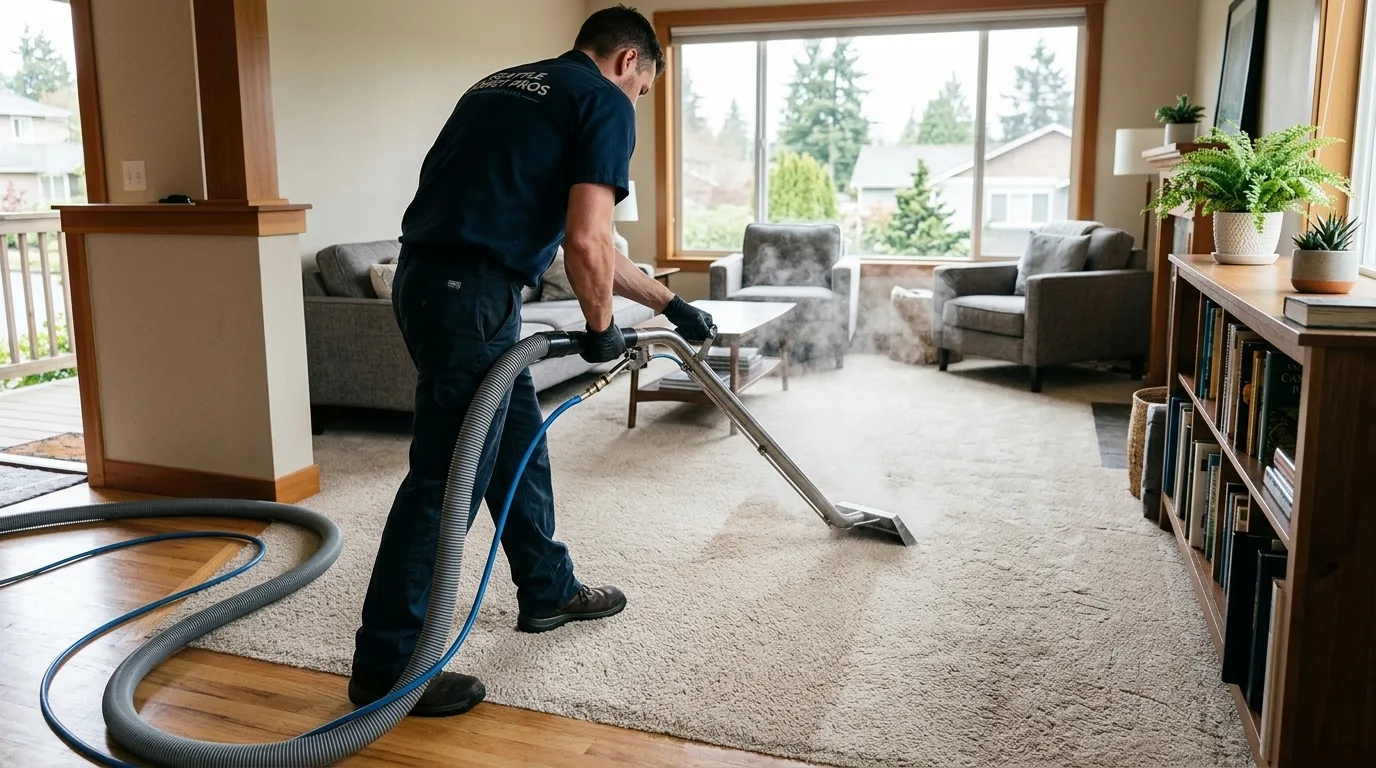
Hot water extraction — the method most professional carpet cleaners use — delivers heated water under pressure into the carpet fiber and pad, then extracts it along with dissolved dirt and cleaning solution. The process is effective precisely because it reaches the padding beneath the fiber, where most contamination actually lives. But the extraction step doesn't remove all the moisture. Some amount of water stays in the pad, and as it slowly evaporates over the next few hours, it carries compounds back up through the fiber to the surface.
Those compounds — body oils, skin cells, dust mite byproducts, and decomposed organic material that had settled into the padding over months or years — are what you smell. The carpet didn't create new odors during cleaning. It released odors that were already there but weren't detectable when the material was dry and settled. This is the same reason a wet dog smells stronger than a dry dog: moisture activates and amplifies organic compounds that are essentially odorless in their dry state.
In most cases, this type of odor resolves on its own within 24 to 48 hours as the carpet and pad dry completely. The condition that created the smell — organic material in the padding — was reduced by the cleaning. Once the moisture evaporates, the smell goes with it.
When the Smell Is Urine — and Why Cleaning Can Make It Worse Temporarily
If the post-cleaning odor is specifically a urine smell — from a cat, dog, or previous tenant — the mechanism is different and more important to understand. When pet urine dries in carpet and padding, the liquid evaporates but the uric acid crystals remain in the fiber structure. These crystals are essentially inert when dry. They don't produce much odor in that state. But when moisture contacts them — from a cleaning appointment, from humidity, from a subsequent spill — the crystals dissolve and release the odor compounds they contain.
Hot water extraction without enzyme pre-treatment does exactly this: it introduces moisture, dissolves the crystals, moves them around, and extracts as much as possible. But it doesn't neutralize the crystals it doesn't reach. When the carpet dries again, the remaining crystals re-form and the odor returns — sometimes worse than before cleaning, because the extraction process moved contamination from the deeper pad into the surface fiber where it's closer to the air.
The correct approach for urine contamination is enzyme pre-treatment applied before extraction, allowed to dwell long enough for the biochemical reaction to break down the uric acid crystals, and then followed by hot water extraction to remove the neutralized material. A service that skips this step — either because they don't stock enzyme products or because they're moving too fast through appointments — will produce a result that smells acceptable immediately after cleaning and noticeably worse within a week.
Detergent Residue and the Smell That Gets Worse Over Days
A third cause of post-cleaning odor is cleaning solution that wasn't fully extracted from the fiber. Carpet cleaning solutions — even professional-grade products — contain surfactants that are designed to attract and hold dirt particles so they can be extracted. If too much solution was applied, or if the extraction pass wasn't thorough enough to remove it, residual surfactant stays in the fiber. As the carpet dries, this residue becomes slightly sticky. It attracts ambient particles — airborne dust, skin cells, whatever comes off foot traffic — and the carpet gets dirty faster than it did before cleaning.
Detergent residue also produces a distinct smell: slightly sour, faintly chemical, and noticeably different from the earthy organic smell of moisture-activated contamination. If your carpet smells chemical after cleaning and the smell doesn't fade within 48 hours, residue is the likely cause. This can be addressed by a rinse pass — running plain water through a hot water extraction setup to pull out remaining solution — followed by thorough extraction.
How Long Is Normal — and When to Call Back
| Type of Smell | Normal Duration | What It Means |
|---|---|---|
| Earthy / dusty / slightly musty | 6–24 hours | Dormant organic material reactivated by moisture — normal, resolves as carpet dries |
| Wet dog or damp fabric | 12–48 hours | Padding retaining moisture — increase airflow, run dehumidifier |
| Mild chemical or cleaning solution | 6–24 hours | Normal off-gassing of cleaning agents — fades as moisture evaporates |
| Urine smell that returns after drying | Should not occur | Enzyme pre-treatment was not used — uric acid crystals not neutralized |
| Musty smell that gets stronger over 48–72 hours | Should not occur | Padding is staying wet too long — mold/mildew risk, call back |
| Odor worse than before cleaning after carpet fully dries | Should not occur | Process failure — inadequate pre-treatment or extraction |
A professional carpet cleaning should leave your home smelling noticeably better once the carpet is fully dry — not just neutral, but cleaner than before. If the smell after your carpet fully dries is worse than before the appointment, that's not a normal outcome and the service should correct it.
What to Do While Waiting for the Carpet to Dry
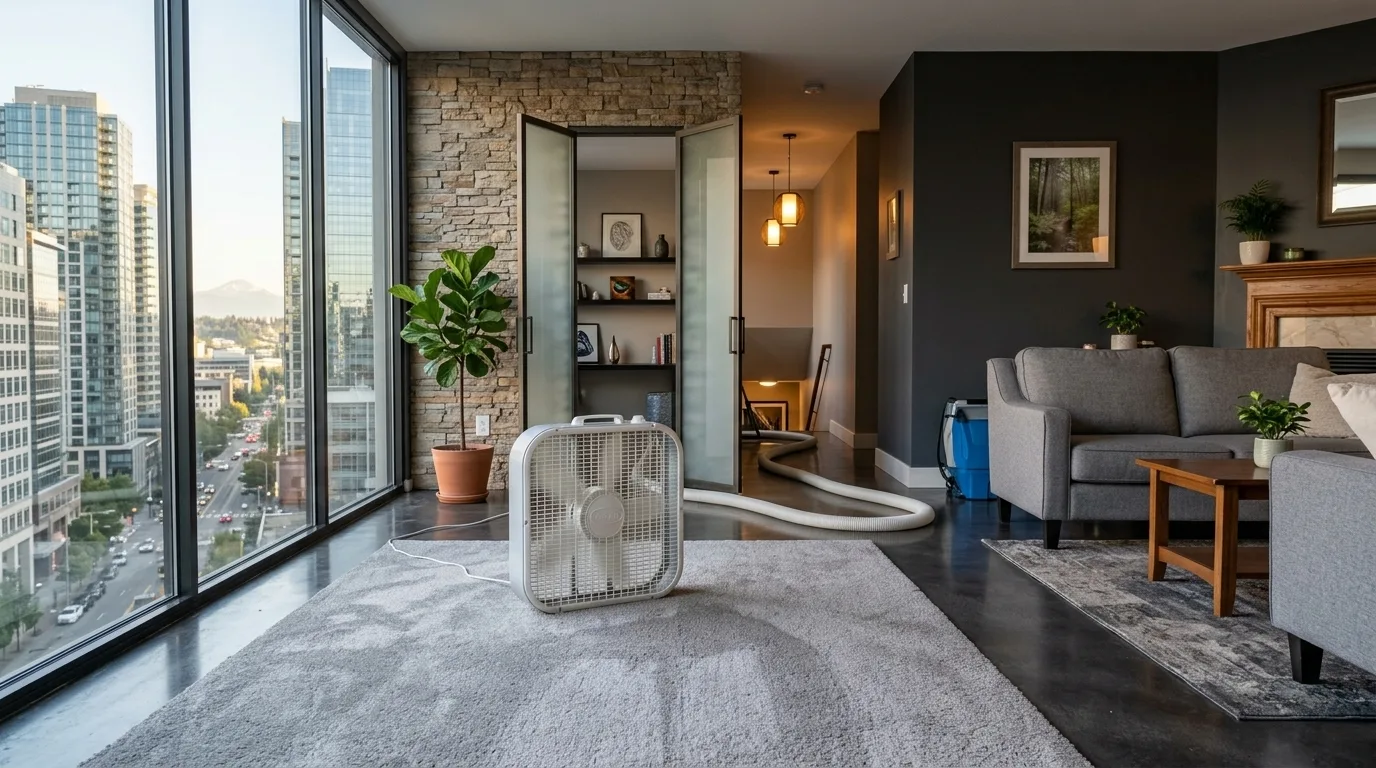
The single most effective thing you can do after a carpet cleaning appointment is maximize airflow. Open windows if outdoor humidity is lower than indoor humidity — in Seattle, this is most reliably the case on dry days from June through September. Run ceiling fans on their highest setting. Place box fans directly on the carpet pointed toward doorways to move moisture-laden air out of the room. If you have a dehumidifier, run it continuously until the carpet is fully dry to the touch — not just the surface, but the padding beneath, which you can test by pressing a dry cloth firmly against the carpet and checking for any moisture transfer.
Avoid walking on the carpet until it's dry. Foot traffic on wet padding presses moisture deeper into the pad and slows evaporation. It also transfers soil from shoe soles into the wet fiber — undoing part of what the cleaning accomplished. If you need to cross the room, wear clean socks only.
Don't apply baking soda, carpet deodorizer sprays, or any other product to wet carpet. These products are designed for use on dry fiber and don't address the source of moisture-related odors. Applying them to wet carpet creates a paste in the fiber that's difficult to remove and can itself become an odor source as it absorbs moisture and biological material.
Why Seattle Homes Have a Higher Risk of Post-Cleaning Odor
The Pacific Northwest climate creates specific conditions that make post-cleaning carpet odor more common and more persistent than in drier regions. From October through May, Seattle homes run with windows closed against sustained rainfall, which keeps indoor relative humidity elevated — often between 55% and 70%. Carpet padding in these conditions holds moisture longer than it would in a climate like Denver or Phoenix, extending drying times from the typical 6 to 12 hours to 18 to 36 hours under poor ventilation conditions.
This extended wet period is when problems develop. A carpet that would dry within 8 hours in a dry climate and never develop a musty odor may stay wet for 24 hours in a sealed Seattle home in November — long enough for bacterial activity in the padding to generate odor compounds. The solution isn't to avoid professional cleaning in winter; it's to be more aggressive about airflow and dehumidification after the appointment, and to schedule on days when you can open windows for at least part of the drying period.
Households with older carpet in basements or ground-floor rooms face additional risk. Concrete subfloors stay cool year-round, and cool subfloor temperatures slow evaporation from the carpet pad significantly. If you have carpet in a below-grade room that smells after cleaning, a dehumidifier running for 24 to 48 hours after the appointment is not optional — it's the primary factor that determines whether the cleaning succeeds.
Choosing a Service That Gets It Right
The most reliable way to avoid post-cleaning odor problems is to choose a service that uses truck-mounted extraction equipment rather than portable units. Truck-mounted systems generate substantially higher suction pressure, which means more moisture is removed from the carpet pad during the extraction pass. Carpets cleaned with truck-mounted equipment are typically surface-dry within 2 to 4 hours. Carpets cleaned with portable units often take 6 to 12 hours to reach the same state — and that extended wet period is precisely when odor problems develop.
Ask prospective services directly: do you use truck-mounted or portable equipment? Do you apply enzyme pre-treatment before extraction on carpets with pet contamination? Do you check for moisture retention before leaving an appointment? These questions aren't adversarial — they're the questions a knowledgeable customer should ask to distinguish services that understand the process from services that are executing a rote routine without understanding what they're doing or why.
Fresh Furnish Cleaners uses truck-mounted extraction systems and applies targeted enzyme pre-treatment to all carpets with identified pet contamination. If you're in the Seattle area and want a cleaning that solves the problem rather than temporarily masking it, our carpet and upholstery cleaning services are available across the greater Seattle area including Bothell, Kirkland, Bellevue, Lynnwood, and surrounding communities. We don't consider an appointment complete until the carpet is dry and the result meets what we committed to before we started.
