How Long Does Upholstery Cleaning Take? Time by Piece, Method, and Drying
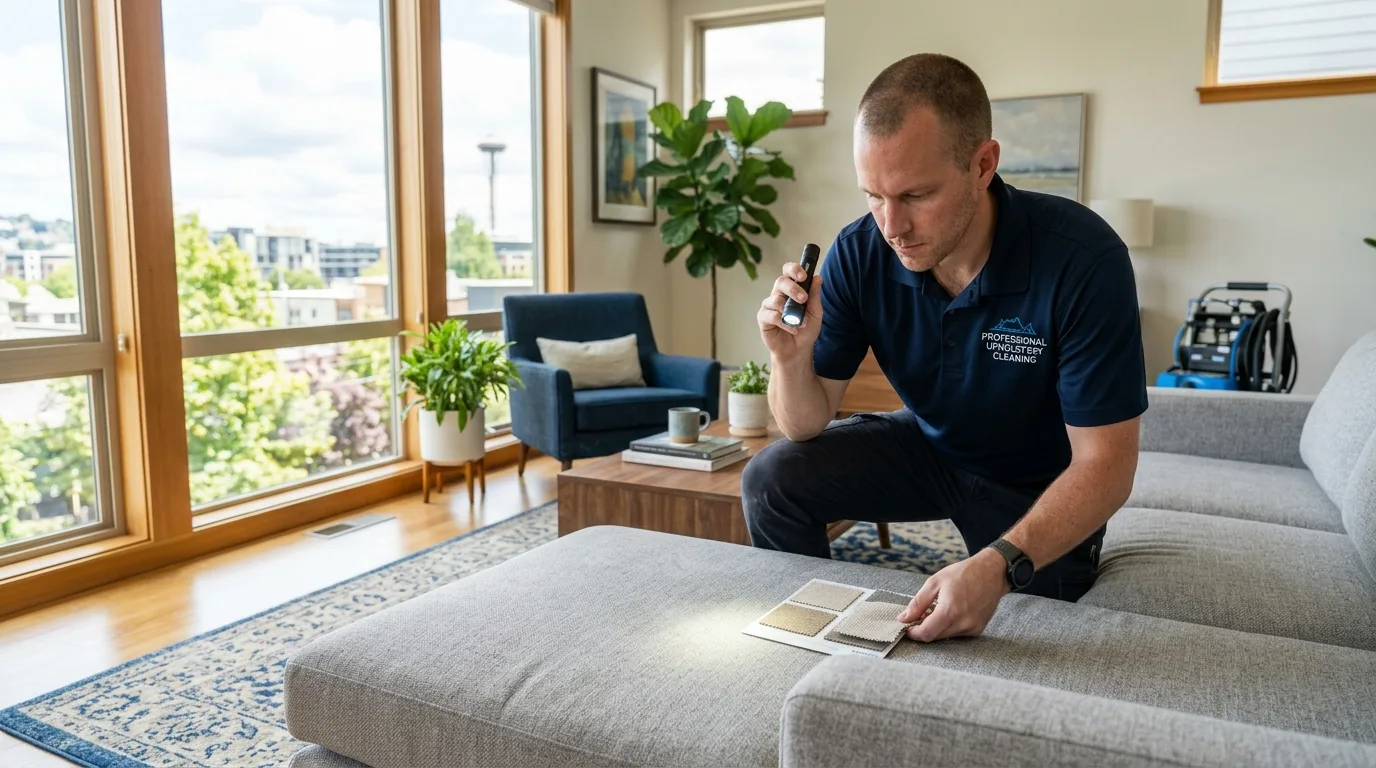
The time upholstery cleaning takes has two separate components that are easy to confuse: the cleaning time (how long the technician is working on the piece) and the drying time (how long before you can use the furniture again). In Seattle, both matter — and the second one is longer than most people expect.
Here's what realistic timelines look like for different furniture types, methods, and Seattle's specific climate conditions.
Cleaning Time by Furniture Type
These are working time estimates for hot water extraction — the most common professional method — on standard fabric upholstery with moderate soiling:
| Furniture Piece | Cleaning Time | Add for Heavy Soiling / Pets |
|---|---|---|
| Sofa (2-seat) | 35–55 min | +10–15 min |
| Sofa (3-seat) | 45–70 min | +10–20 min |
| Sectional (L-shaped, 4–6 pieces) | 90–150 min | +20–40 min |
| Loveseat | 30–45 min | +10 min |
| Armchair | 20–35 min | +5–10 min |
| Recliner | 35–55 min | +10–15 min |
| Dining chair (per chair) | 10–20 min | +5 min |
| Ottoman | 15–25 min | +5 min |
Setup and breakdown (running hoses, connecting truck-mount, moving items for access) adds 10–20 minutes to any appointment, regardless of how many pieces are cleaned. This is one reason multi-piece bookings are more time-efficient per piece than single-item appointments.
Cleaning time increases noticeably for: upholstery that hasn't been cleaned in 3+ years, households with multiple shedding pets, or specific stain types like urine or embedded oil that require extended pre-treatment dwell time before extraction.
How Method Affects Cleaning Time
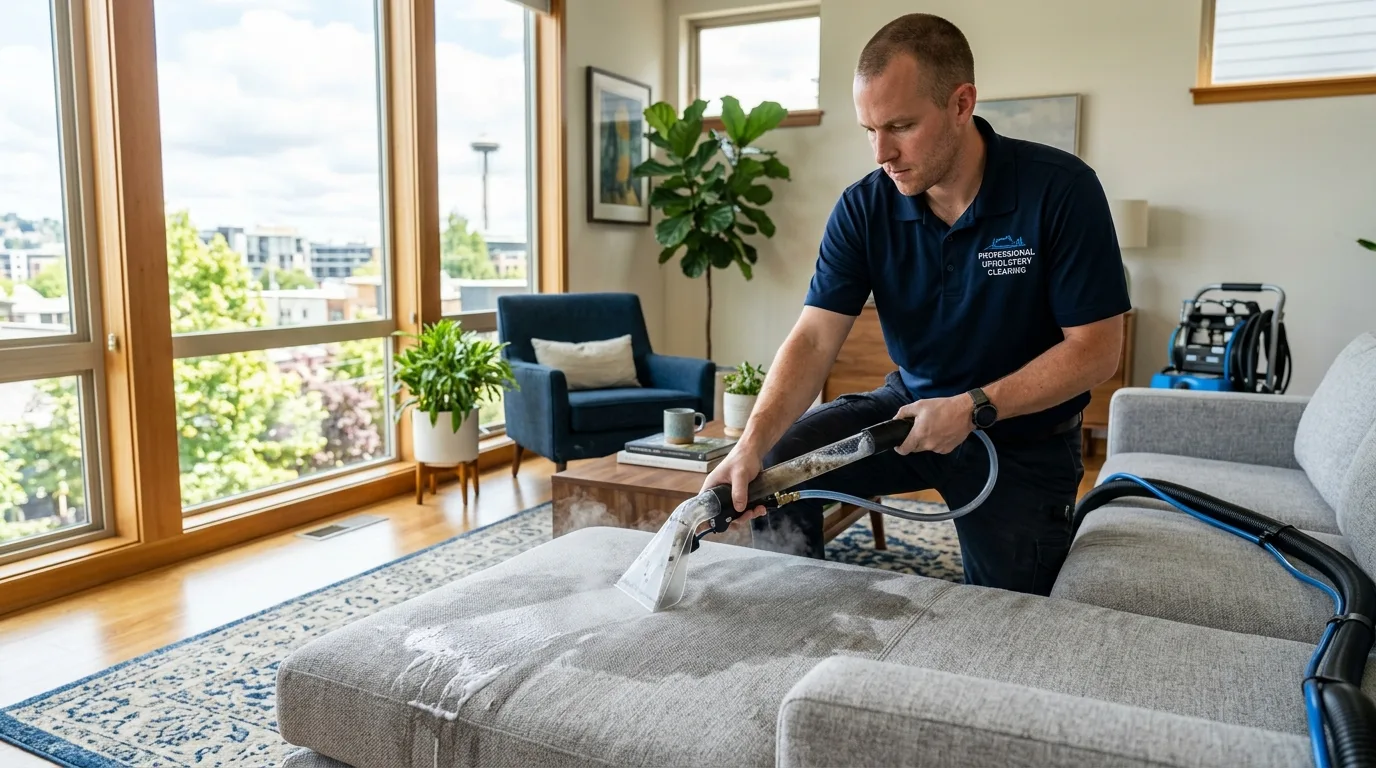
Hot water extraction (commonly called steam cleaning, though the water temperature is below actual steam) is the most common professional method. It takes the longest per piece but removes the most soil. The extraction pass pulls the water and dissolved soil back out of the fabric — this step is what separates professional results from consumer machine results and is what drives drying time down when done properly.
Encapsulation is faster — a sofa takes 20–35 minutes — because there is no extraction step. The cleaning polymer surrounds soil particles and dries to a crystal that vacuums out later. Drying time is 1–2 hours. The trade-off is that encapsulation doesn't reach deep soil the way extraction does; it works well for maintenance cleaning on lightly soiled pieces but produces less dramatic results on heavily soiled upholstery.
Dry foam cleaning (foam applied, worked into the fabric, then vacuumed out) is faster still at 15–25 minutes per piece with 30–60 minute drying, but it's the least effective method at soil removal and is used primarily on delicate fabrics that can't tolerate moisture.

Drying Time in Seattle's Climate
Seattle's humidity is the main variable that separates drying times here from what you'd read in national averages. Most upholstery cleaning guides cite 2–4 hours to dry. That's accurate in Phoenix or Denver. In Seattle, the realistic range is 4–12 hours depending on season and ventilation.
From June through early September, with windows open and a ceiling fan or box fan running, a sofa cleaned with professional truck-mounted extraction typically dries in 3–6 hours. The extraction process itself removes a large portion of the moisture — a machine producing 2,000–3,000 CFM of vacuum leaves fabric damp rather than wet.
From October through April, indoor humidity in Seattle homes regularly reaches 65–80% without active dehumidification. At that relative humidity level, fabric dries significantly slower. The same sofa cleaned in October may take 8–14 hours to feel dry without intervention. This isn't dangerous for the fabric, but it does mean planning cleaning for a day when you don't need the furniture that evening.
Running a dehumidifier in the room is the most effective way to cut drying time in autumn and winter. Setting it to 40–45% RH while the furniture dries will typically halve the drying time compared to doing nothing. Opening windows on days above 50°F and below about 70% outdoor humidity also helps, but during Seattle's rainy season, outdoor air can be more humid than indoor air.
When Can You Use the Furniture Again?
The practical test is feel rather than a fixed hour count. Run your hand across the fabric — if it feels cool and slightly damp, wait. If it feels room-temperature and dry to the touch, normal use is fine. Cushions take longer than surface fabric because the foam interior holds moisture after the outer fabric dries; if you press a cushion firmly and it feels cold inside, give it more time.
Sitting on damp upholstery causes two problems. First, your clothing contacts wet fabric and transfers body oils back into the piece, which accelerates resoiling. Second, weight compresses cushion foam and drives moisture deeper rather than letting it evaporate upward. Neither is catastrophic, but they're worth avoiding when a few more hours of patience makes a difference.
For households with children or pets where furniture unavailability is genuinely disruptive, scheduling cleaning early in the morning gives the maximum drying window before evening use. An 8 AM start in October means a sofa cleaned by 10 AM with active dehumidification and a fan has 8–10 hours to dry before bedtime — typically enough even in Seattle's wet season.
What Slows Things Down
Access is the most common reason cleaning takes longer than the estimates above. Recliners with complex mechanisms, modular sectionals where pieces need to be separated to clean the back panels, or furniture surrounded by other items that require moving all extend the working time. It helps to clear the area around upholstered pieces before a technician arrives.
Heavy pet hair matted into fabric requires vacuuming passes before cleaning begins. A sofa with significant embedded hair adds 15–25 minutes to the job. Pre-vacuuming before the appointment is one of the most useful things you can do to keep the cleaning time predictable — use an upholstery brush attachment and work in short strokes against the nap direction.
Specific stain treatments require extended dwell time. Urine pre-treatment needs to dwell 10–20 minutes to allow enzyme action before extraction. Red wine or tannin stains may need multiple applications. These add time, but skipping them in favor of a faster clean produces worse results on those specific spots.
Book Upholstery Cleaning in Seattle
Fresh Furnish Cleaners serves the Seattle area with hot water extraction on fabric upholstery. We can give you a time estimate for your specific pieces when you book — we'll ask what you have, whether there are pets or specific stains, and schedule accordingly. Most single-sofa appointments take under an hour of working time. For full living-room sets, we typically block 2.5–3 hours. Use our online quote form to get started, or call if you have questions about scheduling around drying time.
