Is Professional Upholstery Cleaning Worth It? An Honest Look
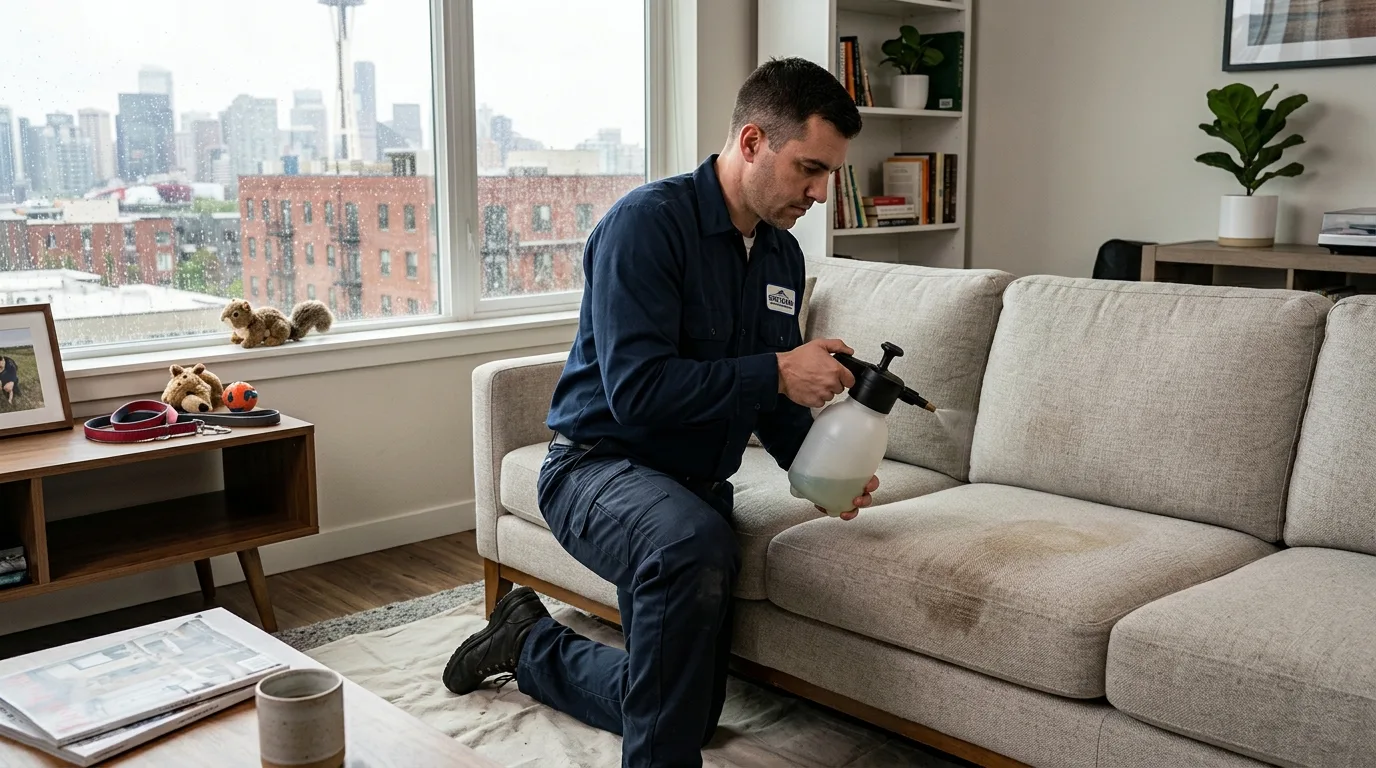
The honest answer depends on what you're comparing it to. If the question is "is $130 worth it to clean my sofa," the answer is almost always yes — relative to replacing it. If the question is "does professional cleaning produce noticeably better results than doing it myself," the answer is also yes, but the gap varies by how dirty the piece is. And if the question is "should I bother at all," it depends on the furniture and what's wrong with it.
Here's what professional upholstery cleaning actually does, when it makes financial sense, and when it doesn't.
What You're Actually Paying For
Professional upholstery cleaning with hot water extraction does something consumer products can't: it puts cleaning solution deep into the fabric, then pulls it back out along with the dissolved soil. Consumer sprays and foam cleaners clean the surface. Rental carpet machines produce weaker vacuum than professional truck-mounted systems and leave significantly more moisture behind.
The practical result: deeply embedded soil, pet dander, skin oils from years of contact, and biological residues (food spills, urine, pet saliva) that have worked their way into the fabric pile get removed rather than diluted and redistributed. On a sofa that's been used daily for two or three years without deep cleaning, the difference before and after is usually visible and noticeable — both in appearance and smell.
What professional cleaning does not do: it doesn't reverse physical wear (pilling, fraying, flattening of cushions), it doesn't reliably eliminate deep urine contamination that has crystallized in the foam padding over a year or more, and it won't remove permanent stains where the dye of the fabric has already been altered.
The Cost Comparison That Actually Matters
Most people frame this as "is cleaning worth $130." The more useful frame is: what does $130 buy me relative to my alternatives?
| Option | Cost | Result |
|---|---|---|
| Professional cleaning (sofa) | $120–$170 | Deep clean, 12–18 months of results |
| Rental machine (1 day) | $40–$60 + time | Surface clean, higher moisture risk |
| Consumer foam cleaner | $15–$30 | Surface only, no extraction |
| Replace with comparable sofa | $800–$2,500+ | New piece |
| Replace with budget sofa | $300–$600 | Lower quality than original |
For any sofa you'd replace with something costing over $400, professional cleaning is cheaper than replacement — often by a factor of 10 or more. Cleaning the same sofa once a year for five years costs $600–$850 total. A replacement sofa of equivalent quality costs $1,000–$2,500. The math isn't close.
The exception: furniture that's structurally at the end of its life. If cushions have lost their shape, the frame is unstable, or the fabric is worn through in high-contact areas, cleaning cosmetically improves it but doesn't extend its useful life. At that point replacement makes more sense than investing in cleaning.

When It's Clearly Worth It
Pet households. Pet dander, oils from fur, and odors accumulate in upholstery fabric faster than any other source of soiling. Regular vacuuming removes surface hair but not the oils and biological residues that cause odor. Professional extraction with enzyme pre-treatment addresses the source of the smell rather than masking it. For households with dogs or cats on the furniture, annual cleaning is the difference between furniture that smells and furniture that doesn't.
Allergy sufferers. Upholstered furniture accumulates dust mites, pet dander, and airborne particles that settle into fabric over months. If someone in the household has allergies or asthma, regular professional cleaning reduces the allergen load in the furniture meaningfully. This isn't a marginal benefit — heavily soiled upholstery can harbor allergen concentrations comparable to an uncleaned mattress.
Before selling or moving. A sofa that looks dirty sells for significantly less (or doesn't sell) compared to one that's been professionally cleaned. A $130 cleaning on a sofa you're selling for $400 pays for itself immediately.
Visible soiling that vacuuming hasn't touched. If a piece looks gray or dingy in areas that get direct contact — armrests, seat cushions, headrests — that's accumulated skin oil and soil that's below the surface. Vacuuming won't address it. Professional extraction will.
When It's Probably Not Worth It
Inexpensive furniture that's already structurally worn. A $200 flat-pack sofa with broken springs and collapsed cushions won't benefit meaningfully from cleaning — the physical decline limits its useful life regardless of how clean the fabric is.
Pieces with permanent staining from bleach, harsh chemicals, or set-in dye transfer. Professional cleaning removes soil; it can't restore fabric whose color has been chemically altered.
Very lightly used furniture. A guest room sofa used a few times a year and vacuumed regularly doesn't accumulate enough soil to warrant professional cleaning more than every two or three years. Regular maintenance cleaning is sufficient.
DIY vs Professional: Where the Gap Is Largest
For light soil and regular maintenance, the gap between DIY and professional is small. A rental machine and some time produces reasonable results on lightly soiled fabric. For heavily soiled pieces — years of accumulated use, pet contamination, or specific stain types — the gap is significant. Professional truck-mounted systems produce vacuum pressure three to five times higher than rental machines, extract more moisture (faster drying, less resoiling risk), and use pre-treatment chemistry that rental machines don't.
In Seattle's climate specifically, the drying difference matters. Rental machines leave upholstery wetter than professional extraction. Fabric that stays damp for 18–24 hours in high-humidity conditions develops musty odors and, in worst cases, mold in cushion foam. Professional extraction typically leaves Seattle upholstery dry in 4–8 hours with a fan running.

Professional Upholstery Cleaning in Seattle
Fresh Furnish Cleaners uses truck-mounted extraction on fabric upholstery throughout the Seattle metro area. Our pricing is per-piece and includes pre-treatment — no add-on fees for standard soiling. If you want an honest assessment of whether a specific piece is worth cleaning versus replacing, we'll tell you directly. Use our quote tool to see pricing for your furniture, or call to discuss what you're working with.
