Mattress & Upholstered Bed Cleaning for Allergy Prevention in Seattle
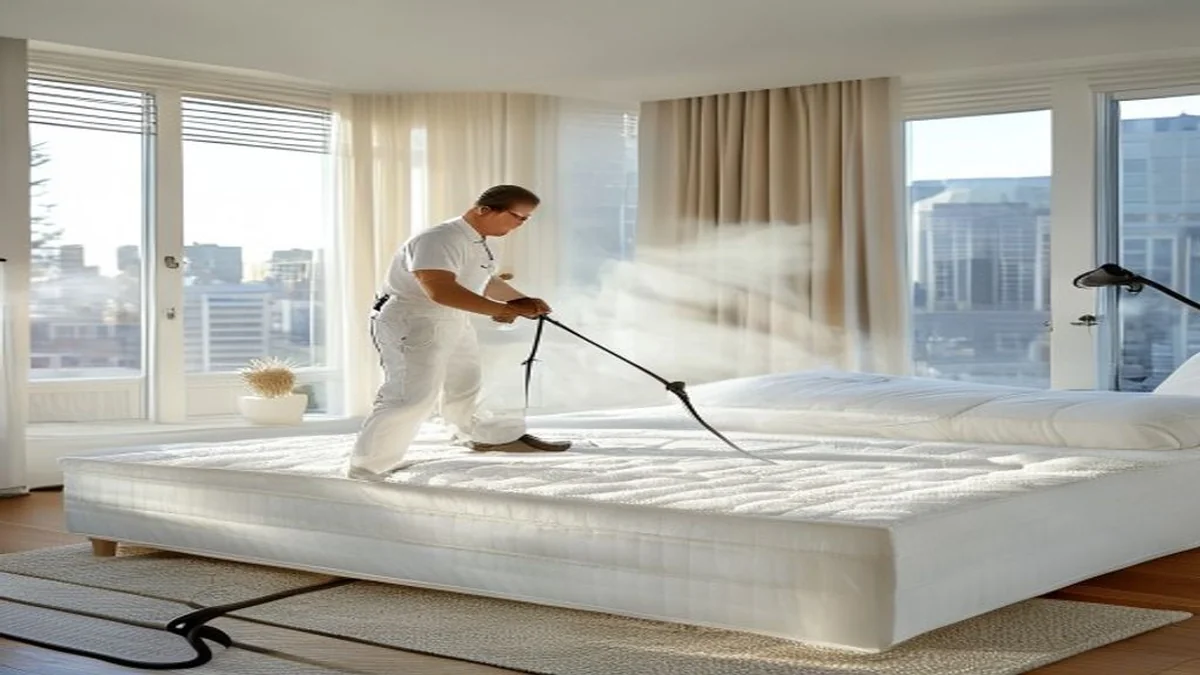
Your Mattress Is the Highest-Allergen Item in Your Home
You spend roughly a third of your life on your mattress. In that time, it absorbs sweat, dead skin cells, body oils, and whatever allergens travel in on your hair and skin from the day. Dust mites — the primary indoor allergen for most allergy and asthma sufferers — thrive in mattresses more than in any other household item. A typical queen mattress that has never been professionally cleaned can contain over two million dust mites and tens of millions of their fecal particles.
At Fresh Furnish Cleaners, we provide professional mattress cleaning in Seattle and throughout the greater King and Snohomish County area. Our hot-water extraction process removes the allergen layer that builds up inside the mattress — dust mites, pet dander, mold spores, bacteria, and skin cell debris — delivering a genuinely cleaner sleeping environment that supports allergy management and better sleep quality.
Why Mattresses Accumulate Allergens Faster Than Any Other Furniture
A sofa gets a few hours of use per day. A mattress gets 7 to 9 hours — and under conditions (warmth, moisture, skin contact) that are ideal for allergen buildup and dust mite reproduction:
What Builds Up in a Mattress
- Dead skin cells — each person sheds roughly 1.5 grams per hour of sleep, directly into the mattress surface. This is the primary food source for dust mites
- Sweat and moisture — the average person sweats 200–700ml per night, creating the humid microenvironment dust mites require to reproduce
- Dust mite colonies — with ideal conditions (warmth, humidity, food), populations double every two weeks in an uncleaned mattress
- Pet dander — if pets share the bed or the room, dander settles into the mattress surface overnight
- Mold spores — the combination of moisture and organic material creates conditions for mold growth, particularly in the Seattle climate
- Bacteria — Staphylococcus and other skin-contact bacteria accumulate in mattress fabric at levels that exceed household surfaces within months of use
Why This Matters for Allergies
During sleep, your face is 2 to 6 inches from the mattress surface for hours at a time. Turning over, adjusting position, and normal breathing movement all disturb the allergen layer and send particles directly into the air you inhale.
This is why allergy and asthma symptoms are often worst in the morning — the peak exposure happens overnight, and the immune system response peaks 4 to 6 hours after exposure.
Common patterns that suggest mattress allergens are a factor:
- Waking with congestion, runny nose, or itchy eyes
- Asthma symptoms worse in the morning
- Symptoms improve significantly when sleeping away from home
- Symptoms worse in autumn and winter when humidity is higher indoors
Signs Your Mattress Needs Professional Cleaning
Visible Signs
- Yellow or brown staining (sweat and body oil accumulation)
- Dark spots or patches — possible mold or mildew
- Visible dust when the mattress is disturbed
- Stains from spills, accidents, or pet incidents
- The mattress surface looks duller or grayer than when new
Odor Signs
- Musty smell — indicates mold or mildew inside the mattress
- Persistent body odor despite fresh bedding
- Pet smell from a dog or cat that sleeps on or near the bed
- Stale or sour smell that does not dissipate with airing
- Any smell detectable from normal sleeping distance
Time-Based Signs
- More than 12 months since last professional cleaning
- More than 6 months if you have allergies or asthma
- A new mattress used by someone else before you
- Mattress in a rental property or vacation home
- Recently moved into a new home — previous occupants' allergens remain in the mattress
Professional Mattress Cleaning: Our Seattle Process
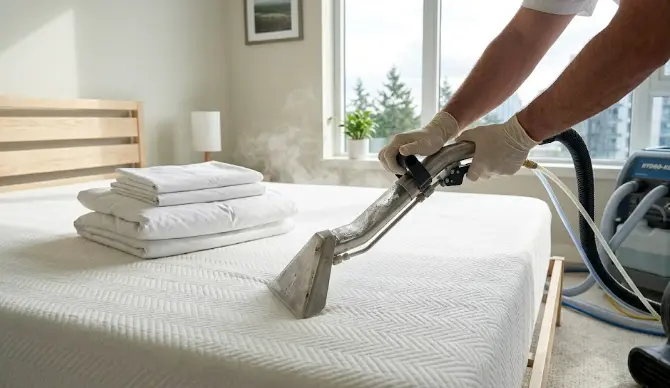
Every mattress cleaning follows a structured process — not a quick spray-and-wipe. Allergen removal requires physical extraction, not just surface treatment:
-
Inspection and Assessment
We check the mattress type (foam, spring, hybrid, latex), identify any staining or odor sources, and note any areas that require specific pre-treatment before cleaning begins.
-
Dry Vacuuming — Both Sides
HEPA-filtered vacuuming of the entire surface, sides, and any accessible areas. This removes loose dust, skin cell debris, and surface-level mite colonies before any liquid treatment. Skipping this step mixes dry debris with moisture during extraction.
-
Stain Pre-Treatment
Stains are identified by type and pre-treated with the appropriate chemistry: enzyme solution for organic stains (urine, blood, sweat), oxidizing agent for beverage marks, degreaser for body oil buildup. Dwell time is maintained before extraction.
-
Hot-Water Extraction
Professional extraction at controlled temperature and pressure — hot enough to kill dust mites on contact (above 55°C / 131°F) while low enough in moisture volume to allow thorough drying. The extraction physically removes what the pre-treatment has broken down.
-
Antimicrobial Treatment
A child and pet-safe antimicrobial solution is applied after extraction. This inhibits bacterial regrowth, discourages mold development, and creates a surface that is inhospitable to new dust mite colonization between professional cleanings.
-
Air Mover Setup
Professional air movers are placed to begin accelerated drying immediately after cleaning. This is critical — a mattress left damp is a mold risk. With air movers, most mattresses are dry within 3 to 5 hours.
-
Final Inspection
We review results with you before leaving. Remaining stains that need a second pass are addressed on the spot. We give you a specific estimated dry time and drying instructions for the Seattle climate.
-
Cleaning Receipt
A dated receipt for every job — useful for rental properties, Airbnb documentation, and landlord records. For allergy management, it also serves as a treatment log to track cleaning frequency.
Upholstered Bed Frame and Headboard Cleaning
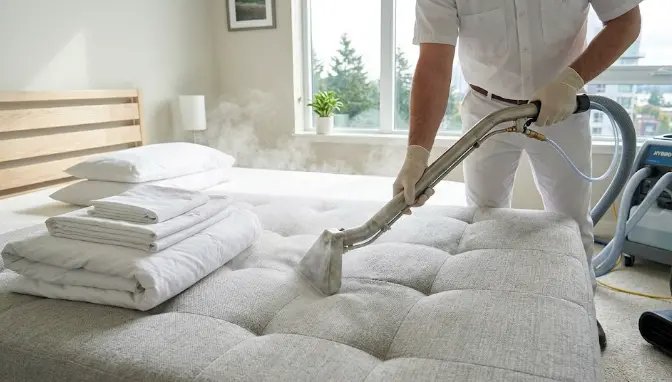
Cleaning the mattress while leaving an upholstered headboard or bed frame untreated significantly limits the allergen reduction in the bedroom. Fabric headboards accumulate the same allergens as any other upholstered furniture — and at head height, directly in the breathing zone during sleep.
Fabric Headboards and Bed Frames
Fabric upholstered headboards are cleaned with hot-water extraction or dry solvent depending on the fabric care code — the same process used for sofas and chairs. We identify the fabric type and care code before selecting a method.
Most fabric headboards are polyester, linen, or velvet. Polyester and linen are typically code W (water-safe). Velvet headboards are often code S (solvent only) — critical to identify before any water-based cleaning.
Typical price: $45–$95 depending on size and fabric type
Leather Headboards
Leather headboards accumulate body oils, skin cell residue, and hair product transfer at the contact zones. We clean leather headboards with pH-neutral leather cleaner applied in sections, followed by conditioning to restore suppleness and protect the finish.
Unlike fabric, leather does not harbor dust mites inside the material — allergens sit on the surface and are removed by cleaning. This makes leather the more allergy-friendly headboard choice for allergy sufferers.
Typical price: $55–$85 depending on size
Mattress Cleaning Pricing in Seattle
| Service | Regular Price | Our Price |
|---|---|---|
| Queen Mattress | $115 | |
| King Mattress | $135 | |
| Fabric Headboard (standard) | $55 | |
| Fabric Headboard (large / king) | $80 | |
| Leather Headboard | $70 |
All prices include inspection, pre-treatment, extraction, antimicrobial treatment, and air mover setup. Serving Seattle, Bellevue, Kirkland, Redmond, Bothell, and surrounding King and Snohomish County communities.
How Often to Clean for Allergy Control
| Household Situation | Mattress | Headboard / Bed Frame |
|---|---|---|
| No allergies, no pets | Every 12 months | Every 12–18 months |
| No allergies, pets in bedroom | Every 6–9 months | Every 9–12 months |
| Allergy or asthma sufferers | Every 6 months | Every 6–9 months |
| Allergy sufferers + pets in bedroom | Every 4–6 months | Every 6 months |
| Children under 5 (more sensitive airways) | Every 6 months | Every 9–12 months |
| After illness, pest issue, or flooding | Immediately | Immediately |
Between professional cleanings, these practices help maintain lower allergen levels:
Use a Dust Mite Mattress Encasement
A fully zippered dust mite-proof encasement over the mattress creates a physical barrier that blocks mite colonies from establishing in the mattress core. Wash the encasement every 4–6 weeks at 60°C. This is the single most effective between-cleaning intervention for dust mite allergy sufferers.
Wash Bedding Weekly at 60°C
Sheets, pillowcases, and duvet covers washed at 60°C (140°F) kill dust mites and remove allergens. Lower temperatures — including 40°C — do not kill mites, only redistribute them. Dry on high heat as well. Weekly washing significantly reduces allergen transfer between bedding and mattress.
Control Bedroom Humidity
Keep bedroom humidity below 50% with a dehumidifier during Seattle's wet season (October–April). Dust mites cannot survive below 40% humidity. Even maintaining 45–50% creates conditions that significantly slow mite reproduction between professional cleanings.
Keep Pets Off the Bed
If a household member is allergic to pet dander, keeping pets off the bed and out of the bedroom reduces dander deposit rates dramatically. Professional cleaning removes existing embedded dander — restricting access prevents rapid reaccumulation. This one change can reduce pet dander levels in the mattress by over 80% within months.
What Seattle Homeowners Say
"I have had dust mite allergy for years and always focused on vacuuming and air purifiers. My allergist finally told me directly that my mattress was likely the main source. After professional cleaning, my morning congestion was noticeably better within a week. I now schedule it every six months. It makes more difference than any other intervention I have tried."
"Our daughter was waking up with asthma symptoms almost every morning. Her pediatric pulmonologist specifically recommended professional mattress cleaning as a first step before changing medication. After the cleaning and adding a dust mite encasement, her morning symptoms dropped by about half within two weeks. We did not expect that significant a change that fast."
"We moved into a house where the previous owners had dogs. The mattress had a smell I could not get rid of with any spray or baking soda trick. After professional cleaning and the antimicrobial treatment, the smell was completely gone. The technician also cleaned our fabric headboard in the same visit. The bedroom smells genuinely clean for the first time since we moved in."
"I run three furnished vacation rentals in the Seattle area. I have mattress and headboard cleaning done after every third or fourth checkout, or after any guest with pets. Guests notice. I consistently get comments in reviews about how clean and fresh the bedrooms smell and feel. It is one of those investments that shows up directly in ratings."
Frequently Asked Questions: Mattress Cleaning in Seattle
For allergy and asthma sufferers, professional mattress cleaning every 6 months is recommended. For households without allergy concerns, once a year is sufficient. Seattle's higher indoor humidity accelerates dust mite reproduction in mattresses, making more frequent cleaning especially beneficial here compared to drier climates. If you share your bed with pets or have young children, every 6 months applies regardless of allergies.
Professional hot-water extraction removes dust mites and their waste (the primary mattress allergen), pet dander, mold spores, bacteria, dead skin cells, sweat residue, and body oils. It also eliminates odors from these organic sources. Stains from spills, accidents, and normal use are pre-treated and extracted. Antimicrobial treatment after cleaning kills residual bacteria and inhibits mold regrowth. Vacuuming alone removes surface debris but does not reach the allergen layer inside the mattress.
Yes — our cleaning products are non-toxic, biodegradable, and completely safe for children and infants once the mattress is dry. We use hypoallergenic detergents with no harsh chemical residue. The mattress is typically dry within 3 to 5 hours after cleaning. For baby mattresses, we also apply a child-safe antimicrobial treatment. Professional mattress cleaning is specifically recommended for allergy-prone children as it removes the allergen load that builds up far faster in children's beds than in adult beds.
Yes — we clean upholstered headboards, footboards, and padded bed frames in the same visit as the mattress. The method depends on the fabric care code. Most upholstered headboards are fabric-covered and cleaned with hot-water extraction. Leather headboards are cleaned and conditioned with leather-specific products. Cleaning the full bed unit together gives a complete allergen reduction for the entire sleeping environment, and we offer combined pricing when both are booked in the same visit.
A queen or king mattress cleaning appointment takes 30 to 45 minutes from arrival to completion, including inspection, pre-treatment, extraction, and antimicrobial application. Drying time is typically 3 to 5 hours with air movers in place. We recommend scheduling a morning appointment so the mattress is fully dry before bedtime. For the Seattle climate, leaving windows open or running a fan during drying significantly accelerates the process.
Professional mattress cleaning in Seattle costs $115 for a queen mattress and $135 for a king. Upholstered headboard cleaning is typically $55 to $80. We offer a combined mattress and headboard rate when both are cleaned in the same visit. All prices include pre-treatment, extraction, antimicrobial treatment, and air mover setup. No hidden fees — the quoted price is the final price. Contact us for a free quote specific to your mattress size and situation.
Mattress Cleaning Prices in Seattle
All prices include pre-treatment, hot-water extraction, antimicrobial treatment, and air mover setup.
| Service | Price Range |
|---|---|
| Twin mattress | $85–$110 |
| Full mattress | $95–$125 |
| Queen mattress | $115–$145 |
| King mattress | $135–$165 |
| Upholstered headboard (add-on) | $45–$95 |
Book Professional Mattress Cleaning in Seattle
Remove dust mites, allergens, and bacteria for better sleep and fewer allergy symptoms. Serving Seattle, Bellevue, Kirkland, Redmond, Bothell, and all of King and Snohomish Counties.
Queen $115 • King $135 • Free assessment before every job • Same-week appointments
Related Cleaning Guides
Can Dirty Upholstery Cause Allergies?
A complete guide to allergens in sofas, chairs, and upholstered furniture — what builds up, why it triggers symptoms, and how professional cleaning helps.
Read Upholstery Allergy GuideDust Mites in Upholstered Furniture
Where dust mites concentrate in upholstered furniture, why they thrive in the Seattle climate, and what professional methods actually reduce allergen load.
Read Dust Mite GuideRemove Pet Urine Smell from Couch
Pet accidents on upholstered furniture leave allergens as well as odor. Learn how enzyme treatment permanently eliminates both from fabric and mattresses.
Read Pet Odor Removal Guide