Upholstery Cleaning for Dog Owners in Seattle: What Actually Works
Dog owners in Seattle deal with a specific set of upholstery problems that general pet cleaning guides don't fully address. Seattle's wet climate means dogs come inside damp more often than in drier cities — and damp fur against upholstery fabric accelerates both odor development and soiling. Add the nine months of year-round indoor time most Seattle households give their dogs, and furniture takes real abuse.
Here's what actually happens to upholstery when a dog uses it regularly, and what removes it effectively.
What Dogs Actually Do to Upholstery
The visible problem is fur. The harder problem is everything else.
Sebaceous oils. Dogs have oil-secreting skin glands that deposit a thin film of lipid compounds wherever they make sustained contact with fabric. This happens every time your dog lies on the sofa. Over weeks and months, these oils accumulate in the fabric fibers — they're the primary source of the persistent "dog smell" that doesn't go away with surface cleaning. They also darken fabric in high-contact areas (where the dog's flank or head rests) and cause a sticky residue that catches more soil.
Dander. Dog dander — microscopic skin flakes — is the main allergen concern and works its way into fabric pile with regular contact. Vacuuming removes surface dander but not what's embedded deeper in the fibers. For household members with dog allergies, this is the primary reason regular professional cleaning matters.
Saliva. Dogs lick themselves, lick the furniture, and drool during sleep. Saliva contains proteins that leave residue in fabric and contribute to odor, particularly as it dries and re-humidifies through humid Seattle days.
Wet-dog effect. In Seattle, dogs come inside wet from rain or puddles 8–9 months of the year. Wet fur against upholstery deposits more oil per contact than dry fur, and damp fabric that's repeatedly re-wetted by a dog develops musty odors faster than in drier climates. A sofa that a wet dog uses regularly in October smells noticeably worse by December than it would in a city like Phoenix.

What Removes It — and What Doesn't
Vacuuming removes surface hair and loose dander. It's essential maintenance and should be done weekly with an upholstery brush attachment. What it doesn't do: it doesn't extract oils, it doesn't reach dander that's worked into the fabric pile, and it doesn't address odor compounds embedded in the fibers.
Consumer sprays and foam cleaners clean surface residue and can temporarily mask odor with fragrance. Most don't contain enzyme chemistry at sufficient concentration to break down sebaceous oils. The smell comes back as the fragrance dissipates — usually within days.
Enzyme-based cleaners (products like Nature's Miracle or similar) work on the right mechanism — they use biological enzymes to break down the protein and lipid compounds in pet odor. Applied correctly with adequate dwell time, they do reduce odor. The limitation: without extraction, the broken-down compounds stay in the fabric. This is why DIY enzyme treatment produces partial results — the chemistry works but the residue isn't pulled out.
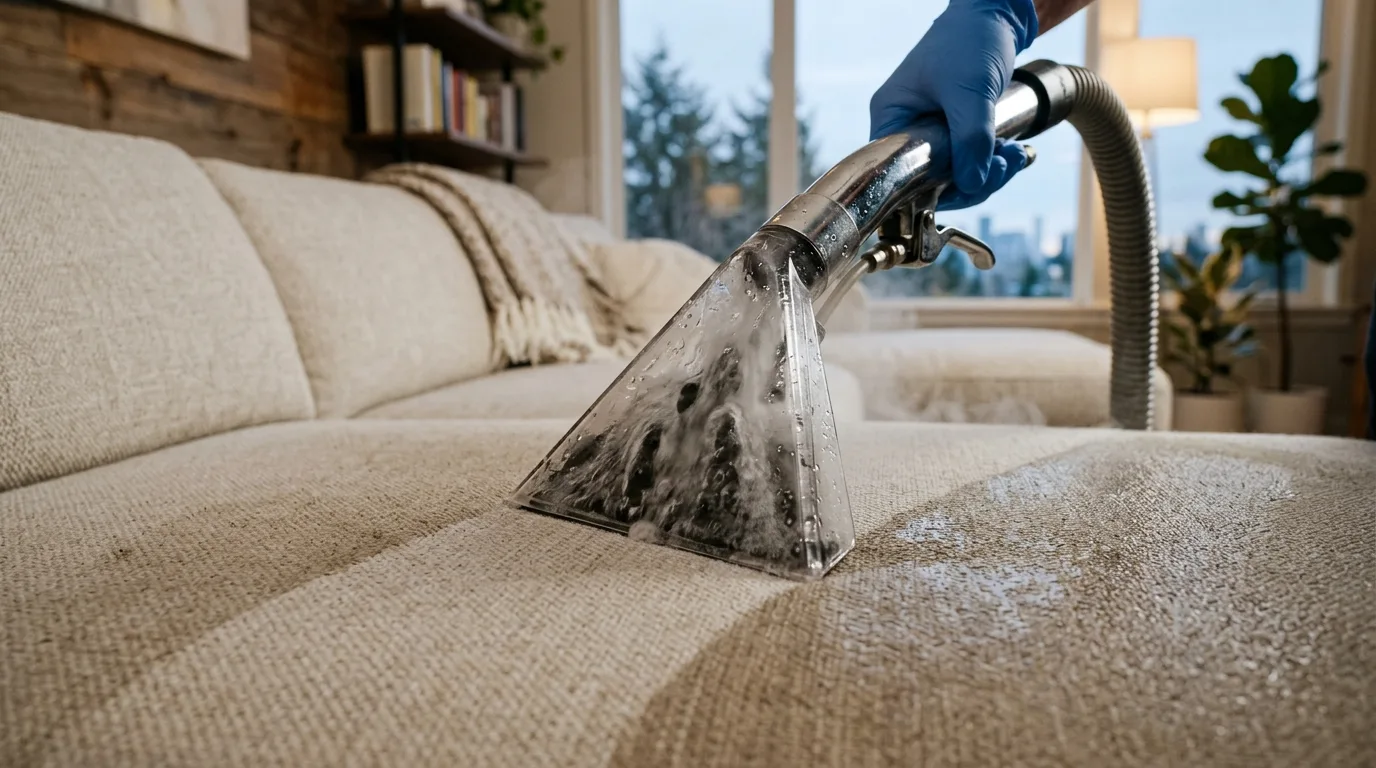
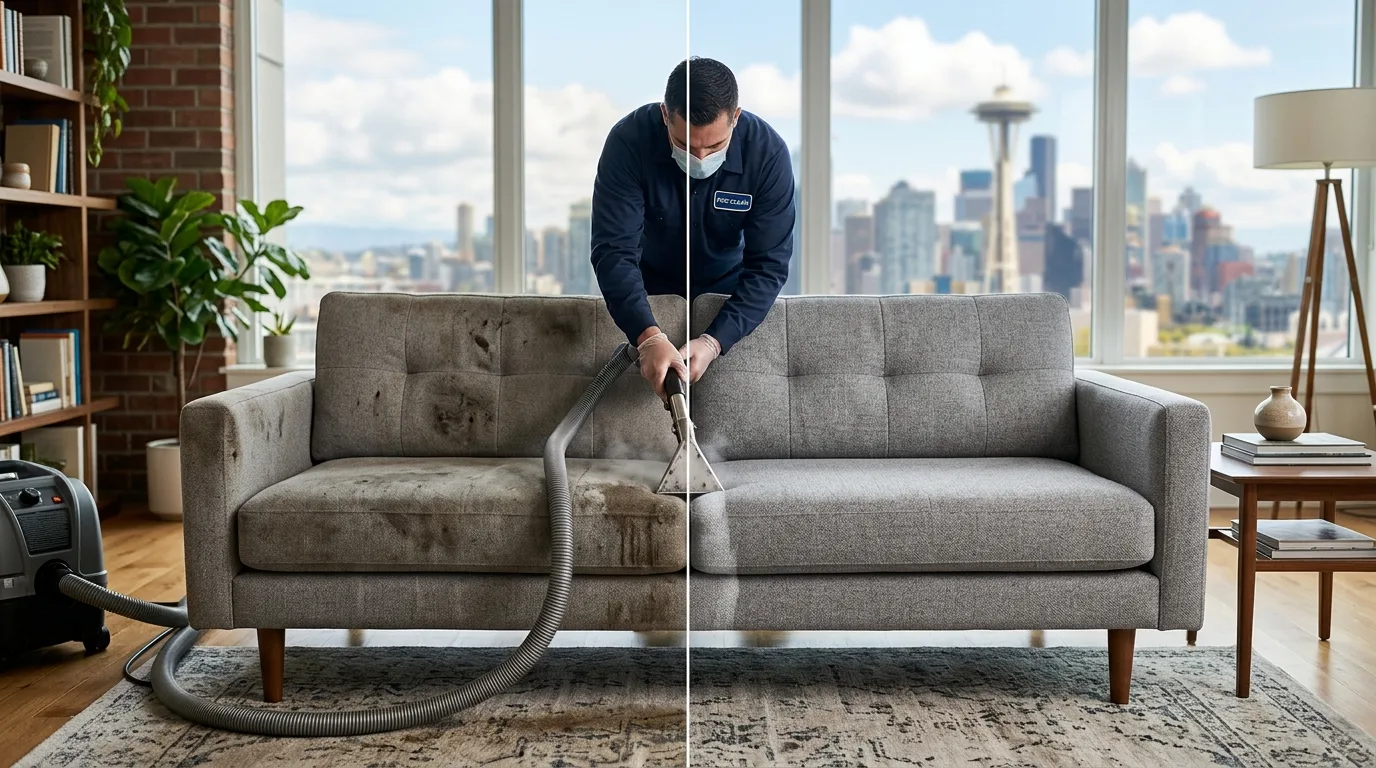
Professional hot water extraction combines enzyme pre-treatment (with enough dwell time for the chemistry to work) with high-pressure hot water and strong vacuum extraction that removes both the dissolved compounds and the treatment residue. This is what actually clears the oils and odor sources from the fabric rather than treating the surface. For a sofa with 6–12 months of regular dog contact, this is the only method that reliably reaches odor-free results.
Breed-Specific Considerations
Not all dogs affect upholstery equally. A few factors that change how often cleaning is needed:
Double-coated breeds (Husky, Golden Retriever, German Shepherd, Labrador) shed seasonally and heavily, driving more hair and dander into fabric. They also tend to produce more oil. These households typically need professional cleaning every 6–8 months versus 10–12 for single-coat breeds.
Wrinkly breeds (Bulldog, Shar-Pei, Basset Hound) have more skin folds that trap and concentrate oils and yeast. They produce more odor per contact hour than smooth-coated breeds. A Bulldog household may need cleaning every 5–6 months to stay ahead of odor buildup.
Water dogs (Labrador, Golden, Springer Spaniel) love Seattle for obvious reasons and come inside wet constantly. The wet-dog cycle — damp contact, partial drying, re-wetting — is harder on upholstery fabric than dry contact alone. These households benefit from throwing a washable cover over their dog's spot during the rainy season and cleaning the underlying furniture in spring.
Small dogs that spend more time on a single cushion concentrate all their oils in a smaller area. That spot accumulates soil and odor faster than the surrounding fabric, often creating a visible discoloration that points exactly to where they sleep.
How Often to Clean — Seattle Dog Owner Schedule
The question isn't really "how often" in the abstract — it's when does the accumulated soil cross the threshold where it's hard to remove versus easy. Oils that have been in fabric for 6 months extract more cleanly than oils that have been there for 2 years. Cleaning on a regular schedule keeps the problem manageable; waiting until the odor is obvious means the next cleaning may not get back to fully clean.
A practical schedule for Seattle dog households:
Weekly: vacuum all upholstered surfaces with an upholstery brush attachment. Ten minutes of this prevents significant hair accumulation in the fabric.
Monthly: spot-treat any visible soiling with an enzyme cleaner. Let it dwell 10–15 minutes before blotting (don't scrub — scrubbing pushes soil deeper and damages fibers).
Every 6–10 months: professional hot water extraction. For a single medium-sized dog in a normal Seattle household, every 8 months keeps odor from building. Schedule before the rainy season starts (September–October) and again in spring (April–May) if the dog is heavily used furniture and prone to getting wet.
Dog Upholstery Cleaning in Seattle
Fresh Furnish Cleaners works with dog households regularly throughout Seattle and the surrounding area. Our standard upholstery cleaning includes enzyme pre-treatment on contact areas — the armrests, seat cushions, and headrests where dog oils concentrate. For households with significant odor buildup, we can extend pre-treatment dwell time and do a second extraction pass on affected areas. If you're not sure whether a piece is recoverable or due for replacement, we'll give you an honest assessment before we start. Get a quote or call to discuss your situation.
