How to Clean a White Couch Without Ruining It: A Step-by-Step Guide
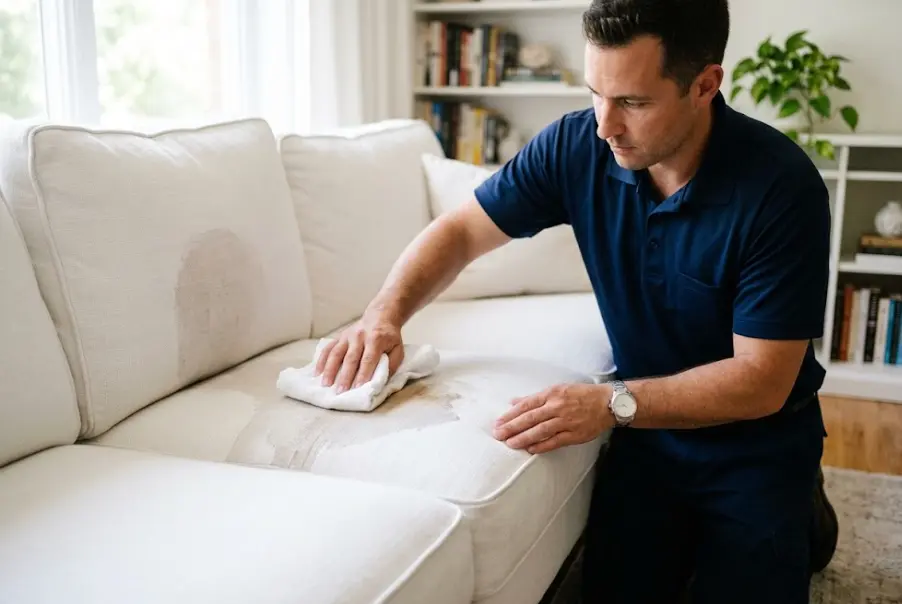
A white couch looks incredible until it doesn't. The spill happens — coffee, red wine, a kid with a marker, a dog who decided the cushion was a bed — and the instinct is to grab whatever's under the sink and start scrubbing. That instinct is exactly what turns a cleanable stain into a permanent one, or a single spot into a sofa-wide discoloration problem.
White upholstery is unforgiving in two directions: it shows every stain immediately, and it shows every cleaning mistake just as clearly. Overwetting leaves rings. Soap residue builds up and turns the fabric yellow. The wrong product on the wrong fabric type causes irreversible damage. This guide covers what to do, what not to do, why white couches yellow in the first place, and when the right answer is to stop cleaning and call a professional before you make things worse.
Step One — Before You Touch Anything: Check the Fabric Code
Every upholstered piece of furniture sold in the US is required to have a cleaning code tag, usually attached under a cushion or on the underside of the frame. This code determines what cleaning methods are safe for your specific fabric. Using the wrong method on the wrong fabric — particularly steam or water on an S-code fabric — can cause shrinking, ring formation, or permanent texture change.
| Code | Meaning | Safe Methods | What to Avoid |
|---|---|---|---|
| W | Water-based cleaners only | Water, water-based upholstery cleaner, steam | Solvent-based cleaners |
| S | Solvent-based cleaners only | Dry-cleaning solvents, foam cleaners with no water | Water, steam — causes rings and shrinkage |
| WS | Either water or solvent | Most methods work; test first | Bleach, aggressive scrubbing |
| X | Vacuum only — no liquid cleaners | Vacuum, light brushing | Any liquid or foam cleaner |
If your couch has no tag, or the tag is missing, treat it as an S-code until you can identify the fabric. Most white couches sold in the last ten years are W or WS — linen, cotton, polyester blends, and performance fabrics are almost always water-safe. Older white velvet, some wools, and certain antique upholstery fabrics may be S or X. When in doubt, test any cleaner on a hidden area — the back corner of a cushion, the underside of an armrest — and let it dry fully before committing to the whole stain.
The Most Common Mistakes That Make White Couches Worse
Scrubbing instead of blotting. Scrubbing a stain on white fabric does two things: it pushes the stain deeper into the fiber and it creates a larger, fuzzier damaged area around the original stain. Always blot — press down with a clean cloth and lift. Work from the outside of the stain inward to avoid spreading it.
Using too much water. Overwetting white upholstery is the most reliable way to create a permanent water ring. When fabric gets saturated, the water wicks outward as it dries and deposits dirt and mineral residue at the outer edge. That ring is often harder to remove than the original stain. Use the minimum amount of moisture needed and extract as much as possible before letting the fabric air dry.
Using tap water directly on white fabric. Tap water contains minerals — calcium, magnesium, chlorine depending on your water supply — that leave residue on white fabric as they dry. Over time, this mineral buildup contributes to yellowing and a dull cast across the whole sofa. Use distilled water for any cleaning that involves liquid on white upholstery.
Using bleach. This one comes up constantly. Bleach seems logical on white fabric — it whitens, right? In practice, bleach weakens fabric fibers on contact, and the breakdown products of bleach oxidizing on fabric create a yellow discoloration that is irreversible. Even diluted bleach on a white sofa is a bad idea. Full stop.
Not rinsing out soap residue. Soap left in fabric doesn't dry neutral — it becomes a sticky residue that attracts new dirt and, on white fabric, contributes to yellowing. After any cleaning that involves soap or detergent, go back over the area with distilled water and a clean cloth to extract the soap before it dries in the fibers.
Cleaning in direct sunlight or near a heat source. Wet white fabric drying in direct sun is a fast route to new yellowing. The UV exposure accelerates oxidation in the wet fibers. Clean away from windows and heat sources, and use a fan to speed drying without adding heat.
Stain-by-Stain Guide for White Couches
Coffee and Tea
Blot immediately — don't let it sit. Mix one teaspoon of dish soap with one cup of distilled water. Apply to the stain with a clean white cloth, blotting from the outside in. Rinse with distilled water, blot dry, and repeat if needed. The tannins in coffee and tea bond to fabric fibers quickly, so speed matters more than anything else. A stain treated within two minutes is almost always removable. The same stain after an hour is significantly harder.
Red Wine
Blot up as much liquid as possible immediately. Do not add water yet — diluting red wine before you've absorbed the bulk of it just spreads the stain. Once you've blotted up everything you can, apply club soda or sparkling water and blot again. The carbonation helps lift the remaining pigment. Follow with the dish soap and distilled water solution above. Club soda works because the carbonation mechanically agitates the stain out of the fiber — plain water doesn't do this.
Pet Urine
This is the one where DIY cleaning most often makes things permanently worse. Pet urine contains uric acid crystals that bond to fabric fibers and cannot be dissolved by water, soap, or vinegar — they can only be broken down by enzyme cleaners. Standard cleaning will remove the visible stain and temporarily reduce odor, but the uric acid remains in the fabric and reactivates with humidity, which is why a "cleaned" pet stain smells again on the first humid day. Use an enzyme cleaner designed for upholstery, apply generously, let it dwell for 10–15 minutes, then blot and dry. On white fabric, test for colorfastness first.
Body Oils and Sweat
The gradual grey shadow that appears on white couch armrests and headrests is body oil accumulation — one of the most common white couch problems and one that most guides don't address directly. Baking soda applied dry, left for 20–30 minutes, and vacuumed off draws out the oil before it sets. For set-in oil stains, a small amount of cornstarch applied the same way works similarly. Avoid water-based cleaners as the first step on oil stains — water and oil don't mix, and you'll push the oil deeper before you lift any of it.
Ink and Marker
Rubbing alcohol on a cotton ball, applied to the stain with a dabbing motion. Do not rub — alcohol spreads ink. Dab, lift, move to a clean section of the cotton ball, dab again. For water-based markers on W-code fabric, the dish soap and water method works. For permanent marker on white upholstery, this is a situation where professional help is worth considering before you commit to a DIY attempt — permanent marker on white fabric is borderline and the wrong move makes it worse.
Food Grease
Dish soap is designed to cut grease — it's the right tool here. Apply a small amount directly to the stain, work it in gently with a soft brush or cloth, let it sit for five minutes, then blot and rinse with distilled water. For set-in grease, the baking soda/cornstarch dry absorption step first, followed by dish soap, is more effective than soap alone. Don't use cooking spray, WD-40, or other oils to "lift" the grease — this is a persistent DIY myth that adds more oil to the problem.
Why White Couches Turn Yellow — and How to Fix It
Yellowing is a different problem from staining, and it has different causes. A single yellow stain is a spill or contact mark. A general yellowing across cushions or armrests is a systemic issue — and there are four main culprits.
Soap residue buildup. The most common cause of white couch yellowing over time. Every cleaning that leaves soap in the fabric adds a layer of residue that attracts more dirt and oxidizes over time to a yellow cast. The fix is a thorough rinse with distilled water and extraction — either manual blotting with a very damp cloth, or professional hot water extraction which removes residue far more completely than hand methods.
Mineral deposits from tap water. Calcium and magnesium in hard water leave a yellowing residue as they dry on white fabric. If you've been cleaning your white couch with tap water, this may be contributing to the yellowing you're seeing. Switch to distilled water and the gradual yellowing typically stops progressing. Existing mineral deposits can sometimes be addressed with a very diluted white vinegar solution (one part vinegar to ten parts distilled water), but test first on a hidden area.
UV oxidation. White fabric near windows yellows faster than fabric in lower light because UV exposure accelerates the oxidation of fabric fibers. This is irreversible at the individual fiber level, but professional cleaning can improve the overall appearance by removing the surface layer of oxidized residue. Moving the couch away from direct sunlight or using UV-blocking window film slows the progression.
Age and body oils. White fabric absorbs body oils from regular use, and those oils oxidize over time to a yellow-grey tone. This is particularly visible on armrests, headrests, and seat cushion edges. Professional extraction reaches the oil that's worked down into the fiber base — DIY surface cleaning only addresses the top layer.
When to Stop and Call a Professional
Some white couch cleaning situations have a clear point where DIY attempts become more likely to cause permanent damage than to fix the problem. Knowing where that line is saves you money and prevents irreversible mistakes.
Call a professional when:
- The stain has been sitting for more than 24 hours on white fabric — set stains often require professional-grade pre-treatment chemistry that isn't available in retail products
- The couch is S-code fabric and you don't have the right solvent cleaner — water will damage it
- Pet urine contamination is extensive — DIY enzyme cleaners work for surface contamination, but urine that has soaked through to the cushion fill needs extraction equipment to reach
- The yellowing is general and widespread — this is typically a residue issue that responds well to professional hot water extraction but resists surface-level DIY cleaning
- The fabric is velvet, silk, or any specialty material — these fabrics require specific chemistry and technique; standard upholstery cleaning methods will damage them
- You've already tried cleaning and made it worse — a cleaning tech can sometimes reverse amateur cleaning damage if they get to it before it fully sets
The cost of professional upholstery cleaning on a white sofa is almost always less than the cost of reupholstering or replacing it. If you're uncertain whether a stain is beyond DIY treatment, the right move is to stop, let it dry, and call for a professional assessment rather than attempting another round of cleaning that may be setting the stain further.
Keeping a White Couch Clean Long-Term
White couch maintenance is about reducing the frequency of crisis cleaning, not preventing it entirely.
Vacuum weekly using the upholstery attachment, including under and between cushions. Dry soil that gets ground into white fabric before it's vacuumed turns into a much harder stain when it eventually contacts moisture.
Treat spills within the first two minutes. The difference between a spill cleaned immediately and the same spill cleaned twenty minutes later is significant — especially with coffee, tea, and anything with natural dyes. Keep a clean white cloth within reach of the couch.
Use distilled water for any spot cleaning. The cost of a gallon of distilled water is negligible; the cost of mineral-deposit yellowing across white cushions is not reversible without professional intervention.
Apply a fabric protector after professional cleaning. Products like Scotchgard or upholstery-specific protectors create a barrier that gives you more time to blot up spills before they penetrate the fiber. Professional application after a cleaning is more effective than retail spray-on application to unclean fabric.
Schedule professional cleaning annually — or every six months if the couch gets heavy use. Hot water extraction removes the accumulated body oils, soap residue, and embedded soil that DIY cleaning can't reach, and it's the most effective intervention for keeping white fabric looking genuinely white rather than gradually off-white.
Professional White Couch Cleaning in the Seattle Area
Stain treatment, yellowing removal, odor elimination. We specialize in white and light-colored upholstery. Same-week appointments available across Seattle, Bothell, Kirkland, Bellevue, and surrounding areas.
