How Often Should You Clean Your Sofa for a Healthy Home?
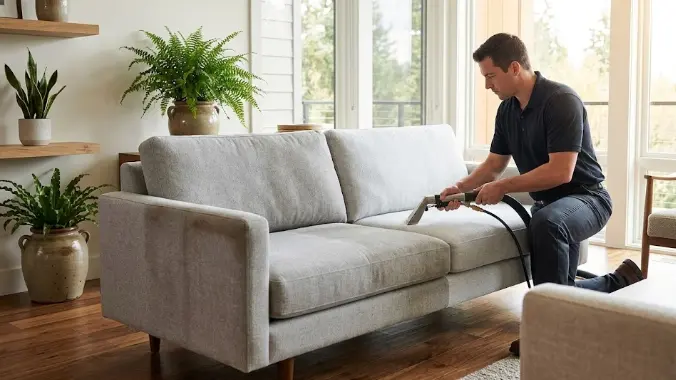
How Often Should You Really Clean Your Sofa?
It is one of the most common questions we hear from homeowners across Seattle, Bellevue, and the Eastside: how often should you clean your sofa? The answer depends on several factors — your household size, whether you have pets or children, the fabric type, and even the local climate. But the short answer is this: most sofas need professional deep cleaning at least once every 12-18 months, and many homes require it far more often.
Your sofa is one of the hardest-working pieces of furniture in your home. The average American sits on their couch for 3-4 hours per day, and that daily use accumulates body oils, dead skin cells, sweat, food crumbs, pet dander, and airborne pollutants deep within the cushion fibers and padding. Regular vacuuming helps, but it only addresses the surface layer — the real buildup happens below, where dust mites thrive and bacteria multiply.
At Fresh Furnish Cleaners, we have cleaned over 15,000 sofas across the Seattle metro area, and we have seen firsthand what happens when sofa cleaning frequency falls behind schedule. Discolored armrests, embedded odors, worsening allergies, and fabrics that age years faster than they should. This guide breaks down exactly how often to clean your couch based on your specific situation — and what that cleaning should actually involve.
Whether you are a couple in a downtown Bellevue condo, a family with three kids in Kirkland, or an Airbnb host in Capitol Hill, the right sofa cleaning frequency depends on your lifestyle. We will cover household-specific recommendations, fabric-specific schedules, Seattle-specific climate factors, DIY maintenance tips, costs, and the warning signs that mean your couch needs immediate professional attention. By the end of this guide, you will know exactly when to schedule your next cleaning — and why it matters more than you think.
Ready to Get Your Sofa Professionally Cleaned?
Our IICRC-certified technicians serve Seattle, Bellevue, Redmond, Kirkland, and the entire Eastside. Same-day appointments available.
Call now: (425) 287-3619
Book Your Sofa CleaningWhy Trust Our Sofa Cleaning Recommendations?
IICRC Certified
All technicians hold current IICRC certifications in upholstery cleaning and fabric care
15+ Years Experience
Serving the Seattle metro area with expert furniture cleaning since 2010
15,000+ Sofas Cleaned
Every fabric type, every stain, every household situation — we have seen it all
The Short Answer: Sofa Cleaning Frequency by Household Type
Not every household needs the same sofa cleaning frequency. The table below provides our recommended professional cleaning schedule based on 15 years of experience and industry guidelines from the IICRC:
| Household Type | Recommended Professional Cleaning | Why |
|---|---|---|
| Couples without pets | Every 12-18 months | Lower soil load; regular vacuuming extends time between cleanings |
| Families with kids | Every 6-9 months | Food spills, sticky hands, crayons, increased body contact |
| Pet owners | Every 4-6 months | Pet dander, hair, oils, tracked-in dirt, and odor buildup |
| Allergy/asthma sufferers | Every 3-6 months | Dust mites, pollen, mold spores accumulate and trigger symptoms |
| Heavy use / Airbnb | Every 2-4 months | High traffic, multiple users, hygiene and guest experience standards |
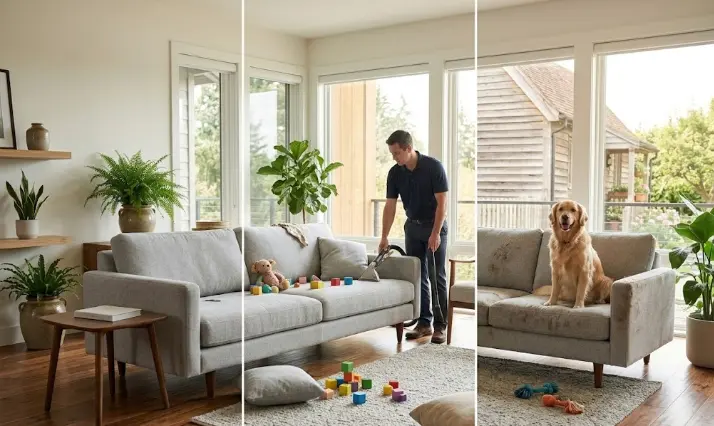
These recommendations assume your sofa gets average daily use. If your couch is in a formal living room that rarely gets used, you can stretch intervals longer. If it doubles as a guest bed or home theater seat, shorten them.
If you fall into multiple categories — for example, you have both pets and young children — use the shorter cleaning interval. The factors compound: pet dander plus food spills plus increased body contact creates a soil load that accumulates faster than any single factor alone.
Why Sofa Cleaning Frequency Matters for Your Health
Your sofa is not just collecting crumbs and pet hair. Research shows that a typical couch harbors:
- Dust mites: An average sofa can contain 10 million+ dust mites. Their fecal pellets are the #1 indoor allergen trigger, causing sneezing, congestion, itchy eyes, and asthma attacks. Learn more in our complete guide to dust mites in upholstered furniture.
- Bacteria: Studies have found that sofa fabric can harbor 12x more bacteria per square inch than a toilet seat, including E. coli, Staph, and mold spores.
- Allergens: Pollen, pet dander, and mold spores settle into upholstery fibers where they resist vacuuming and continue triggering reactions for months.
- Body oils and dead skin: The average person sheds 1.5 grams of skin per day — much of it onto your sofa, providing food for dust mites and bacteria.
- VOCs and chemicals: Smoke residue, cooking fumes, and household chemicals absorb into fabric fibers over time, contributing to poor indoor air quality.
The longer you go between professional cleanings, the deeper these contaminants penetrate into cushion padding where surface cleaning cannot reach them. This is why understanding your ideal sofa cleaning frequency is essential for maintaining a genuinely healthy home environment.
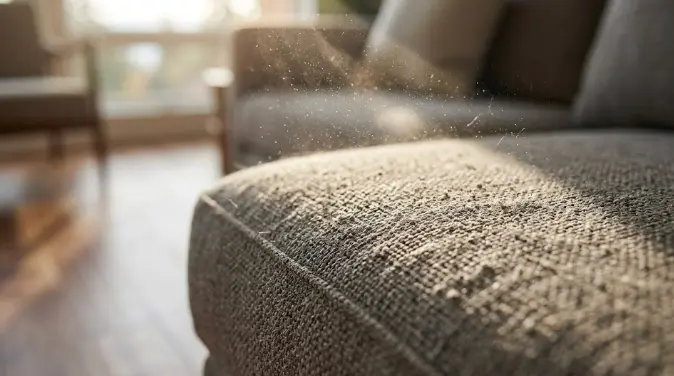
The Accumulation Timeline: What Builds Up and When
Understanding how quickly contaminants accumulate helps explain why different households need different cleaning frequencies. Here is what happens inside your sofa over time without professional cleaning:
| Time Since Last Cleaning | What Has Accumulated | Health Impact |
|---|---|---|
| 1-3 months | Surface dust, light body oils, some pet dander | Minimal — regular vacuuming manages this level |
| 3-6 months | Dust mite colonies establishing, deeper oil penetration, pollen buildup | Allergy sufferers may notice increased symptoms |
| 6-12 months | Established dust mite populations, bacteria colonies, set-in body oils, visible discoloration beginning | Most people notice odors and discoloration; allergy symptoms worsen |
| 12-24 months | Millions of dust mites, deep bacterial contamination, permanent oil staining, potential mold in humid climates | Significant impact on indoor air quality; fabric degradation accelerates |
| 24+ months | Irreversible fabric damage possible, entrenched odors, heavy allergen load throughout padding | Sofa becomes a major source of indoor pollution; some damage may be permanent |
The key insight from this timeline is that the first 12 months are critical. If you catch your sofa before deep contamination sets in, professional cleaning can restore it completely. Wait too long, and some damage becomes permanent — particularly oil-based discoloration and smoke or odor penetration into the padding.
When Was Your Sofa Last Professionally Cleaned?
If it has been more than 12 months, your sofa is overdue. Our eco-friendly deep cleaning removes what vacuuming leaves behind.
Call: (425) 287-3619 • Email: info@ovencarpetcleaning.com
Schedule Your Cleaning TodaySofa Cleaning Frequency by Fabric Type
Different upholstery fabrics collect soil, oils, and allergens at different rates — and they respond differently to cleaning methods. Here is how often each fabric type should be professionally cleaned:
| Fabric Type | Professional Cleaning Frequency | Notes |
|---|---|---|
| Microfiber | Every 12-18 months | Stain-resistant but traps dust; check cleaning codes (W, S, WS) before any DIY attempts |
| Cotton / Linen | Every 6-12 months | Absorbs oils and stains quickly; natural fibers need gentle professional care |
| Leather | Every 12-18 months | Requires conditioning after cleaning; see our leather furniture care guide |
| Velvet | Every 6-12 months | Crushed pile traps dust; requires specialized low-moisture cleaning |
| Polyester Blend | Every 12-18 months | Durable and stain-resistant; responds well to hot water extraction |
| Chenille | Every 6-12 months | Dense pile construction traps allergens; needs professional agitation |
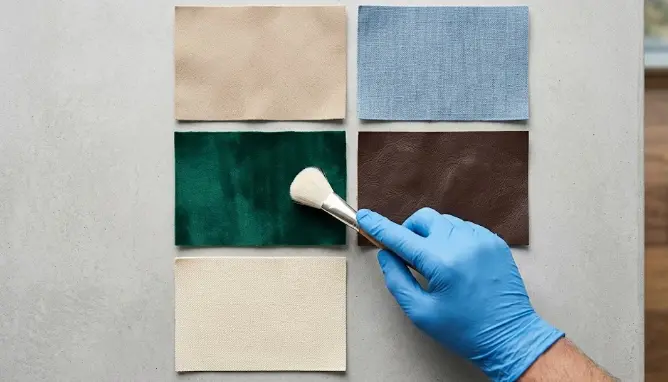
Not sure what fabric your sofa is made from? Look for the manufacturer's care tag — usually found under the seat cushions or stapled to the underside of the frame. The tag will include a cleaning code:
- W — Water-based cleaning is safe
- S — Solvent-only cleaning (no water)
- WS — Either method is acceptable
- X — Professional cleaning or vacuuming only
Our technicians are trained in all cleaning codes and fabric types. We adjust our methods, solutions, and drying techniques based on your specific upholstery — never a one-size-fits-all approach. Read our fabric care guide for more details on caring for specific materials.
8 Signs Your Sofa Needs Professional Cleaning Right Now
Regardless of your regular sofa cleaning schedule, watch for these warning signs that your couch needs immediate attention:
Visible Discoloration
Armrests, headrests, or cushion edges look darker than the rest of the sofa
Lingering Odors
Musty, pet, or body odor that does not go away with airing out
Allergy Flare-ups
Sneezing, congestion, or itchy eyes that worsen when sitting on the sofa
Set-In Stains
Old spills, wine stains, or marks that DIY methods have not removed
Pet Hair Buildup
Hair embedded in fabric that vacuuming and lint rollers cannot fully remove
Fabric Feels Sticky
Body oils and residue create a tacky or grimy texture on the surface
Dust Cloud When Sitting
Visible dust particles rise into the air when cushions are disturbed
Over 18 Months
It has been more than 18 months since the last professional cleaning
If you recognize two or more of these signs, your sofa is overdue for professional attention. Our professional sofa cleaning guide explains exactly what our technicians do to restore your couch.
Many of these signs develop gradually, which is why homeowners often do not notice them. Visitors to your home will notice sofa odors and discoloration much more readily than you will, because your nose adapts to familiar scents over time. This is another reason scheduled professional cleaning — rather than waiting until problems are obvious — is the better approach.
What Counts as "Cleaning"? DIY Maintenance vs Professional Deep Cleaning
One of the biggest misconceptions we encounter is homeowners who believe that regular vacuuming equals sofa cleaning. While vacuuming is essential maintenance, it is not a substitute for professional deep cleaning. Here is how they compare:
| Factor | DIY Maintenance | Professional Deep Cleaning |
|---|---|---|
| Depth of clean | Surface only (top 1-2mm) | Deep into padding (full depth) |
| Allergen removal | 30-40% of surface allergens | 94-98% of all allergens |
| Bacteria elimination | Minimal impact | 99%+ with hot water extraction |
| Stain removal | Fresh spills only | Set-in stains, old spills, discoloration |
| Odor elimination | Temporary masking | Source removal from deep within fibers |
| Dust mite control | Removes some from surface | Kills and extracts mites from all layers |
| Fabric restoration | No impact | Restores color, texture, and softness |
| Equipment used | Home vacuum, spray cleaners | Truck-mounted extraction, commercial solutions |
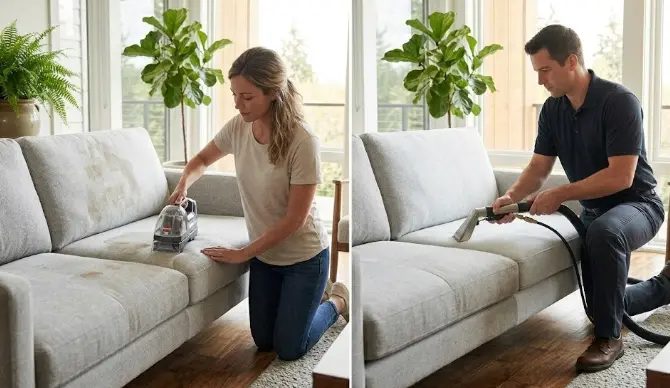
What Our Professional Deep Cleaning Process Includes
When we talk about "professional sofa cleaning" in the context of how often to clean your couch, here is exactly what that involves:
- Pre-inspection: We identify fabric type, cleaning code, existing stains, and areas of heavy soiling to determine the optimal approach
- Pre-vacuuming: HEPA-filtered commercial vacuuming removes loose debris, pet hair, and surface dust before wet cleaning begins
- Pre-treatment: Specialized cleaning solutions are applied to heavily soiled areas (armrests, headrests, cushion edges) and allowed to dwell
- Agitation: Soft-bristle brushes work the solution into the fabric fibers without damaging the weave
- Hot water extraction: Our truck-mounted equipment injects hot cleaning solution deep into the fabric and immediately extracts it along with dissolved soil, allergens, bacteria, and dust mites
- Spot treatment: Any remaining stains receive targeted treatment with fabric-appropriate stain removers
- Speed drying: High-velocity air movers accelerate drying time to minimize downtime
- Post-inspection: We walk through the results with you to ensure complete satisfaction
This comprehensive process is what separates professional cleaning from DIY efforts — and it is why the recommended intervals are based on professional cleaning specifically. No consumer-grade rental machine or store-bought spray can replicate the depth of clean that commercial equipment achieves.
Special Situations: When Your Sofa Needs Cleaning Outside the Regular Schedule
Even with a regular cleaning schedule in place, certain events should trigger an immediate professional cleaning regardless of when the last one occurred:
After a Party or Large Gathering
Multiple guests sitting, eating, and drinking on your sofa in a single evening can deposit more soil than weeks of normal use. If you hosted a holiday party, Super Bowl gathering, or other event where your sofa saw heavy traffic, schedule a cleaning within 1-2 weeks — before spills and body soil have time to set.
New Baby or Immunocompromised Family Member
When someone with a developing or compromised immune system will be spending time on the sofa, a pre-arrival professional cleaning creates a sanitized surface. We recommend cleaning before the baby comes home and then every 4-6 months throughout infancy.
Pet Accident or Illness
Vomit, urine, or diarrhea that reaches the cushion padding requires immediate professional attention. Surface blotting helps, but the contamination penetrates deeper than DIY methods can reach. The sooner we treat it, the better the outcome — call us the same day if possible.
Moving Into a New Home
If your home came with furniture — common with furnished rentals, estate purchases, or hand-me-downs — always have upholstery professionally cleaned before regular use. You do not know what the previous occupants left behind in terms of allergens, bacteria, or contaminants.
After Illness in the Household
Flu, COVID, stomach bugs, or other contagious illnesses mean your sofa has been exposed to viral and bacterial contaminants. Professional cleaning with sanitizing treatment eliminates pathogens and provides peace of mind for the whole family.
Smoke or Water Damage
Kitchen fires, nearby wildfires (increasingly common in Pacific Northwest summers), or any water intrusion event require immediate professional cleaning. Smoke particles and moisture penetrate deep into padding and will cause lasting damage if not addressed promptly.
Get a Free Sofa Cleaning Quote
We provide honest, upfront pricing with no hidden fees. Tell us your sofa size, fabric type, and condition — we will give you an exact quote.
Call: (425) 287-3619 • Email: info@ovencarpetcleaning.com
Get a Free QuoteSeattle-Specific Factors That Affect Sofa Cleaning Frequency
Living in the Pacific Northwest means your sofa faces challenges that homes in drier climates simply do not. Here is why Seattle homeowners often need to clean their sofas more frequently than national averages suggest:
High Humidity & Rain
Seattle's average humidity of 70-80% creates ideal conditions for dust mites and mold growth inside upholstery. Moisture from rain-soaked clothing transfers to sofa fabric, creating damp conditions deep within cushions that promote bacterial growth.
Pollen & Allergen Seasons
The PNW has multiple overlapping allergen seasons: tree pollen (February-May), grass pollen (May-July), and mold spores (year-round in our damp climate). These allergens settle into sofa fibers and accumulate between cleanings.
Mold Risk
Seattle homes are particularly susceptible to mold growth in upholstery. The combination of indoor heating, limited ventilation during rainy months, and ambient moisture means mold spores find a welcoming environment in sofa padding and fabric.
Pet-Friendly Culture
Seattle consistently ranks among the most pet-friendly cities in the US. More pets on sofas means more dander, hair, tracked-in mud, and pet odors requiring more frequent professional cleaning.

Seattle Climate vs National Averages
National cleaning guidelines from the IICRC and furniture manufacturers are typically written for average U.S. conditions — moderate humidity, standard HVAC use, and typical household sizes. Seattle's unique environment changes the equation:
- Annual rainfall: Seattle averages 37 inches of rain per year. That means more damp clothing, wet shoes, and umbrellas near (or on) your sofa — all introducing moisture into the fabric.
- Indoor heating season: From October through April, most Seattle homes run heating systems that circulate dust, dry out leather, and create temperature differentials that encourage condensation in furniture padding.
- Limited natural drying: Unlike homes in sunny climates where you can air out cushions outdoors, Seattle's overcast conditions and rain mean upholstery rarely gets a chance to fully dry out naturally.
- Higher outdoor allergen counts: The PNW's lush vegetation produces more pollen than arid regions, and our mild winters mean mold spores are active nearly year-round.
Based on these local factors, we recommend Seattle-area homeowners shorten the national cleaning interval by 2-3 months. A household that would need cleaning every 12 months in a dry climate like Arizona should plan for every 9-10 months here in the Pacific Northwest. For the most thorough clean, our eco-friendly cleaning methods are specifically designed for PNW conditions.
How to Maintain Your Sofa Between Professional Cleanings
Proper maintenance between professional deep cleanings extends the life of each cleaning and keeps your sofa looking and smelling fresh. Here is the schedule we recommend to our clients. For a more comprehensive guide, read our article on maintaining upholstery between professional cleanings.
Weekly Maintenance
- Vacuum all surfaces with the upholstery attachment (including under cushions)
- Remove and shake out throw pillows and blankets
- Wipe down any hard surfaces (legs, trim) with a damp cloth
- Use a lint roller on pet hair hotspots
Monthly Maintenance
- Rotate and flip cushions to distribute wear evenly
- Sprinkle baking soda, let sit 15-20 minutes, then vacuum for odor control
- Check for and spot-treat any new stains immediately
- Vacuum the back and underside of the sofa
Quarterly Maintenance
- Deep vacuum all crevices and seams with a crevice tool
- Wash all removable covers or slipcovers per manufacturer instructions
- Apply fabric protector spray (for W or WS code fabrics only)
- Inspect for signs of wear, fading, or damage that may need attention

Pro Tip
Keep a clean white cloth and a bottle of club soda near your sofa. For fresh spills, blot (never rub) with the cloth dampened with club soda. This simple habit prevents most stains from setting and reduces the frequency of professional cleaning needed.
Common Mistakes to Avoid
- Never rub stains — always blot from the outside in to prevent spreading
- Avoid store-bought foaming cleaners — they leave residue that attracts more dirt
- Do not over-wet fabric — excess moisture causes mold and water marks
- Skip bleach and harsh chemicals — they damage fabric fibers and cause discoloration
- Do not ignore cleaning codes — using water on an S-code fabric can cause permanent damage
Following this maintenance schedule will help you get the most value from each professional cleaning and keep your sofa looking and smelling fresh between appointments. For a more detailed guide with fabric-specific tips, read our comprehensive article on maintaining upholstery between professional cleanings.
What Does Professional Sofa Cleaning Cost?
One of the reasons homeowners delay sofa cleaning is uncertainty about cost. Here is transparent pricing for our professional sofa cleaning services in the Seattle area:
| Furniture Piece | Standard Cleaning | Deep Clean + Sanitize |
|---|---|---|
| Loveseat (2-seat) | $75 - $150 | $100 - $200 |
| Standard Sofa (3-seat) | $100 - $250 | $150 - $300 |
| Sectional (L-shape) | $200 - $400 | $275 - $500 |
| Dining Chair | $25 - $50 each | $35 - $65 each |
| Accent / Armchair | $50 - $100 | $75 - $150 |
Prices vary based on fabric type, condition, size, and any specialty treatments (pet odor removal, stain treatment, fabric protection). We offer multi-piece discounts when you have two or more items cleaned in the same visit. For commercial clients and offices and clinics, we offer recurring service contracts at reduced rates.
The Cost of NOT Cleaning
Many homeowners hesitate to invest in regular professional cleaning, but consider the cost of replacement. A quality sofa costs $1,000-$4,000+ and should last 12-15 years with proper maintenance. Without regular cleaning, that lifespan drops to 5-7 years due to:
- Fiber degradation: Embedded grit acts like sandpaper, wearing down fabric from the inside with every sitting
- Permanent staining: Body oils and spills that sit too long bond permanently to fabric fibers
- Cushion breakdown: Trapped moisture and soil break down foam padding faster, leading to sagging and loss of support
- Color loss: Acidic body oils and UV exposure cause irreversible color fading and yellowing
At $100-$250 per cleaning, investing in professional care 1-2 times per year is far less expensive than premature sofa replacement. It is one of the best returns on investment for home maintenance.
Service Areas: Professional Sofa Cleaning Across Greater Seattle
We provide on-site professional sofa and upholstery cleaning throughout the Seattle metro area and Eastside. No matter where you live, we come to you with our fully equipped cleaning van. Our service area covers all of King County and Snohomish County, including:
We offer flexible scheduling including evenings and weekends to accommodate busy Seattle-area families. Most appointments are available within 48 hours, and same-day service is often possible depending on availability. No matter which neighborhood you call home, our technicians arrive with everything needed to clean your sofa on-site — no need to transport heavy furniture anywhere.
What Our Clients Say About Regular Sofa Cleaning
Do not just take our word for it. Here is what real customers across the Seattle metro area have to say about their experience with regular professional sofa cleaning from Fresh Furnish Cleaners:
"We have two golden retrievers and a toddler. Fresh Furnish comes every 4 months and our sectional looks brand new each time. My allergies have improved dramatically since we started regular cleanings. Worth every penny."
"I manage 3 Airbnb units in Seattle. Fresh Furnish handles all the upholstery on a bi-monthly rotation. Our guest reviews consistently mention how clean and fresh the furniture looks. Professional and reliable every time."
"I had no idea how dirty our microfiber sofa was until the first cleaning. The water that came out was honestly disgusting. Now we do it every year and the difference in how the whole living room smells is incredible."
"My son has asthma, and our allergist recommended professional furniture cleaning every 6 months. Fresh Furnish has been amazing — always on time, gentle with our leather couch, and my son's breathing has genuinely improved."
Join 15,000+ satisfied customers across the Seattle metro area.
We maintain a 4.9/5 star rating across Google, Yelp, and Angi. Every cleaning comes with our satisfaction guarantee — if you are not happy with the results, we will re-clean the area at no additional charge.
How to Create Your Personalized Sofa Cleaning Schedule
Now that you understand all the factors that influence how often to clean your couch, here is a simple step-by-step method to determine your ideal schedule:
Your Cleaning Schedule Worksheet
Step 1: Start with your baseline. For most households, begin with 12 months as your starting interval.
Step 2: Adjust for household factors.
- Have pets? Subtract 4-6 months
- Have children under 10? Subtract 3-4 months
- Anyone has allergies or asthma? Subtract 3-6 months
- Sofa gets 4+ hours of daily use? Subtract 2-3 months
- Sofa is in a low-traffic formal room? Add 3-6 months
Step 3: Adjust for Seattle climate. Subtract an additional 2-3 months from your national baseline to account for PNW humidity and allergen seasons.
Step 4: Adjust for fabric. If you have cotton, linen, velvet, or chenille, subtract 2-3 months from your interval. Microfiber, leather, and polyester blends can stay at the calculated interval.
Step 5: Set your minimum. The shortest practical interval is every 2 months. If your calculation goes below that, cap it at 2 months and supplement with rigorous weekly maintenance.
Example: A Bellevue family with a dog, two kids, and a cotton sofa: 12 months (baseline) - 5 months (pets) - 3 months (kids) - 2 months (Seattle) - 2 months (cotton) = cleaning every 2-3 months. This family would benefit from our recurring service plan.
Not sure where you fall? Call us at (425) 287-3619 and we will help you determine the right schedule based on a quick conversation about your household, sofa, and lifestyle. There is no obligation — we are happy to provide guidance even if you are not ready to book.
Once you have determined your ideal interval, set a calendar reminder so you do not forget. Many of our regular clients use our recurring service reminders — we will reach out when your sofa is due for its next cleaning, so you never have to worry about falling behind schedule.
Consistent, on-schedule cleaning is the single best thing you can do to maximize your sofa's lifespan and keep your home healthy. Combined with the weekly and monthly DIY maintenance outlined earlier in this guide, a personalized professional cleaning schedule ensures your sofa stays fresh, hygienic, and comfortable for years to come.
Frequently Asked Questions About Sofa Cleaning Frequency
For most households, professional sofa cleaning every 12-18 months is sufficient. However, homes with pets should schedule cleaning every 4-6 months, families with young children every 6-9 months, and allergy or asthma sufferers every 3-6 months. Heavy-use sofas such as those in Airbnb rentals benefit from professional cleaning every 2-4 months. Between professional cleanings, vacuum weekly and spot-clean spills immediately.
Professional sofa cleaning in the Seattle metro area typically costs between $100 and $250 for a standard 3-seat sofa. Loveseats range from $75 to $150, and sectionals from $200 to $400. Factors affecting price include size, fabric type, condition, and any specialty treatments needed. We provide free estimates — call (425) 287-3619 or email info@ovencarpetcleaning.com.
An uncleaned sofa accumulates dust mites, bacteria, mold spores, dead skin cells, body oils, and allergens deep within the fabric and padding. Over time this leads to permanent discoloration, odors that cannot be removed, fabric degradation, and a significantly unhealthy indoor environment. Dust mite populations can reach millions in a single couch within 2-3 years without professional cleaning. Additionally, body oils cause irreversible darkening on armrests and headrests, and trapped moisture can lead to mold growth in the cushion padding.
Yes. Professional cleaning removes 94-98% of allergens and bacteria from deep within sofa padding, while DIY methods like vacuuming and spot cleaning only address the surface layer. Professional equipment uses hot water extraction, commercial-grade suction, and specialized cleaning solutions that penetrate far deeper than any consumer product. DIY maintenance between professional cleanings is important, but it cannot replace periodic deep cleaning. Think of it like dental care — you brush daily at home, but still see the dentist regularly.
A standard 3-seat sofa typically takes 30-45 minutes to clean professionally. A loveseat takes about 20-30 minutes, and a large sectional can take 60-90 minutes. Drying time varies by fabric and method but generally ranges from 2-6 hours. We recommend allowing cushions to air dry completely before sitting on them. Opening windows or running a fan can speed drying time significantly.
Yes, all of our sofa cleaning is performed on-site at your home or business. Our technicians arrive with a fully equipped van containing all necessary equipment, solutions, and tools. There is no need to transport your furniture anywhere. We serve Seattle, Bellevue, Redmond, Kirkland, Bothell, Lynnwood, Everett, Renton, and surrounding areas throughout King and Snohomish counties.
Between professional cleanings, vacuum your sofa weekly using the upholstery attachment, rotate and flip cushions every 2-4 weeks, blot spills immediately with a clean white cloth (never rub), and keep pets off the sofa or use washable covers. A lint roller helps remove pet hair, and baking soda left for 15 minutes before vacuuming can help absorb odors. For a complete maintenance guide, read our article on maintaining upholstery between cleanings.
Absolutely. Professional sofa cleaning removes up to 98% of dust mites, pet dander, pollen, mold spores, and other allergens trapped deep within upholstery fibers and padding. Many of our customers in the Seattle area report significant improvement in allergy and asthma symptoms after having their sofas professionally cleaned. The EPA recommends regular upholstery cleaning as part of an indoor allergen management plan. For homes with severe allergies, we recommend cleaning every 3-6 months.
Related Guides & Resources
Maintenance Between Cleanings
Expert tips for keeping your upholstery fresh between professional visits.
Read GuideDust Mites in Furniture
How dust mites affect your health and what professional cleaning does about them.
Read GuideEco-Friendly Cleaning
Our green cleaning methods that are safe for families, pets, and the environment.
Read GuidePet Stain & Odor Removal
Professional solutions for pet accidents, dander, and embedded odors.
Read GuideSmoke Smell Removal
How we eliminate cigarette, fire, and cooking smoke odors from upholstery.
Read GuideUpholstery Cleaning Costs
Complete pricing guide for professional upholstery cleaning in Seattle.
Read GuideSchedule Your Professional Sofa Cleaning Today
IICRC-certified technicians • Eco-friendly products • All fabric types • Same-day availability
