Professional Upholstery Cleaning in Seattle: What's Included?
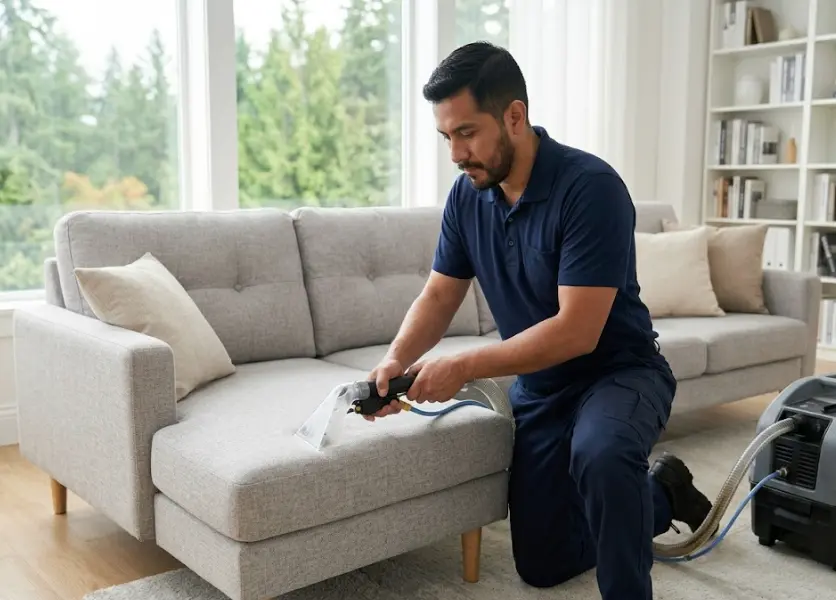
You know your sofa needs cleaning — but when you search for professional upholstery cleaning in Seattle, the results rarely tell you what you are actually paying for. Is it just a quick spray and vacuum? Will they move your furniture? What happens to the stain under the cushion that you have been avoiding for six months? This guide answers every one of those questions.
Fresh Furnish Cleaners has provided professional upholstery cleaning in Seattle and the greater Eastside for years. Below we break down every step of what a professional cleaning actually includes — fabric assessment, pre-treatment, extraction, drying, and optional protection — so you know exactly what to expect before the technician rings your doorbell.
What's Included in Professional Upholstery Cleaning — Every Step
A professional upholstery cleaning service is not a single action — it is a systematic multi-step process. Each step exists for a specific reason, and skipping any one of them reduces the quality and safety of the result. Here is exactly what our technicians do from the moment they arrive at your home.
Pre-Inspection & Fabric Identification
Before touching a single cushion, the technician examines every piece of furniture to be cleaned. This includes identifying the fabric type (microfiber, cotton, linen, polyester, velvet, leather, performance fabric), locating the manufacturer care code tag (W, S, SW, or X), checking for pre-existing damage such as fading, pilling, or worn areas, and documenting any stains for targeted treatment. This step determines everything that follows — the wrong cleaning method on the wrong fabric causes permanent damage, which is why this inspection is non-negotiable.
Thorough Dry Vacuuming
Using a professional upholstery vacuum with specialized attachments, the technician removes all loose debris from the entire surface: crumbs, pet hair, dust, pollen, and particulate matter embedded in the fabric pile. This step is essential before any wet treatment — applying water or cleaning solution to fabric with loose debris creates muddy residue that is harder to remove than the original soiling. Crevice tools are used on seams, piping, tufting, and all areas where debris accumulates. For allergy sufferers, this step alone removes a significant portion of dust mite particles and pet dander.
Colorfastness Testing
Before applying any cleaning solution to visible areas, the technician applies a small amount of the intended cleaning product to a hidden location — typically the back of a cushion or the underside of the frame — and waits to check for color bleeding, shrinkage, or adverse reactions. This step protects your furniture from unexpected damage and is one of the key differences between professional service and DIY attempts. Consumer products typically do not include this precaution because they cannot adapt their formula to the result.
Targeted Pre-Treatment of Stains & High-Soil Areas
Each identified stain receives a targeted pre-treatment product matched to its type: enzyme solutions for organic stains (food, pet accidents, sweat), oxidizing agents for tannin stains (coffee, wine, tea), solvent-based treatments for oil and grease, and protein-specific formulas for dairy or blood. High-traffic areas such as armrests, seat cushions, and headrests receive a general pre-treatment to loosen embedded body oils and general grime. These products are given adequate dwell time to begin breaking down the stain chemistry before the main cleaning step.
Main Cleaning: Hot Water Extraction or Low-Moisture Method
For W-coded and SW-coded fabrics, hot water extraction (also called steam extraction) is the industry standard. The machine injects a controlled stream of hot water and cleaning solution into the fabric at pressure, then simultaneously vacuums it out at high suction — removing dissolved soils, pre-treatment residue, allergens, bacteria, and odor-causing compounds from deep within the fiber structure. For S-coded fabrics, a dry-solvent or low-moisture method is used instead, which cleans without introducing water. For delicate or antique upholstery, hand-cleaning techniques with appropriate solvents may be used.
Rinse & Residue Extraction
After the main cleaning pass, a rinse cycle removes any remaining cleaning product residue from the fabric. Leaving soap residue in upholstery causes rapid re-soiling — the sticky residue attracts airborne dust and grime far faster than clean fabric. Professional extraction equipment removes residue to a level that home machines and spray-and-blot methods simply cannot achieve. This is one of the main reasons professionally cleaned furniture stays cleaner longer after a service visit.
Post-Cleaning Inspection & Touch-Ups
Once the main cleaning is complete, the technician inspects every treated area under bright light for remaining stains or uneven results. Any areas that did not respond fully receive a second targeted treatment. Most professional services include this step at no additional charge because the goal is a consistent, complete result — not a rushed first pass. The technician also checks that no cleaning solution residue remains visible on the fabric surface.
Grooming & Pile Restoration
For pile fabrics (microfiber, velvet, chenille), the technician uses a soft upholstery brush to groom the fabric pile back to its natural direction after cleaning. This restores an even, consistent appearance and prevents the flat, stiff look that results when wet pile dries in random directions. For natural fiber fabrics like linen and cotton, the technician smooths the weave to prevent puckering as the fabric dries.
Accelerated Drying
Air movers (professional fans) are positioned near the cleaned furniture to accelerate drying and prevent moisture from sitting in the fabric and padding for extended periods. Prolonged moisture creates conditions for mold and mildew growth inside cushion foam — a risk that increases significantly without accelerated drying, especially in Seattle's characteristically humid climate. Most fabric sofas are dry enough for light use within 2–4 hours of professional service.
Optional: Fabric Protectant Application
At the end of the service, fabric protectant (such as a professional-grade equivalent of Scotchgard) can be applied to create an invisible hydrophobic barrier that causes spills to bead on the surface rather than absorb immediately. This gives you significantly more time to blot up accidents before they become stains. Protectant is highly recommended after cleaning and should be reapplied every 12–18 months. It is an optional add-on, not automatically included in the base service price.
Fabric Types We Clean — and How Each Is Treated
Not all upholstery is cleaned the same way. Our technicians are trained in fabric-specific techniques for every material type common in Seattle homes. Here is what differs for each:
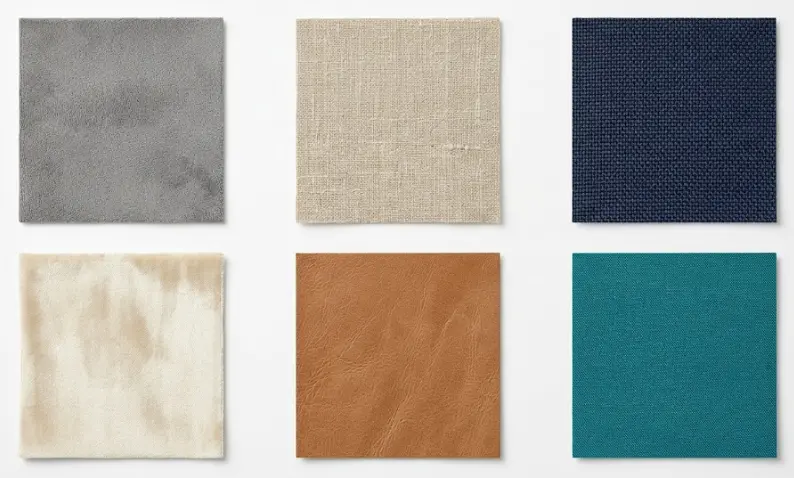
| Fabric Type | Care Code | Cleaning Method | Special Considerations | Dry Time |
|---|---|---|---|---|
| Microfiber | W or S (check tag) | W-code: hot water extraction. S-code: dry solvent cleaning. | Prone to water rings on S-code; pile must be groomed after drying. | 1–3 hrs |
| Cotton & Linen | W or SW | Hot water extraction with pH-neutral solution. | Can shrink with excessive moisture; controlled application essential. | 2–4 hrs |
| Polyester / Nylon | W or SW | Hot water extraction. Highly responsive — best results of all synthetics. | Synthetic fibers release soils well; stain resistance is higher than naturals. | 1–2 hrs |
| Velvet | S or X | Dry solvent cleaning or hand-cleaning with specialist products. | Water permanently crushes pile; must groom in pile direction throughout. | 1–2 hrs |
| Performance Fabric | W | Hot water extraction. Built-in stain resistance means excellent results. | Re-apply fabric protectant after cleaning to restore barrier properties. | 1–2 hrs |
| Leather (Finished) | N/A | Specialist leather cleaner applied by hand; leather conditioner applied after. | Conditioning is essential post-cleaning to prevent drying and cracking. | Immediate |
| Suede & Nubuck | S or X | Dry specialist cleaning only. No water-based products. | Highly sensitive to water staining; professional-only fabric type. | 1 hr |
Furniture Types We Clean in Seattle
Our professional upholstery cleaning service covers every type of upholstered furniture in your home or business. Each piece has its own cleaning considerations beyond just fabric type:
Sofas & Couches
Standard 2- and 3-seat sofas, including removable cushion covers. We clean the full frame, all cushion faces, armrests, and back panels. Available throughout Seattle — see our sofa cleaning Seattle service page.
Sectionals
Large L-shaped or U-shaped sectionals cleaned as complete units. We treat every piece including chaises, ottomans, and corner units. See our sectional deep cleaning guide for what this involves.
Armchairs & Accent Chairs
Single-seat upholstered chairs, wingback chairs, accent chairs, and recliners. Special attention to armrests and seat cushions where body oils concentrate most heavily.
Dining Chairs
Upholstered seat pads and full-fabric dining chairs. Kitchen and dining upholstery accumulates food soiling, grease, and spills faster than any other furniture type in the home.
Headboards & Upholstered Beds
Fabric headboards and upholstered bed frames accumulate body oils, skin cells, and dust mites rapidly due to proximity to sleeping. Regular cleaning is important for allergy management.
Commercial Upholstery
Office seating, waiting room chairs, restaurant booths, hotel furniture, and healthcare facility upholstery. Commercial cleaning is scheduled for minimal business disruption. See our commercial upholstery cleaning service page.
Professional Upholstery Cleaning vs. DIY: The Real Difference
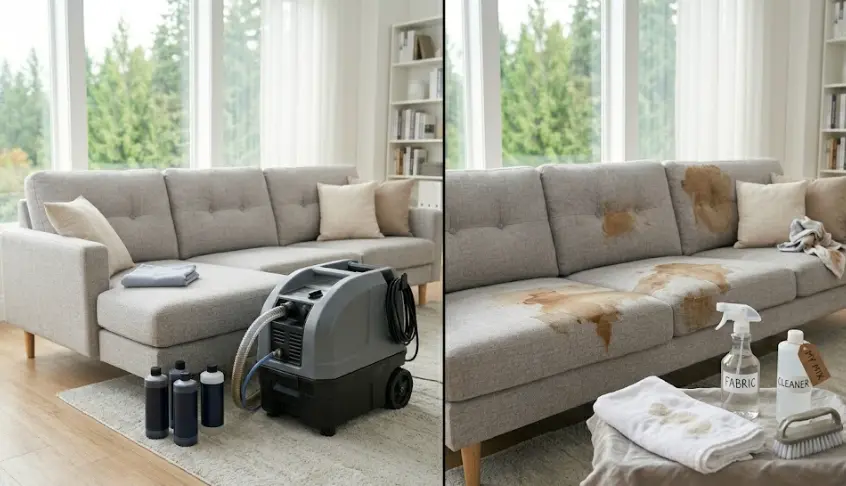
Home cleaning methods — rental machines, spray products, and DIY techniques — can maintain upholstery between professional visits, but they cannot replicate what professional equipment and training achieve. Here is an honest side-by-side comparison:
| Factor | Professional Cleaning | DIY / Rental Machine |
|---|---|---|
| Soil Removal Depth | Removes soils from deep within fiber and padding | Surface cleaning only; soils redeposit as water dries |
| Fabric Safety | Fabric-specific methods; colorfastness tested first | One-size-fits-all approach; risk of water marks, shrinkage |
| Residue Removal | Rinse cycle removes all cleaning product residue | Soap residue often left behind; attracts dirt faster |
| Stain Treatment | Targeted pre-treatment matched to stain chemistry | Generic products; incorrect treatment can set stains |
| Allergen Removal | Hot water extraction removes dust mites, pet dander, pollen | Surface-level; allergens in foam padding remain |
| Drying Time | 2–4 hours with professional air movers | 6–24 hours; over-wetting risk; mold potential |
| Odor Elimination | Enzyme treatment eliminates organic odor at the source | Masking sprays only; odor returns as product fades |
| Results Duration | Clean results last 12–18 months with normal use | Noticeable re-soiling often within 4–8 weeks |
Upholstery Cleaning Pricing in Seattle
Pricing for upholstery cleaning in Seattle varies based on furniture size, fabric type, level of soiling, and add-on services. The table below reflects typical ranges for our service area. For an exact quote based on your specific furniture, call (425) 287-3619 or send us a photo.
| Item | Typical Price Range | Notes |
|---|---|---|
| Standard Sofa (2–3 seat) | $80 – $150 | Both cushion faces, frame, armrests, back |
| Large Sectional | $150 – $300 | Price based on number of seats & pieces |
| Loveseat | $65 – $110 | Full frame and cushions |
| Armchair / Accent Chair | $40 – $80 | Per chair; discounts for multiple pieces |
| Recliner | $60 – $100 | Includes all moving parts and back panel |
| Dining Chair (upholstered) | $20 – $40 | Per chair; set discounts available |
| Fabric Protectant Add-On | $25 – $60 | Applied per piece; highly recommended |
| Stain Spot Treatment | $65 – $130 | Single-stain targeted treatment |
What Affects the Price
- Fabric type — delicate or specialty fabrics require more time and specialist products
- Level of soiling — heavily soiled or stained furniture requires more passes and pre-treatment
- Pet contamination — enzyme treatment for urine or dander adds to service time
- Number of pieces — multi-piece bookings receive package pricing
- Location in Seattle metro — travel time for areas beyond our standard service radius
How Often Should You Schedule Professional Upholstery Cleaning?
The right cleaning frequency depends on how your furniture is used and what it is exposed to. Here are evidence-based guidelines for Seattle households:
Adults Only, No Pets
Recommended frequency: Every 18–24 months
Low-traffic upholstery in adult-only homes accumulates dust, body oils, and allergens slowly. Annual vacuuming and spot treatment between professional cleanings is sufficient. A professional clean every 18–24 months maintains appearance and extends fabric life without unnecessary service visits.
Households with Children
Recommended frequency: Every 12 months
Food spills, sticky residue, and general high-traffic use from children accelerates soiling. Annual professional cleaning prevents stain buildup from becoming permanent and removes bacteria from food residue. See our guide on how often to clean your couch professionally for more detail.
Homes with Pets
Recommended frequency: Every 6–12 months
Pet dander, hair, and accidents significantly accelerate soiling and allergen buildup. Twice-yearly professional cleaning is ideal for multi-pet homes. Between visits, use a pet hair attachment vacuum weekly and address accidents immediately. Our pet stain and odor removal service handles acute situations.
Allergy or Asthma Sufferers
Recommended frequency: Every 6 months
Upholstered furniture is one of the primary reservoirs for dust mites, pet dander, pollen, and mold spores in Seattle homes. Hot water extraction removes these allergens from the fiber structure rather than simply moving them around. Semi-annual cleaning is clinically supported for households managing respiratory allergies. Read more in our guide on upholstery and allergies.
Our Upholstery Cleaning Service Area in Seattle & the Eastside
We provide professional in-home upholstery cleaning throughout the greater Seattle metro area. No need to transport your furniture — our technicians come to you with all equipment and supplies.
Seattle & Westside
- Seattle (all neighborhoods) — Sofa Cleaning Seattle
- Shoreline — Sofa Cleaning Shoreline
- Edmonds — Sofa Cleaning Edmonds
- Lynnwood — Sofa Cleaning Lynnwood
- Everett — Sofa Cleaning Everett
Eastside & Beyond
- Bellevue — Sofa Cleaning Bellevue
- Kirkland — Sofa Cleaning Kirkland
- Redmond — Sofa Cleaning Redmond
- Bothell & Woodinville — Sofa Cleaning Bothell
- Snohomish & Mill Creek — Sofa Cleaning Snohomish
Before & After: What Professional Cleaning Achieves
Results speak louder than descriptions. Here is what Seattle homeowners typically see after a professional upholstery cleaning appointment:
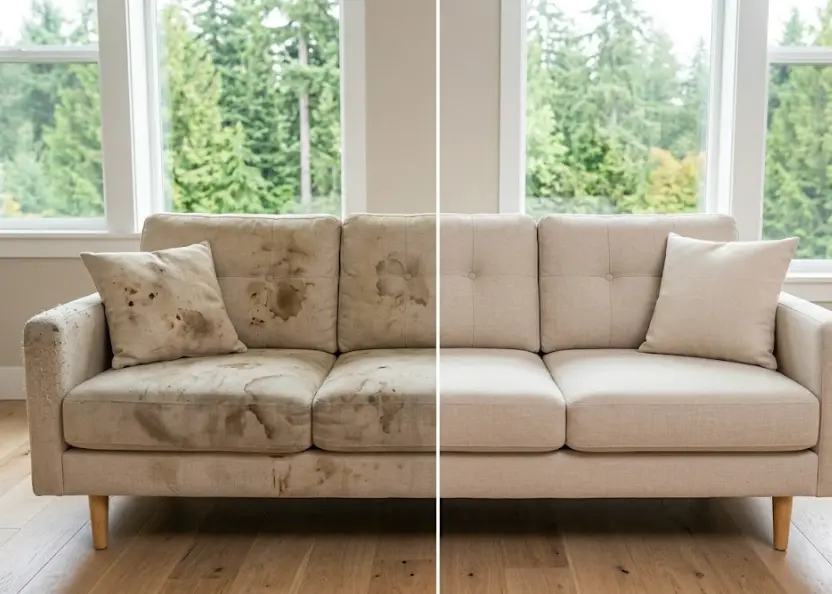
Before Professional Cleaning
- Dull, flat fabric with uneven sheen from accumulated body oils
- Visible stains on seat cushions and armrests
- Musty or stale odor, especially noticeable after sitting
- Pet hair embedded in fabric pile despite regular vacuuming
- Allergy symptoms triggered by sitting on the furniture
- Overall appearance making the room feel less clean
After Professional Cleaning
- Fabric colour restored to its original vibrancy and even tone
- Stains removed or significantly reduced on virtually all fabric types
- Fresh, neutral scent — no perfume masking, genuine odor removal
- Fabric pile restored to even, consistent texture
- Allergen load significantly reduced for improved indoor air quality
- Furniture looks and feels like new — a visible room improvement
What Seattle Homeowners Say About Our Upholstery Cleaning
"I had no idea what a professional upholstery cleaning actually included until the technician walked me through the whole process before starting. The fabric assessment, testing a hidden area first, the targeted stain pre-treatment — it was far more thorough than I expected. My light gray sectional has two kids and a dog. I honestly cannot believe how well it came out. Looks better than it did two years ago when we bought it."
"I tried renting a machine from the hardware store last year and was disappointed — the sofa took forever to dry, had water rings, and looked worse than before within a month. This time I called Fresh Furnish Cleaners and the difference is night and day. The technician was done in under an hour, used air movers so the sofa was dry by evening, and it has stayed clean-looking for six months so far. Professional equipment genuinely makes a difference."
"We have a velvet sofa that I was terrified to have cleaned — every article online warned me that water would ruin it. The technician confirmed it was S-coded before touching anything and used a completely dry solvent method. Not only did the stain come out but the pile looks exactly as it should. It is clear they actually know what they are doing with different fabric types, not just using one approach on everything."
"I manage a small boutique office in Kirkland with a waiting area. We had the upholstered chairs and a loveseat cleaned. The team was efficient, thorough, and done before our first client arrived. They also explained the fabric protectant option and what it would do — I added it and our receptionist says spills from clients now just wipe right off. We now book quarterly. Best decision we have made for office maintenance."
Frequently Asked Questions About Professional Upholstery Cleaning in Seattle
A complete professional upholstery cleaning includes: pre-inspection and fabric identification, vacuuming of loose debris, colorfastness testing on a hidden area, targeted pre-treatment of stains and high-soil zones, hot water extraction or dry-solvent cleaning based on the fabric's care code, a residue rinse, post-cleaning inspection and touch-ups, pile grooming, and accelerated drying with air movers. Fabric protectant application is an optional add-on. The specific method — hot water extraction vs. dry cleaning — depends entirely on your fabric's care code, which the technician identifies before starting.
Service time varies by the size and number of pieces. A standard 3-seat sofa typically takes 30–45 minutes to clean. A large L-shaped sectional takes 60–90 minutes. Heavily soiled furniture or pieces with multiple stains requiring extended pre-treatment will take longer. Add 15–30 minutes for fabric protectant application if included. Drying with professional air movers takes an additional 2–4 hours, after which most furniture is ready for light use. Full dry for heavy fabrics may take up to 6 hours in cooler Seattle weather.
Typical upholstery cleaning prices in Seattle range from $80–$150 for a standard sofa, $150–$300 for a large sectional, and $40–$80 per armchair. Pricing depends on fabric type, size, soiling level, and any add-ons. Multi-piece bookings receive package pricing. We offer free phone and photo-based estimates — call (425) 287-3619 or email info@ovencarpetcleaning.com with a photo of your furniture for a no-obligation quote within minutes.
The recommended frequency depends on your household: every 18–24 months for adult-only homes with no pets; every 12 months for households with children; every 6–12 months for homes with pets; and every 6 months for allergy or asthma sufferers. Seattle's humidity also makes regular cleaning more important than in drier climates, as moisture accelerates dust mite populations in fabric. More frequent cleaning is also recommended if you notice fabric dulling, odors, or visible staining between scheduled visits. See our full guide on how often you should clean your sofa.
Yes — when performed by trained technicians who follow fabric-specific protocols. The key is reading the care code tag on your furniture and adapting the cleaning method accordingly. W-coded fabrics (most common) are safe for water-based hot water extraction. S-coded fabrics require solvent-based or dry methods — applying water causes permanent marks. X-coded fabrics require professional dry cleaning techniques only. Velvet, suede, and antique upholstery require specialist handling that differs significantly from standard fabric approaches. Professional cleaners are trained in all these methods; DIY attempts carry significant risk because they typically apply a single method regardless of fabric type.
Yes. Hot water extraction removes dust mite debris, pet dander, pollen, and allergen particles from deep within fabric fibers — not just the surface layer. This is one of the primary health benefits of professional cleaning, particularly important for Seattle households where allergen seasons run most of the year. For pet odors, we use enzyme pre-treatment specifically formulated to break down uric acid and other organic odor compounds at a molecular level. This eliminates the odor source rather than masking it with fragrance. For severe pet contamination, see our dedicated pet stain and odor removal service, which uses an extended enzyme soak protocol for foam-penetrating contamination.
Related Upholstery Cleaning Guides
Coffee Stain Removal
Spilled coffee on your sofa? Our complete guide to coffee stain sofa removal covers emergency steps, DIY methods by fabric type, and when to call a professional.
Wine Stain Removal
Red wine on the couch? See our guide to removing wine stains from couch fabric — tannin chemistry, emergency steps, and DIY methods that actually work.
Cleaning Frequency Guide
Not sure how often your furniture needs professional service? Our guide on how often to clean your couch professionally gives household-specific recommendations.
Book Professional Upholstery Cleaning in Seattle
Ready for furniture that looks and smells genuinely clean? The Oven & Carpet Cleaning Company provides complete professional upholstery cleaning throughout Seattle, Bellevue, Kirkland, Redmond, and the greater Eastside. Same-day appointments available. Free estimates by phone or photo.
Same-Day Service
Call before 2 PM for same-day appointments across Seattle metro
Photo Estimates
Send a photo of your furniture for a no-obligation quote within minutes
Satisfaction Guarantee
We don't leave until you're fully satisfied with the results
Serving Seattle, Bellevue, Kirkland, Redmond, Bothell, Woodinville, Lynnwood, Edmonds, Shoreline, Snohomish & surrounding areas
